RayNeo Air 3s XR Glasses: Premium 120Hz Visuals for Gamers
Wearable personal cinema and mobile gaming setups have advanced rapidly, and the RayNeo Air 3s aims to replace standard monitors with a massive, pocketable screen experience. Built around an advanced 120Hz FHD HueView OLED engine, this headset simulates a 201-inch virtual display directly in your line of sight. By combining punchy color reproduction, a high…
11 min read
As Amazon Associates, we earn from qualifying purchases. This means we may receive a small commission at no extra cost to you if you click through and make a purchase.
Wearable personal cinema and mobile gaming setups have advanced rapidly, and the RayNeo Air 3s aims to replace standard monitors with a massive, pocketable screen experience. Built around an advanced 120Hz FHD HueView OLED engine, this headset simulates a 201-inch virtual display directly in your line of sight. By combining punchy color reproduction, a high dynamic range, and dual opposing acoustic sound chambers, the device delivers a compelling private gaming theater. For enthusiasts looking to play high-refresh titles or stream media away from a desk, the hardware presents a clear leap forward in pocket-sized audiovisual immersion.
This headset suits console gamers, PC handheld players, and media streaming enthusiasts who demand desktop-grade fluid motion without being anchored to a physical TV. It also serves remote workers seeking an expansive secondary screen alongside ultraportable hardware like the macbook air m3 for private multitasking on the road. However, shoppers seeking outdoor sports glasses or devices with ambient camera recording, GPS tracking, and complete weather resistance should steer clear, as this model focuses purely on private display output and indoor media consumption.
Visual Fidelity and the 120Hz HueView Screen
The centerpiece of the RayNeo Air 3s is its proprietary HueView display engine. Operating on an OLED micro-display framework, the panel projects a virtual 201-inch canvas that appears suspended at a comfortable focal distance. With a native resolution of 1920 × 1080 per eye, visual assets remain sharp and defined, avoiding the visible screen-door effect common on earlier wearable optics. Color reproduction stands out significantly due to wide color gamut tuning: the hardware covers 98% of the cinematic DCI-P3 spectrum and 145% of standard sRGB, reinforced by factory-level color accuracy rated at Delta E under 2. This high color accuracy ensures that skin tones, stylized game palettes, and shadow transitions render precisely as creators intended.
Contrast performance leverages the inherent strengths of OLED technology. The panel provides an infinite contrast ratio rated at 200,000:1, delivering deep blacks alongside vibrant, luminous highlights. With a maximum display brightness reaching 650 nits, the optics retain enough punch to resist washouts in standard indoor lighting environments. Whether navigating high-contrast dungeon crawlers or watching dark sci-fi films, details buried in dark regions remain legible instead of turning into muddy gray bands. The rayneo air 3s hueview screen manages high-contrast scenes cleanly, allowing bright interface elements and subtitles to stay legible over varied backgrounds without obvious blooming.
Complementing the resolution and color profile is the rayneo air 3s 120hz display capability. Fast-paced titles benefit immediately from the doubled refresh rate compared to standard 60Hz panels. Frame transitions appear liquid-smooth, which significantly reduces perceived motion blur when panning cameras in fast-action games. When paired with high-performance host devices like the macbook air m4 13 inch 256gb, the hardware keeps pace with high frame-rate video playback and swift desktop workspace transitions without jitter or dropped frames.
Gaming Immersion and Dynamic Display Modes
Deploying the rayneo air 3s for gaming changes how players interact with handheld systems and home consoles. Handheld gaming machines typically force users into static, neck-straining postures while looking down at a small 7-inch or 8-inch built-in screen. Projecting that video feed into the Air Neo 3s transforms the experience into a private front-row theater. Fast-twitch competitive titles, driving simulators, and competitive shooters benefit substantially from the high refresh cycle, which provides crisp visual feedback during split-second camera maneuvers.
RayNeo incorporates dedicated display profiles to optimize the visual feed according to the content type. Users can switch between Game, Movie, and Standard modes directly on the device:
- Game Mode: Unleashes the full 120 Hz refresh rate alongside tuned contrast to spotlight hidden adversaries in shadow-heavy zones while maintaining fluid, lag-free input tracking.
- Movie Mode: Prioritizes expansive dynamic range and deep color accuracy, calibrating tone mapping to enhance cinematic storytelling and wide-gamut films.
- Standard Mode: Balances battery draw and brightness for general productivity, daily web browsing, and multi-monitor style desktop extensions.
Input execution is direct and responsive. The headset features integrated physical button controls paired with touchscreen input on the chassis, allowing users to toggle settings, adjust stepless brightness levels, or switch operating profiles without interrupting game flow. When considering the core rayneo air 3s specs, the inclusion of 1 TB of onboard memory storage provides room for offline multimedia assets, distinguishing this wearable display from simple passive mirror-only video glasses.
OptiCare Eye Comfort and Flicker Prevention
Visual fatigue has historically been a significant barrier for wearable micro-displays. The RayNeo Air 3s directly addresses visual strain through its proprietary OptiCare architecture. A common culprit behind headaches during prolonged sessions is low-frequency pulse-width modulation (PWM), which creates imperceptible micro-flicker as panels dim. RayNeo implements an ultra-high frequency 3840 Hz hybrid system combining DC dimming with high-frequency PWM dimming. This hybrid architecture eliminates flickering across diverse illumination settings, ensuring that the screen does not cycle abruptly between bright and dark states.
Another strength of the rayneo air 3s opticare eye comfort suite is its stepless brightness adjustment. Rather than locking users into harsh preset jumps, the brightness slider shifts smoothly across its range up to 650 nits. This granular control allows users to dial in exact illumination levels to match ambient lighting conditions, whether playing late at night in a dim bedroom or relaxing in a well-lit lounge. The OptiCare system maintains uniform color calibration across all illumination levels, preventing the washed-out or greenish color shifts that often plague low-brightness OLED panels.
Even with advanced dimming and anti-flicker safeguards, RayNeo incorporates a proactive usage guideline: the manufacturer recommends a 10-minute break after every 30 minutes of continuous viewing. Because the virtual screen spans 201 inches across the user’s field of view, prolonged near-eye focus can tax ocular muscles during intensive gaming marathons. Adhering to these planned intervals helps users maintain focus and prevent general visual fatigue during extended gaming sessions.
Acoustic Performance and Dual Opposing Chambers
Visual immersion requires matching audio, and the RayNeo Air 3s introduces an engineered acoustic package designed to operate without bulky over-ear headphones. Built directly into the arms of the rectangular frames, the integrated audio setup utilizes what RayNeo notes as the world’s first dual opposing acoustic chamber design. By orienting miniature transducers in opposing physical layouts, internal mechanical vibrations cancel each other out, allowing the audio drivers to push higher acoustic energy without vibrating against the user’s temples.
The rayneo air 3s acoustic audio system delivers balanced frequency separation across all three critical bands. Low-frequency drums and explosions land with noticeable punch without muddying the overall soundstage. Mid-range frequencies remain clean and centered, which keeps dialogue intelligible during busy cinematic sequences and multiplayer team voice chats. Meanwhile, high frequencies, such as environmental string instruments or tactical bullet trajectories, stay crisp and directional. For movie enthusiasts engaging in rayneo air 3s movie watching, this spatial tuning constructs an enclosed sound field that makes explosions, footsteps, and directional sound cues feel physically anchored around the virtual screen.
Sound leakage control is an essential consideration for open-ear wearable audio. The acoustic chambers aim directional sound downward toward the ear canal, minimizing sound projection into open rooms. While maximum volume settings in silent environments may still be audible to someone sitting directly next to you, typical listening levels provide a personal sound bubble. For shared travel environments like passenger trains or airplanes, pairing external low-latency wireless earbuds remains an option if total privacy is needed.
Chassis Ergonomics, Controls, and Limitations
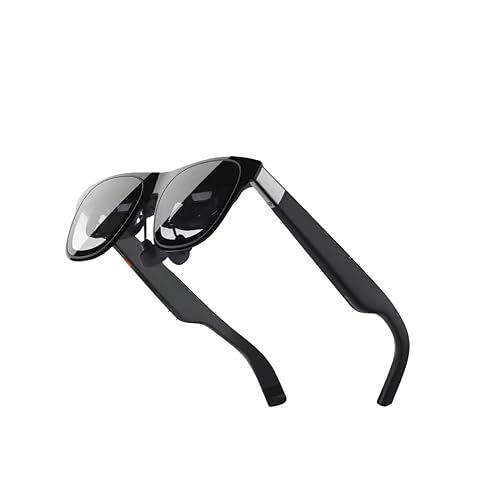
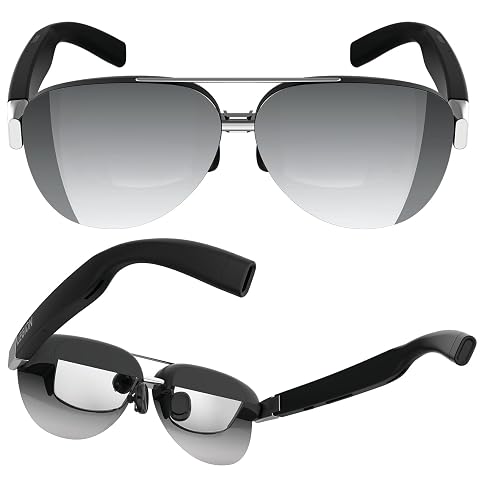
The RayNeo Air 3s adopts a modern sunglass silhouette, finished in a 3S-Silver colorway. Constructed with durable resin band materials, the glasses utilize a rectangular profile that blends into everyday public spaces without appearing overly industrial. A buckle-style closure ensures the temple arms rest securely across different head sizes. The listing notes integrated activity tracking metric measurement, broadening the unit’s role beyond pure video projection into basic session tracking.
Hardware interaction relies on physical buttons paired with intuitive touch control surfaces located along the temples. This hybrid control setup eliminates the need to fiddle with on-screen smartphone menus just to toggle volume or shift between visual modes. For users exploring other portable display upgrades like the ray neo air 3s pro, the physical tactile layout of the standard Air 3s delivers dependable, blind-touch operation when your vision is occupied by the virtual display.
Prospective buyers must keep key environmental limitations in mind. The RayNeo Air 3s is officially rated as not water resistant. As a result, it should not be worn in heavy rain, around swimming pools, or during high-sweat cardiovascular workouts. Furthermore, the unit does not contain integrated GPS geotagging hardware, meaning it cannot serve as a standalone navigation system for outdoor trail mapping. The hardware is purpose-built as an indoor, seated, or transit-focused rayneo air 3s wearable display that prioritizes visual fidelity and sound over outdoor ruggedness.
RayNeo Air 3s Pros and Cons
Pros
- Fluid 120Hz HueView OLED display
- Expansive 201-inch virtual screen simulation
- 98% DCI-P3 and 145% sRGB color gamut
- 3840 Hz flicker-free OptiCare dimming
- Dual opposing acoustic chamber audio
- Generous 1 TB internal storage
Cons
- Not water resistant
- Lacks GPS geotagging functionality
- Requires 10-minute rest breaks every 30 minutes
Who Should Buy the RayNeo Air 3s
Selecting the right wearable display comes down to understanding how you consume content and where you play. The Air Neo 3s fills a specific niche for users who prioritize image refresh rate, deep contrast, and broad color coverage over standalone camera capture features.
Buy It If
- You own a portable gaming handheld or console and want a 120Hz, 201-inch virtual display for lag-free gaming on the go.
- You consume high-fidelity movies and require OLED-level 200,000:1 contrast, 98% DCI-P3 color precision, and spatial open-ear audio.
- You suffer from screen-flicker headaches and need high-frequency 3840 Hz hybrid dimming to protect your eyes during media sessions.
- You want 1 TB of generous on-device storage capacity to carry games, videos, and media files without clogging your phone memory.
Skip It If
- You need all-weather gear or sweatproof glasses for outdoor running, as this model has no water resistance rating.
- You want outdoor navigation or point-of-view camera capture, as the headset features no GPS and no integrated video recording sensors.
- You prefer playing continuously for hours without pausing, since the display’s scale requires regular 10-minute breaks every half hour.
RayNeo Air 3s Alternatives Worth a Look
If your daily workflow prioritizes camera recording, hands-free voice assistance, or outdoor lifestyle convenience over a dedicated 120Hz OLED screen, several alternative smart glasses fulfill different needs.
Photo Capture,Real-Time Translation,Object Recognition,Open-Ear Music

The Photo Capture,Real-Time Translation,Object Recognition,Open-Ear Music glasses are built as a hands-free capture device featuring an integrated camera capable of 4K HD video recording. Alongside Bluetooth call capabilities and open-ear audio, this model focuses on artificial intelligence tools such as real-time language translation and visual object identification. Shoppers who want to record first-person travel vlogs or navigate foreign languages in real time will prefer this capture-centric unit over the Air 3s display-only design.
AI Assistant

The AI Assistant smart glasses emphasize lightweight voice interaction, productivity, and everyday eye protection. Outfitted with photochromic lenses that adapt to changing sunlight, this pair includes UV and blue light blocking alongside integrated ChatGPT-powered AI tools, translation, and hands-free calling. Users wanting an everyday conversational assistant in a casual eyewear format without an internal 201-inch screen will find this model far more practical for office work and outdoor commuting.
Object Recognition

The Object Recognition smart glasses pair a built-in camera with 4K video recording, transparent daily lenses, and an onboard AI assistant. Featuring open-ear speakers, Bluetooth calling, and environmental recognition algorithms, they function as an informational overlay for your immediate surroundings. Choose this unit if you need active scene analysis, clear-lens daily wear, and hands-free video capture rather than a high-refresh cinema screen.
Final Verdict
When asking if the RayNeo Air 3s is worth it, the answer depends entirely on your demand for personal visual immersion. By engineering a 120Hz refresh rate into a 1080p HueView OLED panel that projects a 201-inch virtual boundary, RayNeo has built a premier display companion for mobile gaming hardware and portable laptops. The inclusion of 98% DCI-P3 coverage, 650 nits peak brightness, and a 200,000:1 contrast ratio gives portable video feeds the vibrancy and depth normally reserved for premium dedicated gaming televisions.
While the absence of water ingress protection and lack of GPS hardware restrict the device to controlled indoor or transit environments, its core display performance remains top tier. Paired with 3840 Hz OptiCare anti-flicker dimming and the dual opposing acoustic chamber sound system, the RayNeo Air 3s stands as an exceptional personal screen upgrade for traveling cinephiles, console streamers, and handheld gaming enthusiasts alike.
FAQ
What is the refresh rate of the RayNeo Air 3s wearable display?
The RayNeo Air 3s features a high-speed 120 Hz refresh rate when running in its dedicated Game mode, providing fluid motion and reduced input latency for compatible gaming consoles, PCs, and handheld systems. It also includes Movie and Standard modes for balanced media viewing and productivity.
Does the RayNeo Air 3s support eye comfort features for long sessions?
Yes, the glasses feature RayNeo OptiCare technology, which combines 3840 Hz DC dimming and PWM dimming to eliminate display flicker across all brightness settings. It also includes stepless brightness adjustment up to 650 nits to help prevent eye strain, though RayNeo advises taking a 10-minute rest after every 30 minutes of viewing.
Are the RayNeo Air 3s glasses water resistant?
No, the RayNeo Air 3s is officially rated as not water resistant. Users should avoid exposing the headset to rain, splashes, water submersion, or heavy sweat during intense workouts.
What audio technology is built into the RayNeo Air 3s?
The glasses use a dual opposing acoustic chamber design with built-in open-ear speakers. This opposing configuration cancels out mechanical frame vibrations while delivering punchier bass, clearer vocal mids, and crisp highs directly toward the user’s ears.
Can the RayNeo Air 3s store media directly on the device?
Yes, the specifications state that the RayNeo Air 3s comes equipped with 1 TB of internal memory storage capacity, allowing users to keep multimedia content directly on the wearable hardware.
How these reviews are put together
- 203reviews published
- 2,271products with a buyer rating
- 2,222products with listed features
- 87brands covered
Every number, star and price on this site is read from the Amazon product listing. We do not run lab tests of our own, so a score here is the average rating left by buyers, not a verdict from a test bench. Prices change without notice; check the listing before buying.