SayoDevice O3C Review: Peak 8000Hz Performance for osu!
The SayoDevice O3C is an ultra-compact three-key peripheral engineered specifically for competitive rhythm gamers seeking maximum tapping speed and timing accuracy. Featuring three Hall effect magnetic linear switches, an 8000Hz polling rate over a high-speed USB-C connection, a 0.96-inch IPS color display, and a programmable rotary knob, it replaces conventional mechanical keys with dynamic magnetic…
9 min read
As Amazon Associates, we earn from qualifying purchases. This means we may receive a small commission at no extra cost to you if you click through and make a purchase.
The SayoDevice O3C is an ultra-compact three-key peripheral engineered specifically for competitive rhythm gamers seeking maximum tapping speed and timing accuracy. Featuring three Hall effect magnetic linear switches, an 8000Hz polling rate over a high-speed USB-C connection, a 0.96-inch IPS color display, and a programmable rotary knob, it replaces conventional mechanical keys with dynamic magnetic position sensing. For players tackling high-tempo sayodevice o3c osu maps, it delivers instantaneous key resets and sub-millisecond responsiveness to help conquer intense stream sections.
This specialized controller fits dedicated osu! players, speed-tap enthusiasts, and graphics tablet users who need an ambidextrous input device that frees up desk space without compromising actuation performance. Conversely, general computer users seeking a standard numeric pad for spreadsheets or an everyday typing keyboard should look elsewhere, as its three-button layout and sensitive magnetic action are tailored strictly for rhythm gaming rather than general office work.
Magnetic Switches and Rapid Trigger Performance
The primary draw of the keypad centers on its switch architecture. Traditional mechanical switches rely on internal metal leaves that must physically contact each other to register an input and separate past a fixed reset line before registering a follow-up press. In rapid-fire rhythm gaming, that fixed reset travel creates physical hesitation and finger fatigue. With the SayoDevice O3C Hall effect switches, internal permanent magnets move through electromagnetic sensors that continuously monitor stem travel depth without physical contact friction.
Because the controller continuously tracks switch depth, the SayoDevice O3C rapid trigger technology eliminates the conventional mechanical reset barrier. As soon as your finger reverses downward stroke pressure and moves upward, the switch resets immediately, allowing you to trigger consecutive inputs much faster than standard mechanical switches allow. For players navigating high-BPM deathstreams, this dynamic reset behavior removes finger lock caused by waiting on return springs, making the unit a prime contender for the best osu keypad rapid trigger hardware.
The device also features modular switch sockets that support any Hall magnetic switches on the market. If you decide to swap the stock linear switches for alternative magnetic switches with different spring weights, the hot-swappable design makes upgrading straightforward. A simple click within the configuration utility re-establishes sensor baselines, ensuring consistent physical performance across all three key slots.
8000Hz Polling Rate and Latency Advantage
Input reporting frequency is another defining pillar of the keypad’s design. While standard gaming keyboards report key status to your computer at 1000Hz—creating a 1.0-millisecond reporting delay—the SayoDevice O3C 8000Hz polling rate transmits updates over high-speed USB 2.0 every 0.125 milliseconds. This eightfold increase in reporting frequency reduces hardware transmission delay between the physical tap and the game engine’s registration.
In high-level rhythm play, timing windows for perfect hit scores on strict beatmaps are narrow. Shaving fractions of a millisecond from the input cycle reduces timing variance, which directly translates to a tighter Unstable Rate score during intense play sessions. When connected to a responsive portable computer such as the asus zenbook duo, the instantaneous feedback loop makes fast stream tapping and burst patterns feel direct compared to conventional 1000Hz peripherals.
Reliable high-speed polling requires stable hardware execution, and the published SayoDevice O3C specs confirm full compatibility across Windows, MacOS, and Linux systems. Players using laptops or desktop PCs can connect via the modern USB-C port and experience steady 8000Hz transmission without excessive operating system processing overhead.
Display, Custom Knob, and Setup Functionality
Beyond its switches, the keypad includes an integrated 0.96-inch IPS color screen with a 160 by 80 pixel resolution. This built-in screen provides helpful real-time diagnostics while playing, displaying the active key travel range as well as a live button press counter. Having this visible feedback allows players to monitor their bottom-out habits and stroke consistency directly on the device without cluttering their primary gaming monitor with software overlays.
Firmware personalization is another key advantage. During the initial SayoDevice O3C screen setup, players can customize the top line of text on the display to show their personal gamer tag or handle. Situated right next to the display is a versatile rotary knob that can be assigned to any key command. In rhythm gaming, mapping this knob to scroll through song lists allows players to browse beatmap libraries effortlessly without taking their tapping hand off the keypad.
Because magnetic sensors detect minute variations in magnetic flux, proper calibration is essential for optimal responsiveness. The manufacturer notes that SayoDevice O3C calibration should be performed before initial use or whenever firmware updates are applied. The simple calibration routine measures baseline resting points and maximum travel depth, ensuring that actuation and rapid trigger resets operate with dependable accuracy.
Compact Form Factor and Desk Ergonomics
Measuring just 2.52 inches long, 2.01 inches wide, and 1.50 inches tall, the controller boasts an exceptionally small desktop footprint. For rhythm game enthusiasts who steer their cursor with a graphics tablet in one hand and tap keys with the other, large mechanical keyboards frequently crowd desk space and force awkward wrist angles. The ambidextrous, single-section layout of the keypad allows players to position the device at the exact angle that matches their natural arm alignment.
The chassis is offered in plastic or metal enclosures, providing a durable base capable of handling aggressive tapping sessions. While living room audio setups like the bose soundbar 300 prioritize expansive sound dispersion for movies, rhythm gaming environments require clean, immediate physical feedback. The rigid construction of the keypad keeps switch stems aligned steadily during prolonged practice blocks.
The keypad also integrates customizable RGB backlighting under each key switch, illuminating key positions in low-light environments. Detachable USB-C connectivity ensures that the cable can be removed easily, making the unit convenient to transport in a pocket or gear pouch when traveling to gaming meetups or tournaments.
SayoDevice O3C Pros and Cons
Pros
- Ultra-fast 8000Hz polling rate via USB-C
- Hall effect switches with rapid trigger resets
- Hot-swappable magnetic switch sockets
- Integrated 0.96-inch IPS screen for keystroke stats
- Customizable rotary knob for song scrolling
- Broad compatibility across Windows MacOS and Linux
Cons
- Limited three-key layout unsuitable for typing
- Requires periodic sensor calibration
- Listing does not specify base grip material
Check SayoDevice O3C on Amazon
Who Should Buy the SayoDevice O3C
When asking is sayodevice o3c worth it, the answer depends on your primary software and gaming goals. The specialized feature set delivers clear advantages for rhythm gaming, but its limited key count makes it unsuitable for standard desktop tasks.
Buy It If
- You play competitive osu! and need rapid trigger Hall effect switches to conquer fast streams and reduce finger fatigue.
- You want native 8000Hz polling to minimize input latency and achieve tighter timing consistency.
- You use a graphics drawing tablet and need an ultra-compact keypad that frees up desk room and supports natural wrist angles.
- You want hardware features like an IPS display for keystroke tracking and a customizable knob for quick song list browsing.
Skip It If
- You need a traditional numeric keypad or full macro pad for typing, office work, or everyday computer navigation.
- You prefer the tactile bump or audible click of conventional mechanical switches over smooth linear magnetic action.
- You want a zero-maintenance peripheral and prefer to avoid occasional sensor calibration steps.
SayoDevice O3C Alternatives Worth a Look
Search results for compact keypads often surface a wide range of devices, spanning home security hardware to standard office accessories. Here is how nearby alternatives compare based on their listed specifications.
ANSI Grade 3 Security
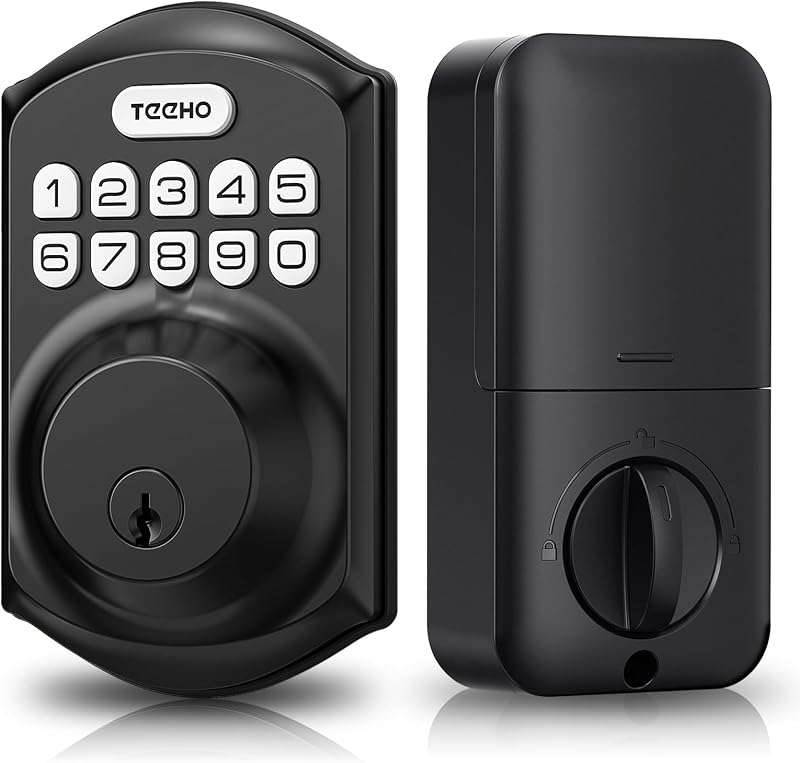
The ANSI Grade 3 Security deadbolt from TEEHO is a matte black keyless entry front door lock featuring an IP54 waterproof rating, 20 user codes, one-touch locking, anti-peep password protection, a low battery alert, and two backup keys. This product is an exterior residential door lock rather than a computer input device, making it relevant strictly for property owners wanting keypad door security who encountered it through broad search terms.
Keypad door lock with handle

The Keypad door lock with handle represents the Schlage FE575 electronic lock, which incorporates a satin chrome lever handle, Plymouth trim, push-button keyless entry, and an auto-lock function. Similar to the deadbolt above, this device is designed purely for residential door security and access management, bearing no connection to computer gaming or rhythm controllers.
TechGarden Wired Number Pad

The TechGarden Wired Number Pad is a 19-key USB numeric keyboard designed for laptops, desktop PCs, and notebooks, featuring large-print lettering and standard numeric layout keys. If you initially searched for a keypad to assist with spreadsheet calculations, accounting tasks, or data entry rather than rhythm gaming, this wired numeric pad offers the full number grid that the three-key gaming device leaves out.
Final Verdict
The SayoDevice O3C represents a dedicated, high-performance peripheral built from the ground up for serious rhythm game players. By pairing three hot-swappable Hall effect linear switches with continuous rapid trigger resets and a high-speed 8000Hz polling rate, it removes the physical reset friction and input delays inherent in traditional mechanical keyboards. The integration of an IPS diagnostic screen and a programmable rotary knob gives players immediate hardware monitoring and convenient library navigation right at their fingertips.
Although its three-key layout and occasional calibration requirement make it impractical as a general desktop companion, the SayoDevice O3C for osu stands out as a powerful, specialized controller for circle-clicking enthusiasts. For rhythm gamers aiming to push their speed boundaries, conquer high-BPM deathstreams, and tighten their overall hit timing, it delivers tangible hardware advantages that elevate competitive gameplay.
FAQ
How does rapid trigger operate on the SayoDevice O3C?
Rapid trigger relies on Hall effect magnetic sensors that track the real-time vertical position of the switch stem. Instead of requiring the key to release past a fixed physical reset line, the firmware registers an immediate reset the moment the key begins moving upward, allowing for instant subsequent actuations.
Why is an 8000Hz polling rate beneficial for rhythm gaming?
An 8000Hz polling rate transmits key state reports to your PC every 0.125 milliseconds, compared to 1.0 millisecond on standard 1000Hz keyboards. This sub-millisecond reporting interval reduces input latency variance, helping players achieve tighter timing on strict hit windows.
What information does the IPS display show?
The 0.96-inch IPS color screen has a 160 by 80 resolution and displays live button press counts alongside active key travel range. In addition, users can customize the top text line to display their player name or gamer handle.
When should you calibrate the SayoDevice O3C?
Calibration should be carried out before using the keypad for the first time, after applying firmware updates, or if switch stems are replaced. A simple click in the software recalibrates the magnetic sensors to ensure accurate actuation and reset depth tracking.
Can you swap out the magnetic switches on the keypad?
Yes, the keypad features modular switch sockets that support any Hall magnetic switches. You can swap in compatible magnetic linear switches with different spring weights and recalibrate the device with a single click to set new baseline readings.
How these reviews are put together
- 522reviews published
- 2,271products with a buyer rating
- 2,222products with listed features
- 87brands covered
Every number, star and price on this site is read from the Amazon product listing. We do not run lab tests of our own, so scores here are out of 10, based on listed specifications and buyer feedback, not a verdict from a test bench. Prices change without notice; check the listing before buying.


