EMAX Tinyhawk RTF: High-Speed Micro FPV Racing for Gamers
The EMAX Tinyhawk RTF is an all-in-one micro indoor racing drone package engineered to deliver an authentic first-person view experience straight out of the box. Designed for aspiring pilots and sim enthusiasts who want to skip the soldering iron and complex configuration software, this complete bundle combines a high-speed quadcopter, analog video goggles, and a…
11 min read
As Amazon Associates, we earn from qualifying purchases. This means we may receive a small commission at no extra cost to you if you click through and make a purchase.
The EMAX Tinyhawk RTF is an all-in-one micro indoor racing drone package engineered to deliver an authentic first-person view experience straight out of the box. Designed for aspiring pilots and sim enthusiasts who want to skip the soldering iron and complex configuration software, this complete bundle combines a high-speed quadcopter, analog video goggles, and a dedicated multi-mode radio controller into an accessible indoor racing rig. Based on our analysis of its hardware specifications and intended performance profile, this kit stands out as a genuine gateway into competitive drone racing, prioritizing low-latency piloting feedback over cinematic camera stabilization.
This ready-to-fly package directly suits PC and console gamers seeking to translate virtual stick reflexes into real-world racing lines, as well as curious beginners who want zero-latency analog flight without buying mismatched peripherals. If you want high-speed living room obstacle courses, fast cornering drills, and authentic freestyle acrobatics, this micro platform gives you the direct mechanical response you need. However, flyers looking for automated GPS hovering, stabilized 4K photography, or expansive outdoor landscape exploration will be much better served by looking at dedicated camera platforms.
Flight Dynamics and Control Progression
The core appeal of the EMAX Tinyhawk RTF lies in its high-speed micro racing architecture, capable of reaching velocities up to 35 mph inside tight domestic spaces. Unlike photography quadcopters that rely on barometer sensors and downward-facing optical flow to lock position automatically, this craft delivers pure aerodynamic response directly influenced by throttle management and stick input. This unassisted control demands genuine piloting involvement, making indoor corridors, table legs, and door frames feel like high-stakes racing circuits. For gamers familiar with competitive flight simulators, the physical feedback and rapid rotational rates feel immediately engaging rather than detached.
To prevent novice pilots from becoming overwhelmed, the included remote controller features a dedicated three-position switch on the right side that cycles through three distinct tinyhawk flight modes. Level mode activates self-leveling safety limits that prevent the craft from tilting past moderate pitch and roll angles, acting as an intuitive safety net for your initial laps around the house. Horizon mode maintains self-leveling while sticks are centered but unlocks full flips and rolls when the control sticks reach their mechanical travel boundaries. Finally, Full Acrobatic mode completely disables automated leveling, turning the quadcopter into a true acrobatic mode fpv drone where continuous pilot correction dictates orientation, providing an authentic taste of competitive FPV racing dynamics.
Transitioning between these flight profiles allows pilots to build real muscle memory at an organic pace. Rather than relying on synthetic flight assists found on outdoor exploration platforms like the falcon eye pro drone, the Tinyhawk platform forces you to understand pitch authority, momentum conservation, and throttle modulation. The agile response curve allows the craft to execute swift directional changes in spaces no larger than an average bedroom, proving that a micro indoor racing drone can offer serious enthusiast engagement without requiring acres of open field.
FPV Goggles and Analog Transmission Performance
Visual feedback on this platform relies entirely on dedicated radio frequency hardware rather than compressed wireless networking protocols. The listing highlights that the kit utilizes real RF analog FPV transmission rather than digital Wi-Fi streaming. In practical piloting scenarios, Wi-Fi-based video feeds introduce noticeable frame latency, sudden frame drops, and visual buffering that make high-speed obstacle navigation nearly impossible. By transmitting raw analog video signals directly to the included FPV goggles, the Tinyhawk minimizes display lag so your ocular perception aligns instantaneously with stick inputs.
The visual system operates using an integrated CMOS optical sensor paired with an RF transmission module capable of maintaining a stable visual link up to a maximum range of 200 feet. The camera setup supports 720p MP4 video capture while pushing a 170-pixel output resolution directly to the viewing screen inside the goggles. While this transmission resolution is modest compared to dedicated high-definition imaging systems like the go ultra camera, analog resolution in this class is intentionally tuned for constant frame delivery rather than cinematic clarity. You see obstacles, branch lines, and furniture edges in real time without the catastrophic video stutter that causes crashes on digital streaming links.
Ergonomically, having the FPV goggles controller bundle pre-configured from the factory eliminates the intimidating channel-scanning and frequency-matching procedures common in bespoke drone building. The goggles and remote come pre-bound to the aircraft right inside the package, ensuring you can slip the headgear on, power the transmitter, and immediately see through the nose of the drone without pairing mobile applications, calibrating touchscreens, or fighting Bluetooth permissions.
Durability and Micro Indoor Racing Design
Crashing is an inescapable reality of learning FPV navigation, and the structural design of the Tinyhawk reflects this operational fact. Constructed from durable, flexible plastics, the airframe incorporates an inverted motor configuration nestled inside protective ducted prop guards. These ducts fully encompass the spinning blades, shielding your walls, furniture, and curious household pets from sharp propeller edges while preventing the drone from tumbling out of the air after glancing collisions with drywall or chair legs.
Weighing only 2.7 pounds for the complete packaged kit and measuring 11 inches long by 9 inches wide and 7 inches high, the entire setup is remarkably compact. The physical airframe absorbs impacts by flexing under stress rather than snapping rigid carbon plates, giving novice pilots the confidence to push their throttle limits indoors. When aggressive maneuvers do lead to hardware stress, the included package provides essential maintenance support right out of the box:
- One complete spare set of replacement propellers for quick repairs after heavy impacts
- A dedicated bag of replacement screws to maintain structural frame integrity over time
- A spare battery connector to ensure electrical reliability after multiple discharge cycles
- A custom-fitted carry case that holds the drone, goggles, radio, and accessories together
This self-contained ecosystem means you do not need an oversized tactical backpack or separate hardware organizers to transport your gear. The dedicated carry case keeps the optical lenses of the goggles protected from dust and scratches while ensuring delicate transmitter switches remain intact when traveling to community meets or friends’ basements for multi-pilot racing sessions.
Battery System and Session Practicality
Powering the Tinyhawk is a 450 milliamp-hour Lithium Polymer (LiPo) battery designed to provide a delicate balance between total aircraft weight and sustained burst current. High-discharge LiPo chemistry is critical for micro quadcopters because rapid throttle punches demand immediate electrical current to execute split-second recoveries before hitting the floor. The battery hooks directly into the aircraft frame, maintaining a tight center of gravity that preserves predictable roll and pitch symmetry during rapid transitions.
Recharging is handled via standard USB connectivity, making it convenient to refresh your flight pack from a gaming PC, laptop, or standard USB wall adapter without carting around a bulky computerized balancing station. However, because the package includes only a single 450 mAh battery, your continuous flight time per outing will be limited. High-speed micro drones generally consume battery capacity rapidly during aggressive throttle routines, meaning prospective pilots will likely want to acquire supplementary flight packs to sustain prolonged training drills.
Managing a single battery setup requires some patience between sessions, as cooling and recharging intervals interrupt your flight rhythm. Nonetheless, the inclusion of the USB charging cable and matched factory connector ensures that beginners avoid the hazardous complexity of configuring manual charge amperages, cell counts, and storage voltages on hobby-grade benchtop chargers during their first introduction to electric flight.
EMAX Tinyhawk RTF Pros and Cons
Pros
- Complete ready-to-fly kit with goggles and controller
- Three flight modes including full acrobatic mode
- Real RF analog video without Wi-Fi lag
- Top speeds reaching up to 35 mph
- Durable ducted frame protects propellers indoors
Cons
- Maximum range limited to 200 feet
- Single 450 mAh battery included in kit
- Modest 170-pixel analog display output resolution
Check EMAX Tinyhawk RTF on Amazon
Who Should Buy the EMAX Tinyhawk RTF
Choosing the right flight platform depends entirely on whether your goals center on fast-paced manual piloting or stable automated photography. The EMAX Tinyhawk RTF targets a specific niche of enthusiast pilots who value mechanical agility and real-time FPV immersion over automated convenience features.
Buy It If
- You want a complete ready-to-fly FPV goggles controller bundle that requires no soldering, pairing, or complex software tuning before taking off.
- You are a gamer or simulator pilot seeking authentic stick feel with a progression system from stabilized Level mode to Full Acrobatic mode.
- You need a durable micro indoor racing drone with enclosed propeller guards designed to survive repeated impacts against indoor furniture.
- You want zero-latency analog radio frequency transmission that delivers instantaneous visual feedback up to 200 feet without Wi-Fi dropouts.
Skip It If
- You are shopping for an automated camera drone that holds its position via GPS to capture stabilized 4K landscape photography.
- You expect long outdoor cross-country flight capabilities beyond the 200-foot control ceiling of this indoor micro frame.
- You are unwilling to manage single-battery recharge intervals or acquire additional 450 mAh packs for extended practice sessions.
EMAX Tinyhawk RTF Alternatives Worth a Look
If your aerial goals lean toward outdoor scenic photography, extended flight endurance, or automated flight assists rather than indoor analog racing, several compelling alternatives showcase different capabilities across the remote flight spectrum.
2K HD FPV Drone

The 2K HD FPV Drone is a foldable, portable consumer aircraft designed primarily for teenagers and casual adult beginners who want recreational camera functions rather than high-speed acrobatic racing. Featuring altitude hold, one-key takeoff and landing, three speed modes, and headless mode, this model handles the stabilizing workload for you so you can focus on casual framing. It also includes two flight batteries in the box for longer initial play sessions. Choose this alternative if you prefer automated hovering stability and simple aerial snapshots over the intense, fully manual maneuvering of an acrobatic micro racer.
3-Axis Gimbal

For pilots who want dedicated outdoor cinematic capability, the 3-Axis Gimbal platform offers an entirely different class of flight performance. Built as an ultra-lightweight craft under 249 grams, this drone features a 4K UHD stabilized camera, auto-return functionality, wind resistance, an expansive 10-kilometer video transmission range, and up to 31 minutes of flight time. As detailed in our coverage of the dji mini 4k drone camera adults guide, GPS-backed camera drones eliminate indoor acrobatic agility in exchange for expansive outdoor range and ultra-smooth video capture.
DJI Mini 4K Camera Drone
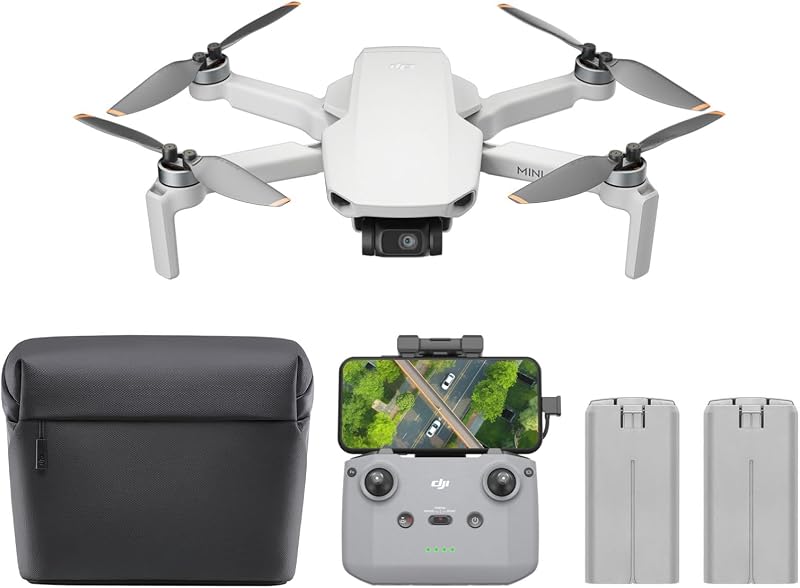
The DJI Mini 4K Camera Drone bundle expands on the standard camera experience by packaging two flight batteries that deliver up to 62 minutes of combined flight endurance. Weighing under 249 grams, this system utilizes mechanical 3-axis gimbal stabilization, QuickShots automated flight paths, auto return, and long-range 10-kilometer transmission. Where pilots interested in advanced aerial videography might also study platforms like the dji maverick 4 pro, this Mini 4K combo represents the polar opposite of the Tinyhawk: it is built to fly far, hover motionless, and record cinema-smooth footage outdoors rather than dodge hallway baseboards at 35 mph.
Final Verdict
The EMAX Tinyhawk RTF successfully solves one of the most frustrating barriers to entry in the radio control hobby: the fragmented, highly technical setup process of traditional FPV racing. By packaging a matched radio transmitter, analog display goggles, durable ducted micro quadcopter, and protective carry case into a single factory-bound box, EMAX allows aspiring pilots to experience authentic low-latency flight within minutes of unboxing. Its 35 mph top speed and graduated three-mode flight switch offer legitimate room for pilot progression, bridging the gap between basic hovering and advanced acrobatic maneuvers.
While the single included 450 mAh battery, 200-foot control range, and 170-pixel transmission feed won’t satisfy aerial cinematographers looking for panoramic 4K imagery, those constraints are standard trade-offs for an ultra-responsive indoor racer. If your goal is to master genuine drone racing mechanics, sharpen hand-eye coordination indoors, and experience true cockpit immersion without spending weeks configuring complex radio protocols, this comprehensive bundle delivers exceptional enthusiast performance.
FAQ
Is the tiny hawk drone suitable for complete beginners?
Yes, the platform is specifically engineered to accommodate beginners thanks to its multi-tiered flight mode switch. The Level mode restricts aggressive tilt angles and automatically levels the aircraft when the sticks are centered, allowing new pilots to master throttle control and steering indoors before experimenting with advanced acrobatic modes.
Does the EMAX Tinyhawk RTF require a smartphone or Wi-Fi network?
No, this system does not use smartphone applications or Wi-Fi streaming. It operates over dedicated 2.4GHz radio frequencies for control and direct analog RF video transmission for the goggles, eliminating connection lag and smartphone compatibility hassles entirely.
What flight modes are available on the controller?
The right-hand toggle switch is pre-programmed with three flight modes: Level mode for self-leveling stability, Horizon mode for self-leveling flight that permits flips at maximum stick deflection, and Full Acrobatic mode for complete, unassisted manual flight control.
What is the maximum control and transmission range?
The aircraft and video transmission system are rated for a maximum operational range of up to 200 feet, which provides ample coverage for navigating living rooms, basements, backyards, and multi-room indoor obstacle courses.
What accessories come inside the package?
The complete kit includes the Tinyhawk drone, FPV goggles, remote controller, a 450 mAh Lithium Polymer battery, a USB charging cable, one set of replacement propellers, a bag of spare screws and a battery connector, and a custom carry case.
How fast can the EMAX Tinyhawk fly?
According to the manufacturer specifications, the lightweight racing frame is capable of reaching top speeds of up to 35 mph, delivering authentic racing acceleration in a compact indoor-safe format.
Maintaining your micro racer and fabricating custom indoor obstacles often requires precise workshop modifications. If you plan to build wooden race gates or modify bench fixtures for spare parts, our detailed Drill Press Guide ensures accurate hole placement without splintering delicate materials. Keeping the right workshop setup ready makes routine airframe repairs and track customization seamless.
How these reviews are put together
- 556reviews published
- 2,271products with a buyer rating
- 2,222products with listed features
- 87brands covered
Every number, star and price on this site is read from the Amazon product listing. We do not run lab tests of our own, so scores here are out of 10, based on listed specifications and buyer feedback, not a verdict from a test bench. Prices change without notice; check the listing before buying.


