BenQ Zowie U2 Wireless Gaming Mouse: Competitive FPS Performance Breakdown
The BenQ Zowie U2 is a dedicated wireless esports mouse engineered specifically around competitive first-person shooter dynamics, combining an inward-curved symmetrical shell, an optical 3950 sensor, and an enhanced 4K wireless receiver. In this comprehensive zowie u2 wireless review, our verdict is clear: it is an uncompromising tournament tool that strips away decorative bloat to…
By Eric Monroe
9 min read
As Amazon Associates, we earn from qualifying purchases. This means we may receive a small commission at no extra cost to you if you click through and make a purchase.
The BenQ Zowie U2 is a dedicated wireless esports mouse engineered specifically around competitive first-person shooter dynamics, combining an inward-curved symmetrical shell, an optical 3950 sensor, and an enhanced 4K wireless receiver. In this comprehensive zowie u2 wireless review, our verdict is clear: it is an uncompromising tournament tool that strips away decorative bloat to focus entirely on tactile stability, agile target tracking, and rapid click response during high-tier competition.
This mouse suits competitive gamers seeking optimized handling during intense micro-adjustments and swift target tracking in tactical shooters. Players who need extensive RGB lighting, complex multi-profile desktop suites, Bluetooth multi-pairing, or broad macOS support should look elsewhere, as Zowie deliberately avoids non-esports embellishments. When organizing a dedicated competitive battle station alongside accessories like a razer base station, the clean footprint of this mouse fits naturally into a streamlined setup.
Sports Science Ergonomics and Inward Curved Shape
The physical geometry of the BenQ Zowie U2 represents a calculated departure from standard symmetrical chassis designs. BenQ utilized sports science research to craft an inward-curved design on both sides of the shell. This bilateral curvature is intended to bolster agility and stability during multi-angle movement, allowing players to execute sharp horizontal swipes, vertical adjustments, and diagonal micro-corrections without losing purchase. When assessing zowie u2 grip and ergonomics, the sculpted waist provides a natural anchoring point for claw and fingertip grip styles, locking the hand into a balanced posture during high-stress rounds.
Beyond basic grip stability, the shell contour directly influences mechanical click mechanics. The left-side curved design works in tandem with the overall slope of the mouse back to systematically reduce the thumb angle. By minimizing thumb extension, the muscular tension across the palm decreases, which supports a faster index finger click speed during critical firefights. Furthermore, BenQ refined the placement of the thumb controls; through experiments with different shapes and positions, the U2 side button design facilitates easier thumb access without requiring the player to compromise their primary grip.
Structural agility is reinforced by the benq zowie u2 weight, which checks in at an even 60g. By keeping the chassis at 60g without resorting to open external honeycomb perforations, the mouse maintains structural integrity while remaining light enough for swift reset sweeps. For competitive FPS players who spend hours grinding ranked ladders, this lightweight build combines with the sports science curvature to mitigate wrist fatigue and promote continuous, repeatable precision.
4K Wireless Polling Rate and Signal Stability
In competitive esports, wireless latency and signal consistency are just as vital as physical ergonomics. The BenQ Zowie U2 features a dedicated 4K enhanced receiver engineered to reduce signal interference in congested wireless environments. Standard wireless gaming peripherals often encounter packet loss or micro-stutters when multiple wireless devices, routers, and mobile hardware broadcast across identical frequencies. The standalone enhanced receiver isolates the connection to maintain a robust datastream between the mouse and the PC.
Operating with a native benq zowie u2 4k polling rate allows the mouse to report its position four times faster than standard 1,000 Hz peripherals. At 4K polling, positional reports are transmitted every 0.25 milliseconds, significantly reducing input latency on high-refresh-rate gaming monitors. Fast-paced flick shots and smooth tracking across wide angles feel exceptionally immediate, creating a direct connection between physical hand movement and on-screen reticle motion. Much like how competitive players seek minimal display latency on dedicated setups like the benq benq tk700sti, eliminating transmission bottlenecks at the mouse level ensures peak responsiveness.
Reliability is the driving force behind this wireless implementation. While high polling rates can theoretically strain system performance or battery consumption, BenQ builds the U2-DW hardware to prioritize stable transmission above all else. The 4K enhanced receiver acts as a dedicated antenna hub, positioned right on the desktop close to the mousepad. This proximity minimizes physical distance and obstruction, providing peace of mind during tournament matches where a dropped wireless frame could mean tournament elimination.
Optical 3950 Sensor Precision and Tracking
The tracking foundation of the mouse relies on the zowie u2 3950 sensor, an optical movement detection engine tailored for pristine competitive performance. In tactical titles like Counter-Strike 2, Valorant, and Apex Legends, sensor consistency matters far more than inflated marketing figures. The optical tracking on the U2 registers high-speed acceleration and sudden directional inversions without introducing smoothing, angle snapping, or spin-outs during frantic mouse movements.
Looking closely at the benq zowie u2 specs, the hardware lists a mouse maximum sensitivity of 3950 DPI. In an industry where general-purpose gaming mice often advertise numbers exceeding 20,000 DPI, a 3950 DPI maximum sensitivity ceiling reflects BenQ’s esports-first philosophy. Pro players overwhelmingly compete at sensitivities between 400 and 1600 DPI, rendering extreme sensitivity metrics irrelevant for competitive play. By focusing the 3950 sensor on tracking integrity within tournament-standard DPI brackets, the mouse delivers 1:1 raw input that rewards disciplined muscle memory.
When assessing the BenQ Zowie U2 for competitive fps environments, the interplay between the 3950 optical sensor and the 60g chassis becomes apparent. Low-sensitivity arm aimers who sweep across oversized mousepads will find the sensor resets cleanly upon lift-off and repositioning. The sensor maintains precise tracking through multi-angle movement, enabling confident crosshair placement whether tracking an opponent around a corner or making micro-adjustments onto a target’s head to maximize zowie u2 esports performance.
Driverless Configuration and Tournament Simplicity
A defining characteristic of Zowie hardware is its refusal to rely on background software, and the zowie u2 driverless setup continues this legacy. While many modern gaming peripherals require heavy configuration software suites running in the background, the U2 operates entirely plug-and-play. All essential settings and hardware calibrations are handled directly on the mouse itself, ensuring that your preferred configurations remain intact regardless of which computer you plug into.
This driverless philosophy is crucial for competitive LAN players and tournament competitors. In sanctioned esports leagues, tournament rules frequently forbid players from installing custom third-party software or unapproved executables onto competition PCs. Because the BenQ Zowie U2-DW is entirely driverless, gamers can connect via USB, sync the 4K enhanced receiver, and compete immediately without violating tournament guidelines or suffering software crashes.
The physical configuration features a clean five-button layout consisting of primary left and right click switches, a clickable scroll wheel, and two streamlined side thumb buttons. By keeping the design focused on five core inputs, BenQ eliminates accidental actuation of superfluous buttons during chaotic combat sequences. The listing notes that the mouse is engineered for personal computers running the Windows operating system, aligning directly with the standard OS used across competitive esports venues globally.
BenQ Zowie U2 Pros and Cons
Pros
- Inward-curved sides for multi-angle agility and stability
- Sports science shell supporting faster index finger clicks
- 4K enhanced receiver minimizing wireless signal interference
- Driverless plug-and-play design for tournament readiness
- Lightweight 60g symmetrical build for rapid reset sweeps
Cons
- Fixed 3950 DPI maximum sensitivity ceiling
- Limited to Windows operating systems
- No software suite for custom macros
- Fixed five-button layout without programmable extras
Who Should Buy the BenQ Zowie U2
Buy It If
- You play competitive FPS titles where rapid multi-angle flicking, stable claw or fingertip grips, and fast index finger clicks are crucial to your performance.
- You prefer a true driverless plug-and-play mouse that functions without installing background software or bloatware on your Windows gaming PC.
- You want an esports-grade 4K polling rate supported by an enhanced wireless receiver that minimizes signal interference in crowded electronic setups.
- You desire a lightweight 60g symmetrical shape with sports science inward-curved sides for enhanced grip stability.
Skip It If
- You require extensive multi-button layouts, deep macro programming, or RGB lighting customizability for MMO or productivity tasks.
- You utilize ultra-high sensitivity settings above 3950 DPI on your desktop.
- You game primarily on macOS or non-Windows operating systems, as the official hardware listing specifies Windows compatibility.
BenQ Zowie U2 Alternatives Worth a Look
While the BenQ Zowie U2 provides an exceptional, focused experience for tournament FPS specialists, different gamers have varying ergonomics, button requirements, and operating system needs. Here are three viable alternatives to consider before finalizing your setup.
Logitech G305 Lightspeed
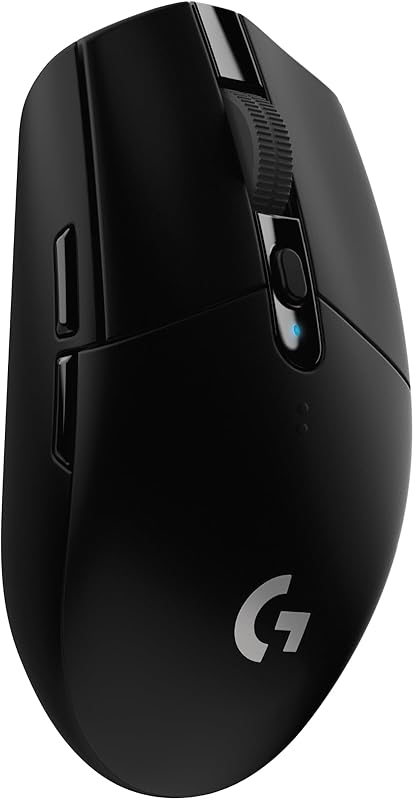
The Logitech G305 Lightspeed is a wireless gaming mouse offering a 12,000 DPI sensor, a lightweight build, and six programmable buttons. It features an impressive 250-hour battery life and on-board memory, with full compatibility across both PC and Mac operating systems. Gamers seeking an everyday wireless mouse that provides long battery endurance, customizable software-programmable buttons, and multi-platform versatility should choose the G305 over the esports-specialized U2.
Logitech G502 Hero
For users who need maximum input versatility and customization, the Logitech G502 Hero is a high-performance wired gaming mouse equipped with a 25,600 DPI sensor, custom RGB lighting, adjustable weights, and 11 programmable buttons with on-board memory. While the Zowie U2 strips away mass to reach 60g for competitive agility, the G502 Hero caters to gamers who play diverse genres like MMOs or strategy games and want custom thumb rests, modular weight balancing, and rich software macros.
ASUS ROG Keris
The ASUS ROG Keris is an ultra-lightweight wired gaming mouse featuring an ROG 16,000 DPI sensor, 400 IPS speed, hot-swap switch sockets, durable PBT keys, slick ROG feet, a flexible paracord cable, and RGB illumination. Players who prefer a wired connection to eliminate battery management entirely, or those who appreciate hot-swappable mechanical switches to tailor button feedback, will find the Keris to be a compelling alternative. When pairing versatile desktop peripherals with modern computing hardware such as an asus zenbook duo, the Keris offers broad flexibility.

Final Verdict
Evaluating whether the mouse is the right choice comes down to understanding your core gaming priorities. So, is benq zowie u2 worth it for the dedicated gamer? If you are a serious competitive first-person shooter player seeking an agile 60g shell, inward-curved ergonomics engineered for rapid clicks, and an interference-resistant 4K polling wireless link, the answer is an emphatic yes. The mouse eschews unnecessary aesthetic trends to deliver pure, unadulterated esports performance straight out of the box.
On the other hand, generalist gamers who expect software macro suites, RGB lighting zones, or sensitivities surpassing the 3950 DPI ceiling may feel restricted by its deliberate minimalism. The BenQ Zowie U2 does not attempt to be a multi-genre jack-of-all-trades; instead, it is a masterclass in tournament-grade execution. By combining sports science curvature, a reliable 3950 optical sensor, and an enhanced 4K wireless receiver, it stands as one of the most focused competitive FPS tools available today.
FAQ
What is the polling rate of the BenQ Zowie U2?
The BenQ Zowie U2 features a 4K polling rate supported by an enhanced 4K wireless receiver. This allows the mouse to report tracking data to your PC up to 4,000 times per second, significantly reducing input latency compared to standard 1,000 Hz mice.
Does the BenQ Zowie U2 require software installation?
No, the BenQ Zowie U2 features a completely driverless plug-and-play design. All hardware settings are managed directly on the device itself without requiring background driver suites, making it tournament-compliant and easy to move between different Windows PCs.
What is the weight of the BenQ Zowie U2?
The BenQ Zowie U2 weighs exactly 60g, offering a lightweight symmetrical build that facilitates swift micro-adjustments and sweeping arm movements without using external honeycomb holes.
What sensor does the BenQ Zowie U2 use?
The mouse is powered by an optical 3950 sensor with a maximum sensitivity of 3950 DPI, specifically calibrated to deliver consistent, raw 1:1 tracking for competitive first-person shooter gameplay.
Is the BenQ Zowie U2 compatible with macOS?
The official listing specifies compatibility for personal computers running the Windows operating system. It is designed primarily for Windows-based gaming and tournament environments.
How does the inward-curved design assist FPS gameplay?
The inward-curved design on both sides enhances agility and stability during multi-angle movement. In addition, the left-side curve paired with the back slope reduces the thumb angle, which supports a faster index finger click speed and grants easier thumb access to the side buttons.
How these reviews are put together
- 203reviews published
- 2,271products with a buyer rating
- 2,222products with listed features
- 87brands covered
Every number, star and price on this site is read from the Amazon product listing. We do not run lab tests of our own, so a score here is the average rating left by buyers, not a verdict from a test bench. Prices change without notice; check the listing before buying.