DJI Air 3S Review: Is the Dual-Camera Upgrade Worth It?
The DJI Air 3S enters the enthusiast aerial imaging space as a high-performance folding drone engineered to eliminate common compromises in dynamic range, optical reach, and flight safety. Built around an advanced dual-camera architecture that integrates a primary 1-inch CMOS sensor, this mid-sized quadcopter delivers 4K/60fps HDR video, 50-megapixel stills, and an industry-first forward-facing LiDAR…
9 min read
As Amazon Associates, we earn from qualifying purchases. This means we may receive a small commission at no extra cost to you if you click through and make a purchase.
The DJI Air 3S enters the enthusiast aerial imaging space as a high-performance folding drone engineered to eliminate common compromises in dynamic range, optical reach, and flight safety. Built around an advanced dual-camera architecture that integrates a primary 1-inch CMOS sensor, this mid-sized quadcopter delivers 4K/60fps HDR video, 50-megapixel stills, and an industry-first forward-facing LiDAR system for low-light navigation. In this in-depth DJI Air 3S review, our verdict is straightforward: it stands as the most capable all-around travel and creative platform in its class, blending professional imaging pipeline quality with class-leading flight telemetry.
This aircraft is tailored for landscape photographers, travel filmmakers, and aerial content creators who require clean nightscapes, rich sunrise highlights, and flexible focal compression without carrying multiple airframes. If your work relies heavily on sunset golden hours or intricate urban scouting, the Air 3S provides unprecedented navigational security and optical fidelity. Conversely, casual flyers seeking an ultralight aircraft that bypasses regulatory registration thresholds should look elsewhere, as a compact system like the drone dji mini 3 pro or an entry-level mini flyer will better serve lightweight recreational flying.
Dual-Camera Imaging and Video Performance
The centerpiece of the DJI Air 3S is its imaging array, headlined by an expansive 1-inch CMOS primary sensor that marks a massive generational step forward for aerial visual artists. By pairing this large primary sensor with high-resolution 50-megapixel capture, the camera produces extraordinary clarity across landscape and architectural subjects. Recording in 4K at 60 frames per second in high dynamic range provides footage with rich detail, reproducing subtle highlights along cloud decks and preserving clean shadow detail that smaller sensors typically crush into digital noise. The camera system provides up to 14 stops of dynamic range, granting creators the latitude necessary for aggressive color grading and balanced exposures during challenging sunrise and sunset shoots.
Beyond raw sensor size, the DJI Air 3S dual camera system offers immense creative versatility through its multi-lens focal perspectives and dedicated panorama features. The platform incorporates a specialized Free Panorama mode that lets pilots stitch together breathtaking wide-angle or medium tele vistas with precise automated panning. Wide-angle panoramas maximize field-of-view coverage for sweeping horizons, while medium tele panoramas compress background features, isolating mountain ridges or city skylines with minimal geometric distortion. With MP4 encoding saved straight to high-speed SDXC media, enthusiast videographers receive an agile, reliable workflow suited for fast-paced commercial production.
For low-light shooting, the 1-inch CMOS primary sensor changes how creators plan their twilight shoots. Standard sub-compact sensors often suffer from heavy grain and muddy color balance once the sun dips below the horizon, but the Air 3S preserves natural contrast, clean edge definition, and vibrant streetscapes. Whether capturing metropolitan twilight or dusk over rugged terrain, this dual-camera setup delivers dependable visual authority that directly rivals heavier production platforms.
LiDAR Obstacle Sensing and Low-Light Navigation
Flight safety has received a major technological upgrade with the integration of DJI Air 3S LiDAR obstacle sensing. By placing a forward-facing LiDAR sensor on the front of the aircraft alongside an array of omnidirectional vision sensors, the Air 3S achieves true nightscape omnidirectional awareness. Traditional optical avoidance systems rely strictly on ambient light, often rendering them useless during blue hour or nighttime flights. In contrast, the active LiDAR system emits physical pulses to measure distance directly, allowing the aircraft to detect and circumvent buildings, tree lines, and structural hazards even in complete darkness.
This nightscape spatial detection provides unparalleled peace of mind during automated flight procedures and manual scouting. Pilots navigating tight urban corridors or forested paths during late-evening photo sessions can trust the drone to scan its perimeter and execute collision-avoidance maneuvers. Enthusiasts who push flight envelopes into darker environments will find this active ranging system fundamentally changes how confidently they operate near complex terrain.
Complementing the sensor array is an upgraded Next-Gen Smart Return-to-Home algorithm that redefines automated retrieval. In real-world flight scenarios where tall structures or natural valleys cause weak GPS satellite coverage, the Air 3S retains environmental mapping data to calculate and follow an optimal, unobstructed flight path back to its original launch point. This intelligent fail-safe mechanism prevents the erratic altitude surges or erratic wandering common in older GPS-dependent return sequences.
Flight Dynamics, Transmission Range, and Controller Ergonomics
With an overall takeoff weight of 724 grams, the Air 3S strikes an ideal balance between nimble flight responsiveness and rock-solid wind resistance. The airframe carries sufficient inertia to track smoothly through turbulent coastal drafts and mountain gusts, producing buttery aerial dolly and tracking shots without micro-jitters. Operating in ambient temperatures up to 40 degrees Celsius, its robust lithium-ion powertrain delivers snappy throttle response and reliable forward acceleration, giving pilots instant feedback through the flight sticks.
Communication reliability is reinforced by an expansive 20km transmission range powered by advanced Wi-Fi and Bluetooth technologies. This massive video transmission buffer guarantees a crisp, low-latency live 4K monitoring feed even when operating at significant distances or flying through RF-heavy urban environments. Pilots who frequently capture large-scale industrial sites or expansive rural topography will appreciate the lack of stutter or video feed dropouts during delicate flight maneuvers. When compared to more stripped-down consumer models like the dji mini 4k drone camera adults, the transmission robustness and wind authority on the Air 3S operate on an entirely different level.
The standard package includes the DJI Air 3S RC-N3 remote controller, providing an intuitive, ergonomic interface that mounts standard smartphones directly above the flight controls. The RC-N3 chassis delivers responsive dual-spring gimbal sticks, dedicated camera control dials, and seamless hardware integration via physical data cables. While some high-tier combos offer integrated-screen remotes, the RC-N3 configuration provides a dependable, streamlined flight station that keeps the setup portable and quick to deploy.
Battery Endurance and Power Management
Sustained airtime is critical for deliberate cinematography, and the DJI Air 3S flight time tops out at an impressive 45 minutes per charge. Driven by a high-capacity 4276 milliamp-hour lithium-ion intelligent flight battery, this airframe stays aloft long enough to scout vantage points, frame complex multi-point panoramic passes, and safely execute cinematic tracking runs without frequent battery swaps. In practical operation, having a 45-minute flight envelope minimizes launch-and-land fatigue, keeping creators focused squarely on capturing optimal light.
Power management requires careful consideration, as the product listing specifies that the battery charger is sold separately. DJI recommends pairing the drone with an official 65W portable charger to achieve fast, efficient battery replenishment between sessions. Enthusiasts planning multi-battery shoots should prepare their charging infrastructure in advance to maintain rapid turnaround times in the field, especially when planning sunrise-to-sunset shooting days.
When evaluating the full DJI 3S drone specs, the combination of a 4276 mAh battery and intelligent power draw optimization highlights its efficiency. Even during demanding high-speed runs and active LiDAR telemetry processing, the battery provides steady voltage delivery down to the final landing approach. Creators debating between standard configurations or evaluating a standalone craft such as the dji mini 5 pro drone only will find that the Air 3S offers substantial physical endurance advantages due to its larger battery capacity.
DJI Air 3S Pros and Cons
Pros
- 1-inch CMOS primary camera with 14-stop dynamic range
- Forward-facing LiDAR for nightscape omnidirectional sensing
- Up to 45 minutes of maximum flight time
- Expansive 20km HD video transmission range
- Next-Gen Smart RTH functions in weak GPS areas
Cons
- Wall charger sold separately from base aircraft kit
- 724-gram weight exceeds ultralight regulatory threshold
- Base RC-N3 remote requires external smartphone display
Who Should Buy the DJI Air 3S
Evaluating whether the platform fits your workflow comes down to payload capability, imaging standards, and environmental flight safety. Deciding if the platform is worth it depends on whether you need professional-grade twilight imaging and advanced obstacle detection or simply want a casual aerial camera for family outings.
Buy It If
- You regularly shoot landscapes or cityscapes during twilight and need the enhanced dynamic range of a 1-inch CMOS sensor.
- You demand the safety of forward-facing LiDAR obstacle sensing for night flights and challenging environments.
- You require extended 45-minute flight sessions and high-resolution medium tele panoramic stitching.
- You need a dependable 20km transmission range that resists interference in congested wireless zones.
Skip It If
- You require an ultra-lightweight drone under 249 grams to avoid registration requirements.
- You want an all-in-one package that includes an out-of-the-box battery charger without purchasing additional accessories.
- You strictly shoot simple daytime holiday clips where basic sub-compact drones suffice.
DJI Air 3S Alternatives Worth a Look
If the Air 3S does not match your specific budget, regulatory weight needs, or intended flying environment, several alternative options exist in the marketplace for different skill levels and flying styles.
2K HD FPV Drone

The 2K HD FPV Drone is a lightweight, beginner-focused quadcopter equipped with altitude hold, one-key takeoff and landing, three selectable speed modes, and headless mode. Packaged with two flight batteries and a foldable airframe, this model is designed for novice flyers, teens, and casual hobbyists who want a fun, low-risk way to learn basic manual flight mechanics without managing complex cinematic sensors.
3-Axis Gimbal

The 3-Axis Gimbal quadcopter is an ultra-portable DJI Mini 4K platform weighing under 249 grams. Featuring a 4K UHD camera stabilized by a 3-axis mechanical gimbal, 31 minutes of flight time, auto-return functionality, and a 10km video transmission system, it is the ideal selection for travel vloggers who prioritize sub-249g regulatory freedom and compact portability over low-light LiDAR sensing.
Mini Drone with 2 Batteries
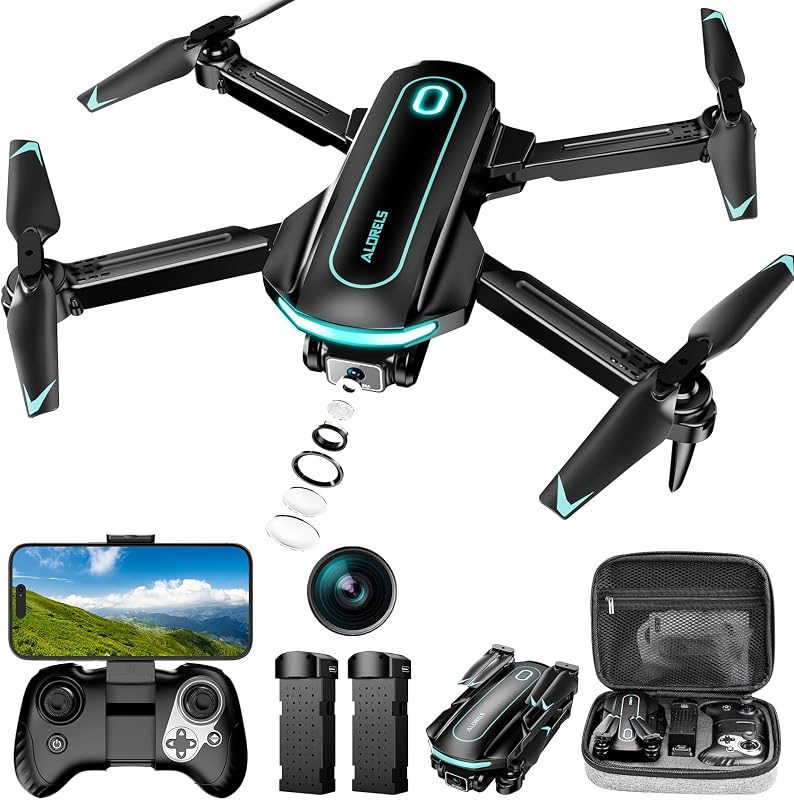
The Mini Drone with 2 Batteries is an entry-level foldable trainer that includes a dedicated carrying case, 1080P HD FPV camera, trajectory flight controls, gravity sensing, and 360-degree flip capabilities. Designed primarily as a starter gift for children and absolute beginners, this craft is tailored for safe indoor and backyard fun rather than professional imaging assignments.
Final Verdict
The DJI Air 3S cements itself as an indispensable imaging tool by blending commercial-grade photographic hardware with cutting-edge flight autonomy. Its 1-inch CMOS primary camera and medium tele panoramic versatility provide rich 4K/60fps HDR video with up to 14 stops of dynamic range, granting visual artists complete control over high-contrast sunrises and dimly lit nightscapes. The addition of forward-facing LiDAR fundamentally transforms evening operations, delivering genuine nightscape obstacle sensing and intelligent return-to-home mapping that protects your investment across complex flight paths.
While the 724-gram takeoff weight places it outside ultralight exemption brackets and the omission of an in-box wall charger requires extra preparation, these trade-offs are minor relative to the substantial creative power on tap. For serious landscape photographers, commercial creators, and enthusiast drone pilots seeking uncompromising performance across variable lighting conditions, the Air 3S delivers an exceptional flight experience that sets a new standard for prosumer aerial systems.
FAQ
Does the DJI Air 3S come with a battery charger?
No, the product listing states that the battery charger is sold separately. DJI officially recommends purchasing the DJI 65W Portable Charger to ensure safe and efficient power delivery for the 4276 mAh flight batteries.
How does the forward-facing LiDAR improve night flight safety?
The forward-facing LiDAR emits active light pulses to calculate obstacle distances regardless of ambient lighting conditions. This enables nightscape omnidirectional obstacle sensing, allowing the drone to detect and avoid structures, trees, and obstacles when traditional vision sensors are limited by darkness.
What is the maximum flight time of the DJI Air 3S?
The DJI Air 3S delivers a maximum flight time of up to 45 minutes on a fully charged 4276 mAh lithium-ion intelligent flight battery under ideal operating conditions.
What controller is included with the base DJI Air 3S package?
The base DJI Air 3S package includes the DJI RC-N3 remote controller, which pairs with your smartphone to provide flight telemetry, live camera monitoring, and precise dual-stick control.
Can the DJI Air 3S return home if it loses GPS connection?
Yes, the Air 3S features Next-Gen Smart Return-To-Home algorithms that allow the aircraft to intelligently map its environment, determine an optimal flight path, and return safely to the home point even in areas with weak GPS satellite signals.
How these reviews are put together
- 522reviews published
- 2,271products with a buyer rating
- 2,222products with listed features
- 87brands covered
Every number, star and price on this site is read from the Amazon product listing. We do not run lab tests of our own, so scores here are out of 10, based on listed specifications and buyer feedback, not a verdict from a test bench. Prices change without notice; check the listing before buying.


