DJI Mini 3 Hands-Off Deep Dive: Why Modern Beats Refurbished
When searching for an accessible entry point into serious aerial photography, many prospective pilots cross paths with legacy platforms like a dji phantom 3 refurbished quadcopter, hoping that bulky commercial-style hardware still holds its ground. However, the DJI Mini 3 proves decisively that modern design philosophy, miniaturized engineering, and contemporary sensor processing render obsolete flagship…
9 min read
As Amazon Associates, we earn from qualifying purchases. This means we may receive a small commission at no extra cost to you if you click through and make a purchase.
When searching for an accessible entry point into serious aerial photography, many prospective pilots cross paths with legacy platforms like a dji phantom 3 refurbished quadcopter, hoping that bulky commercial-style hardware still holds its ground. However, the DJI Mini 3 proves decisively that modern design philosophy, miniaturized engineering, and contemporary sensor processing render obsolete flagship drones unnecessary for high-tier aerial content. Featuring an ultralight sub-249-gram airframe, 4K HDR imaging, and a dedicated smart controller with a built-in screen, this compact flyer delivers dependable performance straight out of a backpack without cumbersome calibration hurdles. Our verdict is clear: this modern sub-249g platform provides vastly superior imaging, transmission reliability, and regulatory freedom compared to aging legacy drones.
This system is tailored for outdoor content creators, mobile travelers, and gaming enthusiasts who prioritize intuitive flight responsiveness, clean vertical social media capture, and minimal pre-flight friction. Those who need enterprise payload options, extensive omnidirectional obstacle sensing arrays, or industrial SDK integration should look elsewhere at commercial workhorses, but pilots seeking an agile, high-performing 4K camera aircraft will find the hardware well suited to their creative demands.
Camera Capabilities and True Vertical Shooting
The imaging core of the drone is built around a modern CMOS optical sensor capable of producing 48 MP stills alongside crisp dji mini 3 4k hdr video. By employing Dual Native ISO Fusion, the camera hardware manages exposure across complex lighting conditions, preserving clean detail in deep shadows and bright highlights during daytime flights and evening sessions alike. For pilots who enjoy post-processing flexibility, the system supports both standard JPG snapshots and uncompressed RAW files, allowing photographers to extract maximum dynamic range from every shot. The hardware stabilization is handled by a 3-axis mechanical gimbal that keeps footage remarkably steady even during rapid directional transitions.
One of the primary advantages for social creators is the hardware integration of dji mini 3 true vertical shooting. Unlike older quadcopters or ground cameras that force users to crop horizontal video in editing software—discarding substantial image resolution in the process—this gimbal physically rotates the camera 90 degrees. This provides full-resolution vertical video ready for portrait-oriented social platforms, capturing tall subjects such as waterfalls, cliff faces, and high-rise architecture with complete optical clarity. Content teams who pair aerial sequences with ground coverage from an action setup like the DJI Osmo Action 4 will appreciate having matching 4K resolution across both vertical and horizontal formats.
Flight Performance and Wind Resistance
Agility and stability are central to the overall dji mini 3 flight performance. Powered by brushless motors and advanced flight algorithms, the aircraft achieves takeoff capabilities at altitudes up to 4,000 meters above sea level. When encountering turbulent coastal breezes or mountain air currents, the dji mini 3 wind resistance holds firm up to 38 kph, representing Level 5 wind resistance. The 3-axis mechanical gimbal actively counteracts airframe tilt and minor buffeting, ensuring that recorded footage remains silky smooth even when the airframe is actively leaning into the wind to maintain position.
Piloting confidence is reinforced by a robust suite of positioning and safety features designed for users of all experience tiers. Precise hovering is facilitated by onboard positioning hardware, while integrated GPS powers an intelligent Return to Home (RTH) function that automatically brings the drone back to its takeoff coordinate during signal loss or low-battery alerts. Automated takeoff and landing sequences remove the anxiety of manual liftoffs, and pre-programmed flight modes like QuickShots and Panorama allow pilots to execute complex sweeping orbits, rocket climbs, and wide-angle scenic shots at the push of a button. For creators experimenting with minimalist setups similar to using a modular DJI Action 2, the autonomous flight modes provide dependable camera movement without requiring a dedicated camera operator.
DJI RC Controller Integration and Long-Range Transmission
A standout element of this configuration is the inclusion of the dji mini 3 dji rc controller. Rather than forcing pilots to mount a smartphone into a spring-loaded clamp and drain mobile phone batteries during flight, the DJI RC features a built-in 5.5-inch HD display with the DJI Fly app pre-installed. The integrated screen delivers crisp viewing visibility even under direct sunlight, offering an uncluttered cockpit experience free from incoming text alerts or app crashes. Physical control sticks and tactile switches provide immediate physical feedback, mirroring the tactile precision gamers expect from high-end console controllers.
Transmission stability matches the refined controls, delivering up to 10 km (approximately 32,800 feet) of HD video feed with strong anti-interference properties. This robust wireless link allows pilots to scout vast landscapes and maintain crisp visual feedback without signal dropouts. Once the flight concludes, offloading footage is equally seamless via QuickTransfer over Wi-Fi. By pairing the drone near a smartphone without turning on the remote controller, media transfers at speeds up to 25 Mb/s directly to the mobile device for fast editing and sharing.
Battery Life and Power Management
Flight endurance is often the primary bottleneck for compact aircraft, but dji mini 3 battery life sets a high benchmark in the ultra-portable category. The included 2453 mAh lithium-ion Intelligent Flight Battery provides an operational flight time of up to 38 minutes, measured at a constant speed of 21.6 kph in windless test conditions. For pilots purchasing the Fly More combo configuration, the package delivers up to 114 minutes of total flight time across multiple battery packs, drastically cutting downtime in the field.
For those demanding extreme endurance, the airframe is also compatible with the Intelligent Flight Battery Plus (sold separately in select countries), which pushes continuous flight times up to 51 minutes. However, installing the Plus battery increases the overall weight past the 249-gram threshold, altering regulatory categorization. For hobbyists prioritizing aerial filming over complex studio rigging like the DJI Focus Pro, having close to 40 minutes on a single standard charge allows ample time to frame complex tracking shots, scout scenic vistas, and experiment with creative camera angles without rushing.
Airframe Portability and Regulatory Freedom
The structural design of the aircraft emphasizes convenient transport and straightforward regulatory compliance. Weighing under 249 grams with the standard Intelligent Flight Battery, propellers, and a microSD card installed, the aircraft falls below the mandatory weight threshold for FAA recreational registration and Remote ID requirements in the United States. This sub-249g status makes it exceptionally travel-friendly, saving pilots administrative paperwork and licensing friction before taking to the skies for recreational fun.
Constructed from lightweight gray plastic, the folding airframe collapses down into an ultra-compact footprint that slips easily into a shoulder bag or backpack pocket alongside camera lenses and everyday travel gear. This form factor highlights the dramatic leap forward from obsolete hardware: where a legacy quadcopter required an oversized hard-shell suitcase and dedicated transport, modern engineering packages 4K stabilization, smart flight telemetry, and high-capacity battery power into an airframe that weighs less than an average tablet.
DJI Mini 3 Pros and Cons
Pros
- Sub-249g weight avoids recreational FAA registration
- 4K HDR video with Dual Native ISO Fusion
- True vertical shooting via rotating mechanical gimbal
- Up to 38 minutes standard flight battery life
- Dedicated DJI RC with built-in 5.5-inch HD screen
- Robust 10 km HD video transmission range
Cons
- Intelligent Flight Battery Plus pushes weight over 249g
- Does not include omnidirectional obstacle avoidance sensors
- Requires DJI Fly app activation before first flight
Who Should Buy the DJI Mini 3
Buy It If
- You want 4K HDR aerial filming and 48 MP stills without hauling bulky legacy flight cases.
- You produce content for vertical social platforms and want true native sensor rotation rather than cropped footage.
- You prefer a dedicated controller with an integrated high-visibility screen over clamping your phone to a transmitter.
- You fly recreationally and want an aircraft under 249 grams to bypass standard FAA registration requirements.
Skip It If
- You need omnidirectional obstacle avoidance sensors to automatically dodge side and rear hazards in dense terrain.
- You require enterprise-grade modular payloads, thermal imaging, or commercial SDK application support.
- You plan to use the heavy extended battery while remaining strictly within the sub-249g regulatory exemption.
DJI Mini 3 Alternatives Worth a Look
If you are exploring the wider drone market to see how different flying cameras match your budget and intended flight style, consider these three alternatives from recent searches.
2K HD FPV Drone

The 2K HD FPV Drone offers a beginner-oriented training setup equipped with a 2K camera, altitude hold, headless mode, and one-key takeoff and landing. Supplied with two batteries and a foldable design, it focuses on entry-level users and teen hobbyists who want a simple, budget-conscious recreational craft rather than a motorized 3-axis gimbal 4K filmmaking platform.
3-Axis Gimbal

The 3-Axis Gimbal quadcopter delivers 4K UHD video capture, an under 249 g airframe, and up to 10 km video transmission with auto-return security. Offering up to 31 minutes of flight time alongside Level 5 wind resistance, it serves as a viable option for pilots wanting sub-249-gram convenience with high-definition mechanical stabilization at a slightly reduced single-battery runtime compared to the Mini 3.
Mini Drone with 2 Batteries
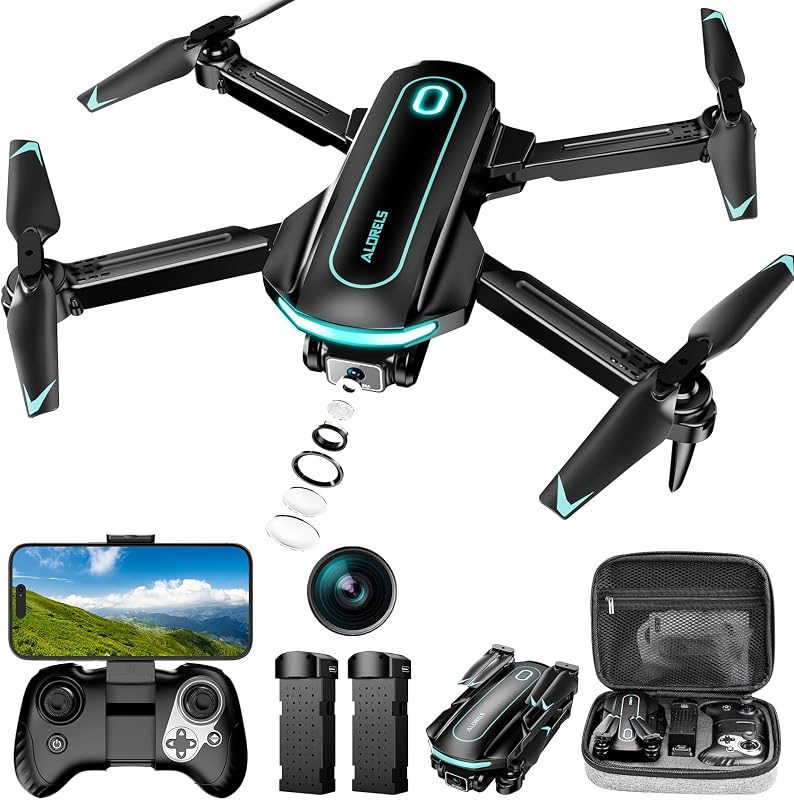
The Mini Drone with 2 Batteries is tailored primarily toward younger pilots and casual indoor or backyard recreation, complete with a carrying case and 1080P HD FPV camera. With features like trajectory flight, gravity control, and 360-degree flips, it appeals to families seeking fun aerial stunts rather than cinematic landscape documentation.
Final Verdict
Looking at modern drone benchmarks, it becomes immediately apparent why evaluating an older platform like a refurbished Phantom quadcopter is counterproductive for everyday aerial photography. The DJI Mini 3 packages superior imaging tech, Dual Native ISO Fusion, 4K HDR video capture, and true vertical gimbal rotation into an aircraft small enough to sit in the palm of your hand. Paired with the dedicated DJI RC and its direct-sunlight display, the flight experience is streamlined, immersive, and remarkably responsive.
When you consider the 38-minute standard flight endurance, 10 km HD transmission range, Level 5 wind resistance, and the regulatory ease of flying an aircraft under 249 grams, the system stands out as a clear winner for creators and enthusiasts alike. If you want an accessible, travel-ready aerial camera that delivers professional visual clarity without unnecessary operational complexity, this modern mini platform is well worth the investment.
FAQ
Is the DJI Mini 3 worth it compared to older quadcopters?
Yes. The modern airframe provides 4K HDR imaging, a 3-axis mechanical gimbal with true vertical shooting, up to 38 minutes of standard battery life, and a 10 km transmission range in a sub-249g body. Older quadcopters are substantially heavier, require separate smartphones or monitors, demand FAA registration, and lack the optical efficiency and portability of modern compact platforms.
Does the DJI Mini 3 require FAA registration for recreational use?
No. When flown with its standard Intelligent Flight Battery, the aircraft weighs under 249 grams. For recreational pilots in the United States, aircraft under this weight threshold do not require FAA registration or Remote ID compliance, provided they are flown strictly for hobbyist purposes under recreational guidelines.
How does True Vertical Shooting work on the DJI Mini 3?
The camera sits on an innovative 3-axis mechanical gimbal that physically rotates the entire camera assembly 90 degrees. This allows the sensor to capture native vertical video and portrait photos at full 4K resolution, eliminating the need to crop horizontal footage in post-production and maintaining optimal image sharpness for mobile viewing feeds.
What is the battery life of the DJI Mini 3 during flight?
With the included 2453 mAh standard Intelligent Flight Battery, the aircraft delivers up to 38 minutes of flight time when operated at a steady speed of 21.6 kph in windless conditions. Using the Intelligent Flight Battery Plus (sold separately) can extend flight times up to 51 minutes, though it raises the total aircraft weight above 249 grams.
What advantage does the DJI RC controller provide?
The DJI RC includes a built-in 5.5-inch HD display and comes with the DJI Fly app pre-installed. This eliminates the need to attach a personal smartphone, avoiding battery drain on mobile devices and shielding the pilot from incoming call or message interruptions while delivering crisp visibility in bright sunlight.
How these reviews are put together
- 1,107reviews published
- 2,271products with a buyer rating
- 2,222products with listed features
- 87brands covered
Every number, star and price on this site is read from the Amazon product listing. We do not run lab tests of our own, so scores here are out of 10, based on listed specifications and buyer feedback, not a verdict from a test bench. Prices change without notice; check the listing before buying.