Gskyer 25×50 Monocular Telescope Breakdown: Optics, Range, and Design
The Gskyer 25×50 Monocular is an optic that pairs traditional nautical aesthetics with long-range observation hardware. Built around a 50mm objective lens and an internal optical assembly supporting 25x magnification, it presents an eye-catching alternative to utilitarian pocket scopes. Our verdict is that this optic serves as an entertaining, collectible viewing piece that can resolve…
9 min read
As Amazon Associates, we earn from qualifying purchases. This means we may receive a small commission at no extra cost to you if you click through and make a purchase.
The Gskyer 25×50 Monocular is an optic that pairs traditional nautical aesthetics with long-range observation hardware. Built around a 50mm objective lens and an internal optical assembly supporting 25x magnification, it presents an eye-catching alternative to utilitarian pocket scopes. Our verdict is that this optic serves as an entertaining, collectible viewing piece that can resolve distant subjects when stabilized, though its high magnification and compact exit pupil require steady hands and ample ambient light.
This handheld monocular is well suited for hobbyists, historical reenactors, casual wildlife spotters, and anyone seeking a distinctive outdoor gift with functional magnifying power. Conversely, hunters needing fast target acquisition at dawn or hikers demanding ultralight, weather-sealed tactical rubber armor should look toward conventional outdoor optics instead.
Optical Performance and Prism Quality
The visual clarity of any high-power glass relies heavily on its internal prism and lens coatings. The optical layout incorporates fully multi-coated elements paired with a green-film BAK-4 prism, designed to minimize internal reflections and enhance light transmission. Evaluating the Gskyer monocular BAK4 prism performance shows that it provides respectable color fidelity and center-frame definition during bright daylight hours. When pointing the optic toward sunlit terrain or distant architectural landmarks, contrast remains crisp across the primary sweet spot of the lens.
However, physics imposes strict boundaries on a 25×50 configuration. Dividing a 50mm objective lens by 25x magnification yields an exit pupil of exactly 2 millimeters. A 2mm beam of light is relatively narrow, requiring precise eye placement to avoid black crescents along the edges of the viewing circle. While this configuration gathers adequate light under direct sun or bright overcast skies, visual brightness drops noticeably during twilight, dawn, or deep canopy viewing. Users comparing this system with a wide-angle zoom tube monocular will notice that while the magnification reaches much further, target alignment demands significantly more eye discipline.
Chromatic aberration is well managed across the middle of the field, though subtle color fringing can emerge along high-contrast boundaries, such as a dark tree branch silhouetted against a bright sky. For general nature scanning, sporting events, and sightseeing, the fully multi-coated surfaces succeed in keeping glare in check, delivering a sharp view when the subject is properly framed and focused.
Magnification, Range, and Stability Handling
At 25x magnification, this instrument functions as a Gskyer high powered handheld monocular capable of drawing far-off details into close view. To put 25x into perspective, standard field binoculars typically operate between 8x and 10x magnification. Tripling that power allows an observer to inspect distant nesting raptors, scan lake shores, or read navigational markers that appear as mere specks to the naked eye. The manufacturer lists a focal length of 1250 millimeters and a straight-through finderscope configuration, producing high image scaling within a relatively compact form factor.
The principal drawback of 25x magnification in a handheld device is visual shake. Every micro-tremor from an observer’s hands, heartbeat, or breathing is magnified 25 times in the eyepiece. Without steady positioning, tracking stationary targets can feel erratic. Weighing 0.85 kg, the optic carries enough mass to dampen tiny twitches compared to featherweight plastic toys, but holding it steady for extended observations still requires a technique such as resting elbows on a deck railing, tree limb, or vehicle hood.
Fortunately, the listing specifies tripod compatibility. Securing the unit to an external tripod or monopod mount transforms the viewing experience entirely. Once locked onto a stable platform, the jitter vanishes, allowing the 50mm objective lens to resolve fine feathers, distant signage, or the craters of the moon. While casual observers can manage short handheld glances, anyone engaging in methodical observation sessions will benefit greatly from mounting hardware.
Field of View and Spotting Precision
Looking closely at the Gskyer 25×50 monocular telescope specs reveals a field of view rated at 352 feet at 1,000 yards, or roughly 106.68 meters. In high-power handheld optics, field width always trades off against magnification. A narrower slice of the horizon allows greater focal pull on a singular target, but locating that target requires methodical scanning. Sweeping open terrain to acquire a quick target requires deliberate pacing so you do not overshoot the subject entirely.
Deploying the Gskyer 25×50 for spotting stationary wildlife or identifying landmarks is where this optic finds its mechanical rhythm. For target shooters verifying shot groupings on static paper targets or boaters identifying harbor buoys, the narrow viewing corridor is an acceptable compromise for the reach provided. However, attempting to track erratic, fast-flying songbirds or running wildlife through thick brush can prove frustrating, as subjects readily dart outside the 352-foot window.
The manual focus mechanism allows fine adjustments to dial in distant focal planes. Adjusting the manual barrel brings distant subjects into clean relief, though users will find that depth of field becomes shallow at 25x magnification. Frequent micro-adjustments are necessary when switching viewing distances between medium-range trees and distant hillsides.
Chassis Design, Durability, and Portability
The visual signature of this model centers around its pirate-themed design. Rather than imitating modern tactical scopes coated in utilitarian black rubber, it evokes classic maritime spyglasses. It stands out as an engaging conversation starter, often sought by those searching for the best pirate monocular telescope that still provides genuine glass rather than decorative plastic. Despite the vintage appearance, the listing notes durable and waterproof construction, making it resilient enough for splashes during water sports or damp mornings in the field.
The physical dimensions measure 7.2 inches deep, 3.7 inches wide, and 4.3 inches high, with a weight of 0.85 kg. The manufacturer includes a cylinder leather bag, which protects the brass-styled finish during transport while keeping with the vintage aesthetic. The cylinder case slips neatly into a daypack or luggage, safeguarding the glass surfaces from trail grit and scratches.
Carrying the unit on a Gskyer 25×50 hunting camping excursion offers a distinct blend of novelty and utility. It will not replace specialized heavy-duty field gear, but for recreational campers who enjoy glassing ridgelines or parents introducing children to long-range optics, the distinctive build adds theatrical enjoyment to practical scanning. Those seeking automated sky tracking might look at a digital setup like the dwarf mini smart telescope, but the tactile, analog simplicity of this manual scope carries its own retro appeal.
Evaluating Overall Value and Practicality
Deciding whether the Gskyer 25×50 Monocular is worth it depends on what an outdoor enthusiast expects from a handheld instrument. If the objective is securing a sterile, ultra-compact scouting tool for dense brush, the vintage cylinder shape and narrow 2mm exit pupil are less forgiving than modern 8×42 binoculars. But as a functional showpiece, historical accent, or gift for nature enthusiasts, it bridges the gap between mechanical collectible and legitimate long-distance glass.
Throughout this Gskyer 25×50 monocular review, the underlying strength remains its combination of a 50mm objective aperture and multi-coated BAK-4 prism glass inside a distinctive housing. Unlike many novelty display spyglasses that use plastic lenses, this unit delivers true magnification and optical coatings capable of rendering distant scenes with clarity. For users seeking traditional starter equipment, alternatives like the bresser junior 70/400 refracting telescope with backpack provide educational astronomy reach, yet the Gskyer remains far more portable for spontaneous day excursions.
Gskyer 25×50 Monocular Pros and Cons
Pros
- High 25x magnification for distant observation
- FMC green film BAK-4 prism maximizes clarity
- Generous 50mm objective lens light gathering
- Tripod compatible for stable viewing sessions
- Includes premium protective leather cylinder bag
- Waterproof construction for outdoor activities
Cons
- 2mm exit pupil limits low-light visibility
- Heavy 0.85 kg weight for extended handheld use
- Narrow field makes tracking fast targets difficult
Check Gskyer 25×50 Monocular on Amazon
Who Should Buy the Gskyer 25×50 Monocular
Buy It If
- You want a functioning optic with a distinctive pirate spyglass aesthetic for themed events or display.
- You need substantial 25x magnification for stationary daylight spotting across open fields or waterways.
- You intend to mount the optic to a tripod for stable, high-power bird watching or lunar viewing.
- You are seeking a unique outdoor gift complete with a protective leather cylinder carrying bag.
Skip It If
- You need rapid target acquisition for fast-flying birds or moving game in dense woodland brush.
- You frequently glass at dawn or dusk, where a 2mm exit pupil produces a dim image.
- You require a rubber-armored, lightweight optic designed purely for rugged tactical packing.
Gskyer 25×50 Monocular Alternatives Worth a Look
Shoppers looking at high-power viewing tools may find that alternative form factors, lower magnifications, or specialized sensors better match their specific outdoor demands.
Monocular Telescope High Power 16X52
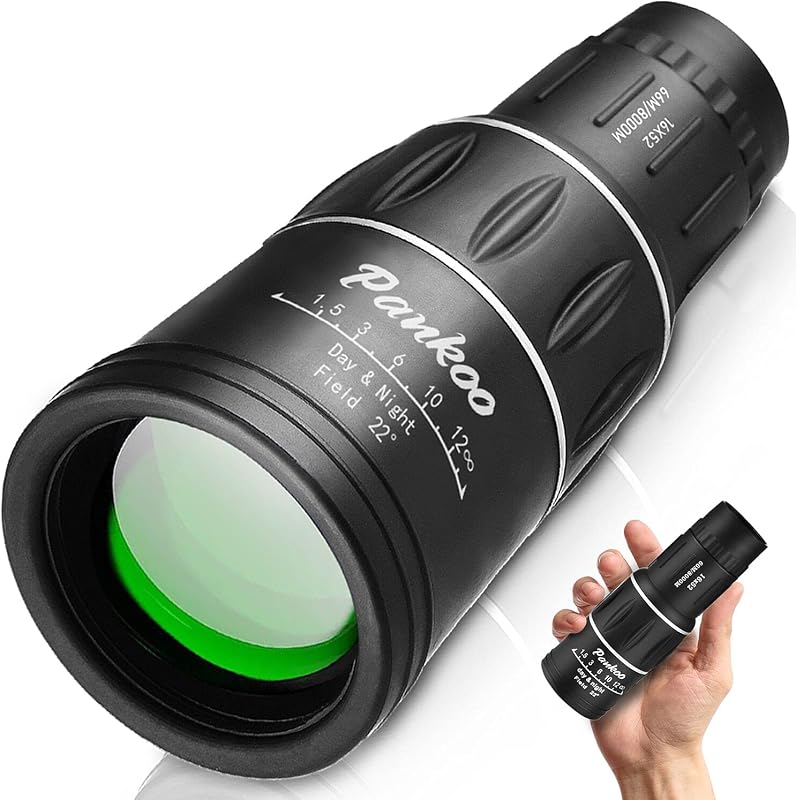
The Monocular Telescope High Power 16X52 provides a more moderate 16x magnification paired with a 52mm front element. This combination yields a slightly wider exit pupil than a 25x system, making handheld shake less severe and low-light viewing slightly brighter. Featuring waterproof, fogproof, and shockproof construction with a hand strap, it represents a standard utilitarian alternative for hikers who prioritize modern grip ergonomics over vintage brass styling.
320 x 240 TISR 256
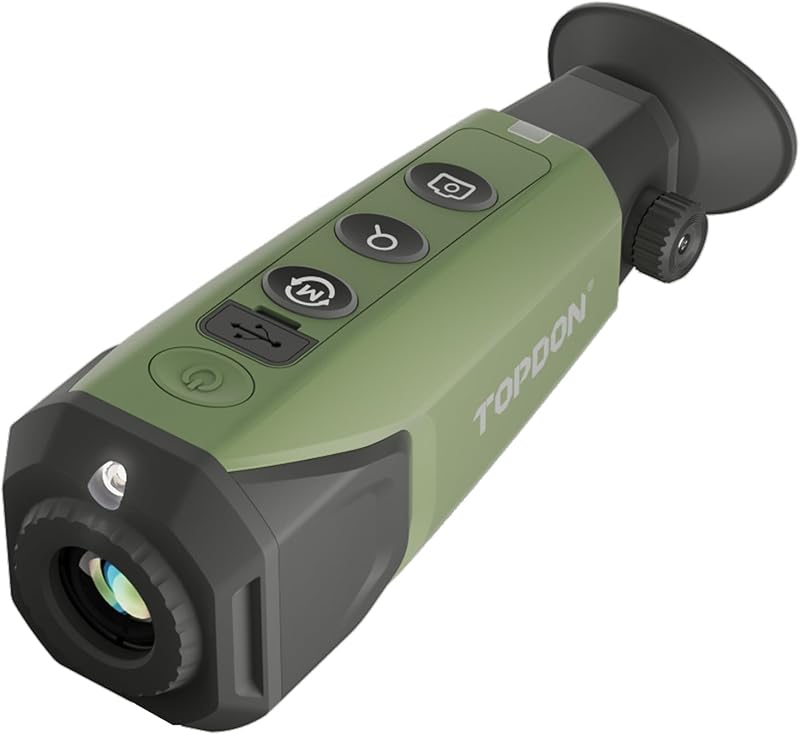
For outdoor adventurers venturing out after dark, optical glass alone cannot overcome total blackness. The 320 x 240 TISR 256 features an infrared thermal sensor with wireless connectivity and an IP67 rating. While the Gskyer relies strictly on visible light and manual focus, this thermal monocular is engineered specifically for night hunting and heat tracking, making it the appropriate choice for nocturnal surveillance where daylight optics are ineffective.
Mini 25X Monocular Telescope

The Mini 25X Monocular Telescope matches the 25x magnification level of the Gskyer while focusing on an ultra-compact, lightweight profile. Designed with green multilayer optical coatings and waterproof housing, it provides high magnification for travel, stargazing, and hiking. Shoppers who want 25x zoom without the heft of a 0.85 kg chassis will appreciate its streamlined footprint.
Final Verdict
The Gskyer 25×50 Monocular successfully steps outside the standard mold of modern outdoor optics by pairing a nautical spyglass theme with functional multi-coated glass. Its 50mm objective lens and BAK-4 prism work together to deliver bright, sharp images across open distances, provided viewing takes place under decent daylight. While the 25x magnification introduces natural handheld jitter, the integrated tripod compatibility ensures you can lock down steady views when inspecting stationary subjects.
Potential buyers must balance the optical realities of a 2mm exit pupil against the sheer enjoyment of operating a retro-styled scope. It is not an all-weather tactical scouting optic, nor is it built for deep-dusk surveillance. Instead, it serves as an engaging, capable companion for leisurely viewing, scenic lookouts, and unique gifting, offering real optical capability inside a memorable visual package.
FAQ
Can the Gskyer 25×50 Monocular be used without a tripod?
Yes, the optic features a handheld form factor that can be used independently. However, because 25x magnification amplifies minor hand movements, resting your hands against a solid surface or mounting the unit to a tripod provides a significantly clearer and more stable image.
Does this monocular perform well in low-light conditions?
The combination of a 50mm objective lens and 25x magnification creates a 2mm exit pupil. While the fully multi-coated BAK-4 prism maximizes light throughput, the small exit pupil makes the image noticeably darker at twilight compared to lower-magnification optics.
What does the leather cylinder bag include?
The listing specifies that the monocular comes with a premium leather cylinder bag designed to hold and protect the handheld telescope during transit and storage.
Is the Gskyer 25×50 Monocular waterproof?
Yes, the manufacturer listing states that the monocular is built with durable, waterproof construction suitable for outdoor activities including camping, hiking, and water sports.
How do you adjust the focus on this optic?
The monocular uses a manual focus system. Observers adjust the barrel mechanism by hand until distant subjects sharpen into clear view through the straight-through finderscope.
How these reviews are put together
- 556reviews published
- 2,271products with a buyer rating
- 2,222products with listed features
- 87brands covered
Every number, star and price on this site is read from the Amazon product listing. We do not run lab tests of our own, so scores here are out of 10, based on listed specifications and buyer feedback, not a verdict from a test bench. Prices change without notice; check the listing before buying.


