Nikon Prostaff P7 8×42 Binoculars: Clarity, Build, and Optics Breakdown
The Nikon Prostaff P7 8×42 binoculars represent the premier tier of Nikon’s Prostaff lineup, delivering sharp optical definition, robust light transmission, and weather-sealed dependability in an easy-handling roof prism format. Positioned for birders, trail hikers, and outdoor enthusiasts who require balanced handheld viewing without extreme mass, these nikon 8×42 roof prism binoculars prioritize optical efficiency…
9 min read
As Amazon Associates, we earn from qualifying purchases. This means we may receive a small commission at no extra cost to you if you click through and make a purchase.
The Nikon Prostaff P7 8×42 binoculars represent the premier tier of Nikon’s Prostaff lineup, delivering sharp optical definition, robust light transmission, and weather-sealed dependability in an easy-handling roof prism format. Positioned for birders, trail hikers, and outdoor enthusiasts who require balanced handheld viewing without extreme mass, these nikon 8×42 roof prism binoculars prioritize optical efficiency through phase-correction coatings and dielectric mirror elements. The one-line verdict is that this optic provides an exceptional balance of wide-angle clarity, natural color balance, and rugged weatherproofing for demanding nature observation.
This optic directly serves wildlife trackers, nature watchers, and sports viewers who need consistent optical clarity during changing ambient conditions and low-light transitions. Its steady eight-times magnification and wide view make scanning dense brush, canopy foliage, and open skies straightforward. Conversely, ultralight backpackers seeking an ultra-compact pocket set or long-range target observers demanding high-power reach over extreme distances should look elsewhere, as the full-size 42 millimeter chassis prioritizes light collection over packable micro dimensions.
Optical Clarity and Prism Engineering
At the center of the optical system is Nikon’s specialized roof prism architecture, which integrates both phase-correction coatings and dielectric high-reflective multilayer prism coatings. In standard roof prisms, light waves reflecting off prism surfaces can experience phase shifting, which degrades fine contrast and lowers resolution. The phase-correction layer applied to these prisms realigns the light waves, maintaining sharp edge definition and micro-contrast across the visual plane. This optical treatment ensures that fine textures, such as plumage patterns or textured tree bark, remain distinctly separated rather than muddying together.
The dielectric high-reflective coating provides an equally critical performance advantage by maximizing light throughput across the visible light spectrum. Rather than using conventional metallic mirror coatings that absorb a percentage of inbound light, dielectric coatings reflect nearly all wavelengths evenly. This results in vivid color fidelity and true-to-life white balance without an artificial warm or cool tint. Outdoor enthusiasts evaluating the nikon p3 8×42 against this optic will note that the inclusion of dielectric coatings forms the core technical distinction in the nikon prostaff p7 vs p3 comparison, directly improving overall image brilliance.
Nikon pairs this prism array with fully multicoated lenses, meaning every air-to-glass surface receives multiple anti-reflective layers. This setup suppresses stray reflections, internal flare, and ghosting when viewing subjects near backlit horizons or reflective water surfaces. Additionally, the outer surfaces of both the objective lenses and eyepieces feature oil- and water-repellent coatings. Smudges from fingertips, facial oils, raindrops, and moisture bead up and wipe clean without leaving sticky residue that could otherwise obscure resolution during critical observation moments.
Low-Light Performance and Brightness Transmission
Low-light capability represents one of the strongest operational assets of this optical configuration. With an 8x magnification paired with 42 millimeter objective lenses, the optic produces an exit pupil diameter of 5.3 millimeters alongside a relative brightness rating of 28.1. When human pupils dilate in dim settings, an exit pupil larger than 5 millimeters ensures that the user’s eyes receive all available light gathered by the objective bells. Consequently, the nikon prostaff p7 low light performance allows observers to continue tracking wildlife during dawn, dusk, and beneath dense forest canopies when smaller pocket optics lose clarity.
The 42 millimeter front elements collect substantially more ambient light than compact 25 millimeter or 32 millimeter designs. When viewing into shadowed brush lines at sunset, this extra light gathering power enables users to distinguish animal outlines and subtle movement that would otherwise blend into dark backgrounds. While competitors in this category like the vortex diamondback hd 8×42 also employ 42 millimeter front objectives, the Prostaff P7 uses its specialized dielectric prism mirrors to ensure that the gathered light reaches the eye with minimal transmission loss.
Because the optical glass maintains high contrast under low illumination, chromatic fringing along high-contrast boundaries remains well controlled. When looking at tree limbs silhouetted against a fading dusk sky, the optic delivers clean margins without excessive purple or yellow halos. This reliable low-light throughput ensures prolonged observation sessions during peak wildlife feeding hours without inducing severe eye strain from struggling to resolve dim subjects.
Field of View and Tracking Dynamics
Tracking fast-moving subjects requires a wide viewing window, and the nikon prostaff p7 field of view measures 377 feet. Coupled with an apparent angle of view of 53.4 degrees, this expansive sightline allows viewers to scan expansive terrain quickly. Whether scanning open wetlands for rising waterfowl or tracking raptors sweeping across ridgelines, users can keep erratic movers within the optical frame without constantly repositioning the chassis.
These optical characteristics make the nikon prostaff p7 for bird watching an exceptionally capable companion. Active songbirds flitting through thick branches present a tracking challenge for narrow-view binoculars, but the broad visual perspective here provides sufficient spatial context to reacquire small birds instantly when they hop between perches. Furthermore, the moderate eight-times magnification keeps handheld jitter minimal, allowing observers to hold steady views without the micro-shake often experienced with ten-power or twelve-power alternatives.
For users deciding between magnification steps, such as choosing between this optic and the nikon prostaff p7 10×42, the 8x format delivers a noticeably wider field of view and a larger exit pupil. The wider picture window reduces the need for erratic panning across the landscape, which reduces visual fatigue during multi-hour viewing excursions in open country or dense woodlands alike.
Chassis Durability, Weatherproofing, and Handling Ergonomics
Field optics must endure harsh handling, fluctuating temperatures, and sudden storms. The Prostaff P7 employs a structural body molded from fiberglass-reinforced polycarbonate resin. This material choice provides solid structural rigidity and resistance to impact while keeping overall carry weight down compared to traditional metal chassis designs. The exterior is wrapped in a dark green, shock-resistant rubber armor that cushions internal prism clusters against minor drops while providing a tactile, non-slip grip even when wet or operated with gloved hands.
The mechanical control interface features a specialized nikon prostaff p7 locking diopter ring located beneath the right eyepiece. Unlike standard friction-fit diopter rings that easily shift when rubbing against jackets or binocular harnesses, this mechanism locks securely into place once adjusted to match individual eye strength. The central focus wheel operates smoothly with manual focus precision, allowing rapid transitions from close-range viewing to infinite horizon vistas with minimal finger travel.
Eyeglass wearers benefit directly from the generous 20.2 millimeter eye relief and multi-position turn-and-slide eyecups. Users can adjust the eyecups down to maintain a complete, black-out-free picture while wearing sunglasses or corrective lenses, or extend them fully outward to position bare eyes at the optimal optical distance. Environmental reliability is backed by complete waterproof and fogproof engineering, preventing internal moisture condensation during drastic temperature swings. Additionally, standard tripod mount threading on the front hinge allows users to attach an adapter for rock-solid stability during extended stationery viewing.
Nikon Prostaff P7 8×42 Pros and Cons
Pros
- Dielectric high-reflective multilayer prism coatings
- Phase-correction coated roof prisms for crisp definition
- Generous 20.2 mm eye relief for glasses
- Locking diopter ring prevents accidental adjustment shifts
- Oil and water repellent protective lens coatings
- Waterproof and fogproof rubber-armored chassis
Cons
- Full-size 42mm chassis bulkier than pocket travel binoculars
- 8x magnification limits extreme long-range target magnification
- Manual dual-barrel focus requires active hand adjustment
Check Nikon Prostaff P7 8×42 on Amazon
Who Should Buy the Nikon Prostaff P7 8×42
Buy It If
- You need a dedicated optic for bird watching, wildlife viewing, and hunting where wide-angle tracking and low-light dawn scanning are essential.
- You wear eyeglasses or sunglasses and require long eye relief with fully adjustable turn-and-slide eyecups to eliminate edge vignetting.
- You frequently hike in damp, rainy, or dusty conditions and demand certified waterproof, fogproof construction with oil-repellent lens surfaces.
- You prefer a locking diopter mechanism that permanently locks your visual correction in place during rugged movement.
Skip It If
- You require an ultra-compact pocket pair for casual travel, concerts, or ultralight pack loads where full-size 42 millimeter barrels are too bulky.
- You need specialized high magnification beyond 8x for extreme long-distance shorebird identification or precision rifle target spotting.
- You prefer a high-magnification variable zoom system rather than a fixed wide-angle eight-times magnification profile.
Nikon Prostaff P7 8×42 Alternatives Worth a Look
Before making a final purchasing choice, comparing the flagship Prostaff against distinct alternative optical configurations helps clarify which format best fits your specific observation goals.
High Powered Occer 12×25 Binoculars

The High Powered Occer 12×25 compact binoculars emphasize extreme travel portability over full-size light gathering. Featuring 12x magnification alongside compact 25 millimeter objectives, this model is tailored for users who want a pocket-friendly optic for cruise ships, sightseeing, concerts, and casual daytime hiking. Observers who value minimal pack volume over low-light twilight performance will prefer this ultra-portable setup.
20×50 High Powered Binoculars

The 20×50 High Powered Binoculars step up to a substantial 20x magnification coupled with massive 50 millimeter front objectives. Designed for long-range surveillance, hunting across wide valleys, and casual stargazing, this optic delivers extensive reach across vast distances. Buyers focused on distant stationary viewing rather than wide-angle bird tracking will find this high-magnification alternative better aligned with their needs.
Lightweight & Compact for Birders Kowa BD III-XD 10x42mm
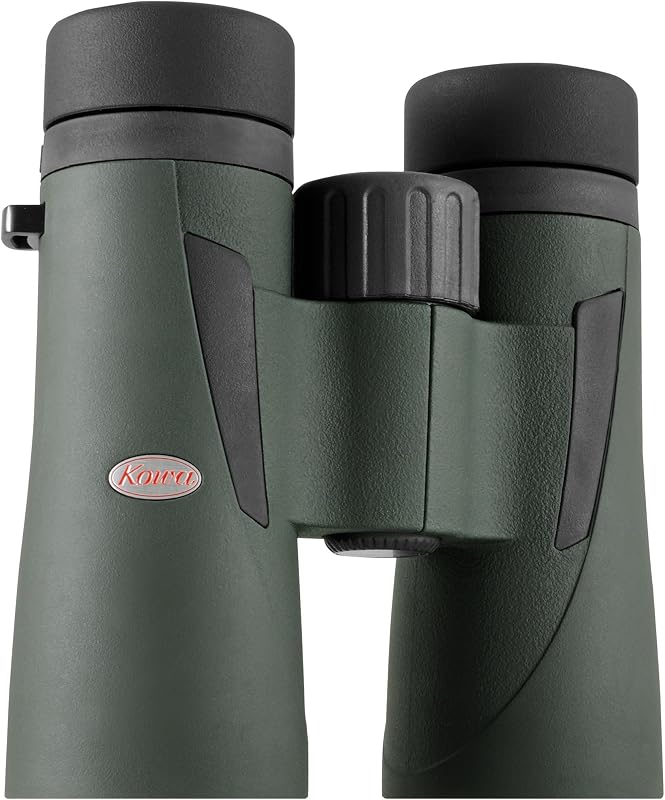
The Lightweight & Compact for Birders Kowa BD III-XD 10x42mm wide-angle binoculars provide 10x magnification paired with specialized fluorite-rich XD lenses. Birders who require tighter close-up detail on distant perches and premium chromatic aberration control will appreciate the extra reach and optical glass refinement provided by this wide-angle alternative.
Final Verdict
Evaluating this optic for outdoor enthusiasts leaves no doubt regarding its all-around field competence. In answering whether the optic delivers real practical value, this nikon prostaff p7 8×42 review confirms that the integration of dielectric prism coatings, phase correction, and oil-repellent glass elevates the viewing experience beyond standard entry-level glass. It renders scenes with vibrant color fidelity, remarkable edge clarity, and impressive brightness during the most challenging hours of the day.
Combined with its fiberglass-reinforced polycarbonate chassis, full weatherproofing, and secure locking diopter, the optic withstands rigorous outdoor use without unnecessary mechanical failure. For hikers, wildlife trackers, and nature observers seeking dependable, immersive visual performance without burdensome mass, this model stands as a well-engineered centerpiece for outdoor observation.
FAQ
What are the primary Nikon Prostaff P7 8×42 specs?
The official nikon prostaff p7 8×42 specs include an 8x magnification, 42 millimeter objective lens diameter, a 377-foot field of view, an apparent angle of view of 53.4 degrees, 20.2 millimeters of eye relief, an exit pupil of 5.3 millimeters, and a relative brightness index of 28.1. The optic utilizes a roof prism system, fully multicoated lenses, and an environmentally sealed chassis.
How does the Nikon Prostaff P7 locking diopter function?
The nikon prostaff p7 locking diopter is integrated into the right-hand eyepiece ring. To calibrate, you pull or unlock the ring, rotate it to balance the visual focus for your right eye against the center focus wheel, and push it back into the locked position. This prevents the adjustment ring from accidentally spinning when brushing against clothing or gear.
Is the Nikon Prostaff P7 8×42 suitable for eyeglass wearers?
Yes, the optic provides 20.2 millimeters of eye relief, which is generous enough to accommodate prescription eyeglasses or sunglasses. Users can twist the multi-click turn-and-slide eyecups down to bring their eyes to the correct focal distance, ensuring a complete, unobstructed view without peripheral blackout.
How does the Nikon Prostaff P7 handle wet or stormy conditions?
The optic is fully waterproof and fogproof, protecting internal optical prisms and lens elements from water intrusion and internal moisture fogging during rapid temperature changes. Additionally, the outer lens elements are treated with oil- and water-repellent coatings that shed water droplets and wipe clean easily in the field.
Can the Nikon Prostaff P7 8×42 binoculars be mounted to a tripod?
Yes, the chassis features standard tripod mount compatibility. Users can remove the central front cap between the objective barrels to expose threaded mounting sockets, allowing connection to standard binocular tripod adapters for extended stationary glassing sessions.
How these reviews are put together
- 540reviews published
- 2,271products with a buyer rating
- 2,222products with listed features
- 87brands covered
Every number, star and price on this site is read from the Amazon product listing. We do not run lab tests of our own, so scores here are out of 10, based on listed specifications and buyer feedback, not a verdict from a test bench. Prices change without notice; check the listing before buying.


