MSI RTX 5080 Vanguard SOC Analysis: Built for Extreme 4K Gaming
The MSI RTX 5080 Vanguard SOC arrives as an unapologetic, high-performance desktop graphics card built upon NVIDIA’s Blackwell architecture, combining 10,752 CUDA cores with next-generation GDDR7 memory. Tuned straight from the factory with a 2,730 MHz boost clock in Gaming Mode and supported by an advanced thermal assembly, this launch edition model is engineered to…
By Rachel Ford
9 min read
As Amazon Associates, we earn from qualifying purchases. This means we may receive a small commission at no extra cost to you if you click through and make a purchase.
The MSI RTX 5080 Vanguard SOC arrives as an unapologetic, high-performance desktop graphics card built upon NVIDIA’s Blackwell architecture, combining 10,752 CUDA cores with next-generation GDDR7 memory. Tuned straight from the factory with a 2,730 MHz boost clock in Gaming Mode and supported by an advanced thermal assembly, this launch edition model is engineered to handle demanding modern titles at ultra-high resolutions without thermal throttling. In short, it is a massive, whisper-quiet computing powerhouse designed to conquer extreme 4K gaming through sheer engineering muscle.
This flagship card is tailored specifically for enthusiast PC builders, competitive high-refresh-rate gamers, and digital creators who maintain high-airflow full-tower cases and high-wattage power supplies. Users stepping up to cutting-edge 4K monitors or ultra-wide multi-panel configurations will find its display engine and memory bandwidth thoroughly capable. Conversely, anyone planning a small-form-factor build, running a legacy compact mid-tower, or operating a power supply rated below 850 watts will find this card entirely too large and demanding for their existing setup.
MSI 5080 Vanguard Gaming Performance and Core Architecture
At the center of the MSI RTX 5080 Vanguard SOC is NVIDIA’s Blackwell graphics processor, packing 10,752 CUDA cores to deliver elite rendering capabilities across modern gaming engines. MSI pushes the core beyond reference baselines by providing a factory-applied boost clock of 2,730 MHz out of the box in Gaming Mode, which can be further elevated to 2,745 MHz Extreme Performance through the proprietary MSI Center software suite. This aggressive clocking profile provides sustained throughput across heavy compute workloads, rasterization, and intensive ray-traced lighting pipelines.
Memory throughput plays an equally critical role in the msi 5080 vanguard specs. The card incorporates 16GB of next-generation GDDR7 memory operating on a 256-bit bus with an extraordinary 30 Gbps memory clock speed. This massive jump in bandwidth ensures that high-resolution textures, complex shadow maps, and demanding game assets stream directly into the GPU without stalling the compute pipelines. While portable desktop replacements like the msi vector 18 hx ai rtx 5080 showcase what high-end Blackwell silicon can achieve in tight mobile spaces, the desktop Vanguard leverages its full unconstrained board power to deliver raw, consistent frame pacing.
When assessing overall msi 5080 vanguard gaming performance, the card easily handles maximum visual presets at native 3840×2160 resolution. The inclusion of modern display standards ensures future-proof compatibility with cutting-edge displays, supporting resolutions up to 7680×4320 across as many as four simultaneous screens. For enthusiasts seeking uncompromising immersion, the processing density on display here translates to seamless frame delivery across the most visually punishing titles currently available.
Hyper Frozr Cooling RTX 5080 and Thermal Management
Managing the thermal output of a 360-watt graphics card requires serious thermal dissipation hardware, and MSI addresses this with its custom Hyper Frozr cooling rtx 5080 design. The foundation of this cooling system is an advanced vapor chamber that makes direct contact with both the GPU silicon and the surrounding GDDR7 memory modules. By rapidly vaporizing and condensing internal working fluids, this vapor chamber spreads concentrated heat across a wide surface area far more rapidly than conventional solid copper baseplates.
From the vapor chamber, thermal energy transfers directly into MSI’s specialized Core Pipes. These square-shaped heat pipes are precision-machined to maximize contact area with the baseplate, channeling heat into a sprawling aluminum fin array. Working in tandem with designs seen across other premium custom cards such as the msi gaming trio 5080, the Vanguard architecture ensures heat is systematically dispersed across the entire length of its massive heatsink without allowing hot spots to form over the VRAM or voltage regulation modules.
Airflow generation is driven by MSI’s proprietary STORMFORCE fan technology. Featuring a distinct seven-blade geometry with claw texturing and a circular arc profile, these fans are specifically optimized to generate maximum static pressure and directional airflow through the dense radiator fins while keeping acoustic output whisper-quiet. When evaluating msi 5080 vanguard thermals during extended gaming sessions, the combination of the vapor chamber, square core pipes, and specialized fans ensures the GPU maintains peak boost clocks without dropping frequencies due to thermal saturation.
Card Dimensions and Chassis Clearance Demands
Prospective buyers must pay close attention to the msi 5080 vanguard dimensions before committing to an upgrade. Measuring an imposing 14.0 inches in length, 6.0 inches in width, and 2.6 inches in height (357 x 151 x 66 mm), this card is one of the largest graphics cards on the market. It occupies more than three expansion slots in thickness and extends well past the edge of standard ATX motherboards, making chassis clearance an essential consideration.
Installing a card of this size into prebuilt cases or compact mid-towers—such as those attempting a GPU upgrade inside an msi aegis zs2 enclosure—can present significant physical clearance hurdles. Builders must verify clearance not only against front-mounted intake fans and liquid-cooling radiators, but also against the side panel, as the 6-inch width demands ample room for the power connector without inducing severe cable bending.
Because a cooling assembly of this magnitude carries substantial mass, mechanical stress on the PCIe slot is a genuine concern. MSI mitigates the risk of long-term motherboard warping by bundling a dedicated VGA support stay directly in the box. Utilizing this reinforced bracket is strongly advised, as it supports the trailing edge of the card and guarantees mechanical rigidity inside the chassis during daily operation and transport.
MSI 5080 Vanguard Power Consumption and System Requirements
Peak performance requires substantial electrical delivery, and the msi 5080 vanguard power consumption is rated at 360 watts under full load. To safely handle transient power demands and guarantee operational stability across demanding multi-threaded workloads, MSI recommends a system power supply rated for at least 850 watts. Enthusiasts pairing this graphics card with unlocked, high-draw flagship desktop processors may even consider higher-capacity power units to retain comfortable operational headroom.
To feed this board power, the card features the modern high-density 16-pin power interface alongside PCIe 5.0 motherboard compatibility. For users operating dependable power supplies that do not feature native 16-pin power cables, the package includes an 8-pin x3 to 16-pin conversion connector. This adapter ensures three independent 8-pin PCIe cables from your power supply feed the card safely, preventing cable overheating and ensuring consistent voltage regulation under peak load states.
RTX 5080 Vanguard Launch Edition Features and Packaging
As part of the rtx 5080 vanguard launch edition release, MSI includes specialized accessories that distinguish this version from bare-bones graphics packages. Aside from the heavy-duty VGA support stay and the 3x 8-pin power adapter, each launch package contains a collectible blind box housing one of ten limited-edition Lucky-kun dragon mascot figures, including an elusive Secret Edition variant. This collectible extra gives early adopters an exclusive piece of enthusiast memorabilia to display alongside their high-end rig.
Display connectivity on the Vanguard SOC represents the latest in visual interface technology. The rear I/O plate is equipped with three DisplayPort 2.1b connections and a single HDMI 2.1b port, supporting up to four displays simultaneously. These updated 2.1b connections provide the immense bandwidth required to drive ultra-high-refresh 4K gaming panels and 8K displays without needing severe chroma subsampling or visual compression, catering directly to high-end simulation rigs and multi-monitor productivity workstations.
MSI RTX 5080 Vanguard SOC Pros and Cons
Pros
- Factory boost clock reaching up to 2,745 MHz
- Blazing 16GB GDDR7 memory running at 30 Gbps
- Advanced vapor chamber with Hyper Frozr cooling
- Triple DisplayPort 2.1b and HDMI 2.1b connectivity
- Bundled anti-sag VGA support stay and power adapter
Cons
- Massive 14-inch footprint demands a spacious chassis
- Requires high-capacity 850-watt power supply
- Substantial triple-slot thickness limits PCIe expansion
Check MSI RTX 5080 Vanguard SOC on Amazon
Who Should Buy the MSI RTX 5080 Vanguard SOC
Buy It If
- You demand uncompromising 4K gaming performance and want a factory-overclocked boost clock of 2,730 MHz right out of the box.
- Your desktop chassis features more than 360 mm of GPU length clearance and at least three dedicated expansion slots.
- You value whisper-quiet acoustics achieved through an advanced vapor chamber and specialized STORMFORCE fans.
- Your system is anchored by a high-quality 850-watt or greater power supply with triple 8-pin PCIe connections.
Skip It If
- You are building a compact small-form-factor or mini-ITX system that cannot accommodate a 14-inch, three-slot graphics card.
- Your current power supply is rated below 850 watts and lacks the necessary cabling infrastructure for a 360-watt board.
- You play predominantly at 1080p where this level of Blackwell graphics silicon and GDDR7 memory bandwidth will remain largely unutilized.
MSI RTX 5080 Vanguard SOC Alternatives Worth a Look
While the MSI Vanguard SOC represents a peak implementation of custom Blackwell cooling, builders with specific size restrictions or differing architectural preferences should consider these alternative options.
ASUS SFF-Ready Prime RTX 5070 OC

For builders constrained by chassis space, the ASUS SFF-Ready Prime NVIDIA GeForce offers a more compact alternative. Built as a 2.5-slot card utilizing Axial-tech fans, 12GB of GDDR7 memory, and a dual BIOS feature, this card fits comfortably into small-form-factor cases where the massive 14-inch Vanguard physically cannot go.
GIGABYTE Radeon RX 9070 XT Gaming OC
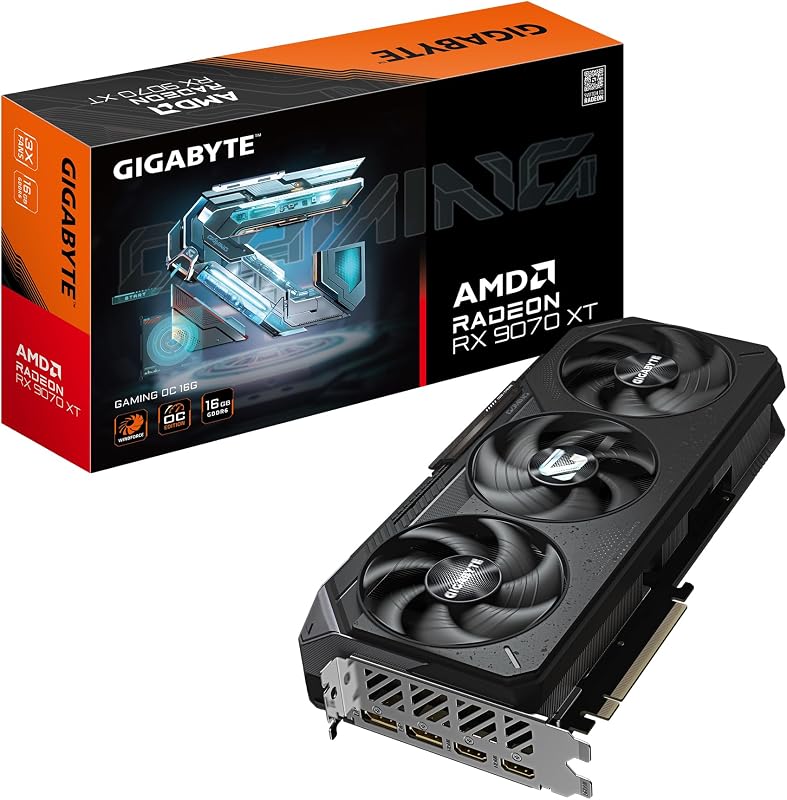
Enthusiasts shopping across GPU manufacturers will find a compelling option in the GIGABYTE Radeon RX 9070 XT. Equipped with 16GB of GDDR6 memory on a PCIe 5.0 interface, this card delivers a robust triple-fan cooling design for gamers who prefer AMD’s graphics ecosystem for their high-resolution gaming rigs.
ASRock Radeon RX 9070 Challenger

Another alternative in the 16GB category is the ASRock Radeon RX 9070 Challenger. Featuring a 2,520 MHz boost clock, 16GB of GDDR6 across a 256-bit bus, an integrated LED indicator, and 0dB silent triple fans, it serves buyers looking for a straightforward, capable graphics solution without extreme physical bulk.
Final Verdict
When considering whether the msi rtx 5080 vanguard review points to a must-have component, the conclusion depends directly on your chassis space and power delivery. The Vanguard SOC makes zero compromises in delivering flagship-tier performance, backing its 10,752 CUDA cores and 30 Gbps GDDR7 memory with a remarkable thermal architecture. The synergy between its advanced vapor chamber, square-profile Core Pipes, and claw-textured STORMFORCE fans ensures whisper-quiet acoustic profiles and exceptionally low operating temperatures under heavy rendering loads.
Ultimately, is msi 5080 vanguard worth it for your setup? If your PC case provides the requisite 14 inches of clearance, your power supply meets the 850-watt threshold, and your goal is pristine, high-framerate 4K gameplay, this launch edition card represents an exceptional engineering achievement. Its physical size and 360-watt power demand are significant trade-offs, but for the dedicated enthusiast building a full-sized gaming rig, the performance and cooling headroom speak for themselves.
FAQ
What power supply is recommended for the MSI RTX 5080 Vanguard SOC?
MSI recommends a minimum 850-watt power supply to handle the card’s 360-watt power consumption alongside high-end desktop components. The package includes an 8-pin x3 to 16-pin adapter to ensure compatibility with standard modular power cables.
What are the exact dimensions of the MSI RTX 5080 Vanguard SOC?
The card measures 14.0 x 6.0 x 2.6 inches (357 x 151 x 66 mm). Due to its length and triple-slot thickness, you must ensure your PC case offers at least 360 mm of clear horizontal space and adequate clearance from the side glass panel.
What type of video memory is installed on the MSI 5080 Vanguard?
The card is equipped with 16 GB of high-speed GDDR7 memory on a 256-bit interface, delivering an ultra-fast memory clock speed of 30 Gbps for high-resolution texture streaming and compute tasks.
What display outputs are available on this graphics card?
The card features three DisplayPort 2.1b ports and one HDMI 2.1b port, supporting up to four simultaneous displays and a maximum digital resolution of 7680 x 4320.
What extras are included in the Vanguard Launch Edition box?
The Launch Edition package includes a specialized VGA support stay to prevent GPU sag, an 8-pin x3 to 16-pin power conversion cable, a quick start guide, and a collectible blind box containing one of ten limited-edition Lucky-kun figures.
How these reviews are put together
- 1,107reviews published
- 2,271products with a buyer rating
- 2,222products with listed features
- 87brands covered
Every number, star and price on this site is read from the Amazon product listing. We do not run lab tests of our own, so scores here are out of 10, based on listed specifications and buyer feedback, not a verdict from a test bench. Prices change without notice; check the listing before buying.


