ASUS TUF Gaming GeForce RTX 5070 Ti: Built for Extreme Enthusiast Rigs
The ASUS TUF RTX 5070 Ti delivers an unapologetically overbuilt graphics solution engineered to harness NVIDIA Blackwell architecture for high-refresh rendering. In this asus tuf rtx 5070 ti review, the hardware demonstrates why enthusiast-grade engineering matters when pushing modern visual boundaries. Operating as a heavy-duty blackwell dlss 4 graphics card, it pairs 16GB of rapid…
By Rachel Ford
9 min read
As Amazon Associates, we earn from qualifying purchases. This means we may receive a small commission at no extra cost to you if you click through and make a purchase.
The ASUS TUF RTX 5070 Ti delivers an unapologetically overbuilt graphics solution engineered to harness NVIDIA Blackwell architecture for high-refresh rendering. In this asus tuf rtx 5070 ti review, the hardware demonstrates why enthusiast-grade engineering matters when pushing modern visual boundaries. Operating as a heavy-duty blackwell dlss 4 graphics card, it pairs 16GB of rapid GDDR7 memory with a reinforced physical layout designed to resist thermal stress and mechanical sag during grueling desktop workloads. The verdict is clear: this graphics card provides tremendous thermal headroom, unflinching physical durability, and the high-fidelity power necessary to drive modern enthusiast titles smoothly.
This card is designed primarily for dedicated PC gamers, creative professionals, and hardware enthusiasts seeking an uncompromising engine for rtx 5070 ti for 4k gaming across expansive display setups. Buyers seeking sustained boost frequencies in high-stress scenarios will appreciate the over-engineered cooling fins and specialized phase-change interface. However, builders assembling compact small-form-factor builds or those hoping to reuse an older, lower-wattage power delivery platform should look elsewhere, as its massive frame and stringent 16-pin power requirements demand a roomy chassis and modern electrical infrastructure.
Blackwell Architecture and High-Resolution Gaming Power
Evaluating the 5070 ti prime specs reveals a core graphics processing engine built to handle demanding rasterization, ray tracing, and AI-accelerated workflows. Utilizing NVIDIA Blackwell architecture, the card incorporates 16GB of cutting-edge GDDR7 video memory operating across a PCI-Express 5.0 interface. The graphics processor operates with a baseline boost frequency of 2588 MHz in default mode, while activating the software-configured OC mode elevates the engine clock to 2610 MHz. This combination of elevated clock frequencies and GDDR7 throughput ensures the GPU maintains steady performance while processing complex geometry, high-resolution texture packages, and heavy shader computations.
As an advanced blackwell dlss 4 graphics card, the architecture brings neural rendering and temporal reconstruction pipelines directly into demanding titles. These hardware optimizations enable the ASUS TUF RTX 5070 Ti to generate fluid frame rates even when rendering complex lighting simulations at high resolutions. Gamers who compare this release against alternative designs, such as the asus prime 5070ti, will observe that the TUF variant prioritizes stable clock retention under sustained thermal stress. The 16GB memory buffer prevents bottlenecking in memory-heavy scenes, ensuring responsive execution across ultra-wide monitors and high-refresh gaming displays.
Thermal Engineering and Acoustic Dissipation
Peak performance requires aggressive heat management, and the rtx 5070 ti cooling performance built into this model represents one of its most compelling attributes. ASUS configured the card with a gargantuan 3.125-slot heatsink packed with a massive aluminum fin array. This thick layout expands the total heat dissipation surface area well beyond ordinary dual-slot or standard triple-slot designs. Heat generated by the Blackwell silicon transfers efficiently across the fin stack, allowing the trio of Axial-tech fans to cycle fresh air through the chassis without spinning at excessive, distracting speeds.
A standout technical innovation on this graphics card is the inclusion of a specialized phase-change GPU thermal pad. Unlike conventional thermal paste compounds that can pump out or degrade over extended months of intense thermal cycling, the phase-change pad maintains consistent thermal contact across the silicon die. When operating temperatures rise during prolonged gaming sessions, the phase-change interface transitions to maximize microscopic contact area between the GPU die and the heatsink baseplate. When exploring custom PC hardware alongside alternative partner boards like the msi rtx 5070 ti, this specialized thermal interface ensures sustained heat transfer efficiency over the entire lifespan of the graphics card.
Heavy-Duty Durability and Manufacturing Precision
The TUF series identity centers around rugged durability, and the asus tuf 5070 ti oc edition reinforces this heritage through industrial component choices. ASUS equips the card with military-grade components, including hardened capacitors and durable chokes engineered to withstand electrical fluctuations and continuous high-current loads. These components deliver rock-solid power delivery to the Blackwell graphics processor, keeping electrical noise low and extending overall hardware lifespan for high-performance desktop installations.
To combat common real-world failure points, the graphics card features a specialized protective PCB coating. This protective barrier seals the underlying circuit traces against environmental factors such as ambient moisture, dust accumulation, and stray debris that can cause electrical shorts inside high-airflow cases. The entire manufacturing process utilizes ASUS Auto-Extreme technology, an automated assembly system that solders all surface-mount components in a single pass. This automated manufacturing technique eliminates human assembly inconsistencies and reduces thermal strain on circuit components, resulting in higher long-term operational reliability.
Power Requirements, Installation, and Display Connectivity
Before adding this graphics card to your system, reviewing the rtx 5070 ti power supply requirements is essential. ASUS specifies a minimum 850W power supply unit to ensure stable voltage delivery under sudden transient electrical spikes. Furthermore, the graphics card requires a modern 16-pin 12V-2×6 (12VHPWR) power connector. Buyers must verify that their current power supply either features native 16-pin cabling or uses the appropriate manufacturer-approved adapters before attempting installation to ensure uninterrupted performance during heavy gaming.
Chassis physical dimensions represent another crucial planning consideration. With an overall length of 13.0 inches and a width of 5.5 inches, combined with a thick 3.125-slot profile, the card demands substantial clearance inside mid-tower and full-tower PC cases. Builders evaluating preconfigured gaming options, such as an ibuypower i7 14700f rtx 5070 gaming rig, understand the necessity of generous internal volume. You must verify that front radiators do not impede the 13-inch length, and check that adjacent PCIe slots remain clear to fit the 3.125-slot depth.
Display versatility is another major highlight, outfitting users with five native video output ports. The rear bracket houses three Native DisplayPort 2.1a ports and two Native HDMI 2.1b connections. This array of modern display standards allows users to power multi-monitor flight simulators, ultra-wide racing rigs, or high-refresh gaming displays simultaneously without external splitters. The ports support maximum digital resolutions up to 7680×4320 pixels, granting seamless access to cutting-edge visual displays.
System Tuning and Hardware Monitoring
Hardware capability is complemented by software control, and ASUS provides deep tuning capability through the GPU Tweak III utility. This software platform features an intuitive interface that allows users to monitor real-time core metrics, such as GPU clock speeds, memory frequencies, fan rotations, and system voltages. Enthusiasts who wish to switch between the default 2588 MHz boost mode and the elevated 2610 MHz OC mode can do so with a single click, unlocking extra clock frequency headroom whenever needed.
In addition to preset performance profiles, GPU Tweak III provides advanced thermal controls. Users can calibrate custom fan curves based on discrete temperature thresholds, ensuring the three Axial-tech fans remain quiet during low-load tasks and spool up smoothly under demanding gaming conditions. The software also provides on-screen display capabilities, allowing gamers to monitor active frame rates, temperature profiles, and hardware utilization metrics directly during gameplay without interrupting their session.
ASUS TUF RTX 5070 Ti Pros and Cons
Pros
- Rugged military-grade hardware construction
- Long-lasting phase-change GPU thermal pad
- Generous five native video outputs
- Protective PCB coating resists moisture
- Massive 3.125-slot Axial-tech cooling setup
Cons
- Requires 13 inches of chassis clearance
- Mandates minimum 850W power supply
- Exceeds standard three-slot bracket thickness
Check ASUS TUF RTX 5070 Ti on Amazon
Who Should Buy the ASUS TUF RTX 5070 Ti
Selecting the right graphics card requires balancing physical case dimensions, power supply compatibility, and overall gaming expectations. The ASUS TUF RTX 5070 Ti caters to specific enthusiast build scenarios while demanding careful hardware planning.
Buy It If
- You require maximum thermal headroom and durability backed by military-grade components and a phase-change thermal pad.
- You prioritize multi-monitor setups or high-end display connectivity using five native video outputs across DisplayPort 2.1a and HDMI 2.1b.
- You plan to play intensive modern titles at high resolutions using NVIDIA Blackwell architecture and DLSS 4 acceleration.
- Your desktop chassis offers ample clearance for a 13-inch, 3.125-slot graphics card paired with an 850W or higher power supply.
Skip It If
- You are assembling a small-form-factor or compact mini-ITX build that cannot accommodate a 13-inch length and 3.125-slot thickness.
- Your existing system features an older power supply under 850W that lacks modern 16-pin 12V-2×6 power cabling.
- You strictly play lightweight competitive esports titles where enthusiast-grade cooling and 16GB of GDDR7 memory are unnecessary.
ASUS TUF RTX 5070 Ti Alternatives Worth a Look
While the TUF model offers outstanding physical durability and thermal control, comparing alternative graphics hardware helps ensure you choose the best match for your specific gaming preferences and case layout. The competitive landscape includes strong offerings across differing architectures, as seen when assessing asus tuf rtx 5070 ti vs rx 9070 xt hardware options.
GIGABYTE Radeon RX 9070 XT
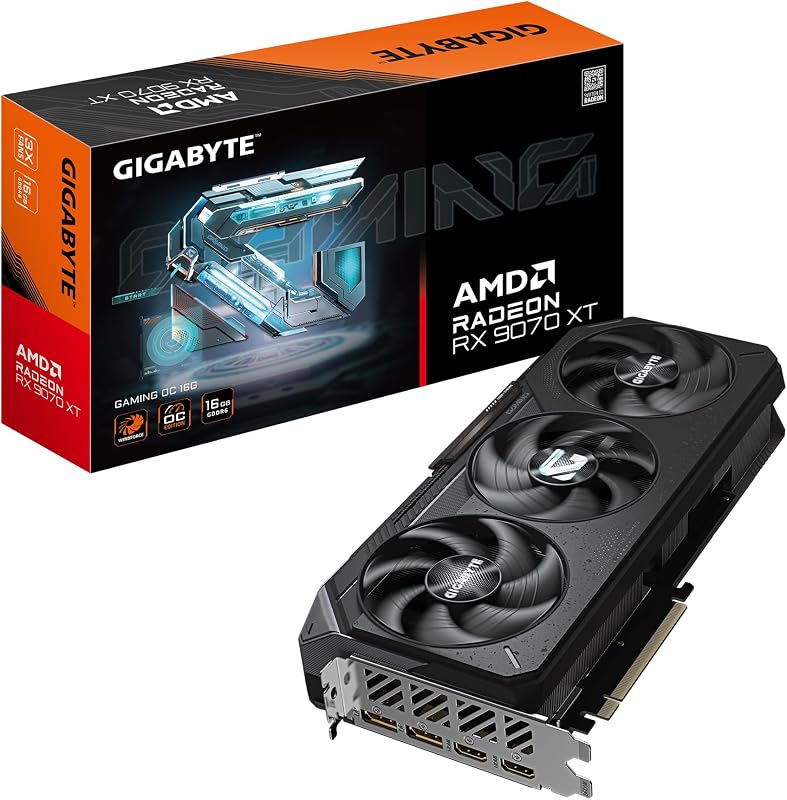
The GIGABYTE Radeon RX 9070 XT is a Gaming OC graphics card featuring 16GB of GDDR6 memory on a PCIe 5.0 interface. Gamers who prefer an AMD-based high-performance rendering solution with a dedicated factory-overclocked cooling design will find this card a compelling alternative to Blackwell-powered options.
ASRock Radeon RX 9070 Challenger

The ASRock Radeon RX 9070 Challenger incorporates AMD RDNA 4 architecture, a 2520MHz boost clock, 16GB GDDR6 memory across a 256-bit bus, and a PCIe 5.0 connection. Equipped with triple cooling fans, 0dB silent operation, and an integrated LED indicator, this model is a great match for users seeking quiet operation and solid RDNA 4 performance in high-refresh gaming rigs.
Final Verdict
When assessing whether is the rtx 5070 ti worth it, the ASUS TUF RTX 5070 Ti makes a powerful argument for enthusiasts who demand longevity, thermal stability, and high performance. By combining NVIDIA’s advanced Blackwell architecture and DLSS 4 support with a massive 3.125-slot heatsink, three Axial-tech fans, and a specialized phase-change thermal pad, this card eliminates thermal throttling and maintains elevated boost clocks even in marathon gaming sessions. The inclusion of military-grade components, Auto-Extreme automated manufacturing, and a protective PCB coating ensures this graphics card can endure the physical demands of high-end desktop gaming for years to come.
While the 13-inch physical footprint and 850W power supply requirement necessitate a spacious desktop case and a modern power delivery setup, the trade-offs are well worth it for the performance and durability delivered. With five native display outputs, robust GDDR7 memory bandwidth, and seamless tuning via GPU Tweak III, the ASUS TUF RTX 5070 Ti stands as a top-tier choice for serious PC builders who want zero compromises in high-resolution rendering and thermal engineering.
FAQ
What are the power supply requirements for the ASUS TUF RTX 5070 Ti?
The listing states that the card requires a minimum 850W power supply unit equipped with a 16-pin 12V-2×6 (12VHPWR) power connector. You must verify that your power supply meets these wattage and cabling specifications before purchasing.
Does the ASUS TUF RTX 5070 Ti support DisplayPort 2.1 and HDMI 2.1?
Yes, the graphics card provides five native video outputs, consisting of three Native DisplayPort 2.1a ports and two Native HDMI 2.1b ports, supporting digital display resolutions up to 7680×4320 pixels.
What is the advantage of the phase-change GPU thermal pad?
The phase-change GPU thermal pad provides superior thermal conductivity and longevity under heavy loads, outlasting traditional thermal paste which can dry out or degrade over repeated heating cycles.
How big is the ASUS TUF RTX 5070 Ti inside a PC chassis?
The graphics card measures 13.0 inches in length and 5.5 inches in width, and it features a thick 3.125-slot form factor. You must ensure your computer case has sufficient slot width and clearance length to house the card comfortably.
What clock speeds does the ASUS TUF 5070 Ti OC Edition deliver?
The card features a boost clock of 2588 MHz in default mode and reaches an elevated boost clock of 2610 MHz in OC mode, which can be configured through ASUS GPU Tweak III software.
How these reviews are put together
- 203reviews published
- 2,271products with a buyer rating
- 2,222products with listed features
- 87brands covered
Every number, star and price on this site is read from the Amazon product listing. We do not run lab tests of our own, so a score here is the average rating left by buyers, not a verdict from a test bench. Prices change without notice; check the listing before buying.


