MSI GeForce GTX 1080 Ti Duke Analysis: Built for Heavy Gaming
The MSI GTX 1080 Ti Duke is a dedicated desktop graphics card powered by NVIDIA GeForce GTX 1080 Ti silicon, engineered specifically to handle high-demand visual computing through an expansive 11GB GDDR5X memory buffer and a 352-bit interface. Designed around an oversized three-fan cooling array and a reinforced physical frame, this GPU delivers rock-solid, sustained…
By Rachel Ford
9 min read
As Amazon Associates, we earn from qualifying purchases. This means we may receive a small commission at no extra cost to you if you click through and make a purchase.
The MSI GTX 1080 Ti Duke is a dedicated desktop graphics card powered by NVIDIA GeForce GTX 1080 Ti silicon, engineered specifically to handle high-demand visual computing through an expansive 11GB GDDR5X memory buffer and a 352-bit interface. Designed around an oversized three-fan cooling array and a reinforced physical frame, this GPU delivers rock-solid, sustained frame rates for gamers who prioritize raw rasterization output across high-resolution displays. For desktop builders seeking an exceptionally stable, heavily cooled graphics component capable of chewing through demanding visual titles up to a maximum resolution of 3840×2160, this card stands as a testament to high-bandwidth engineering.
This heavy-duty graphics card suits enthusiast desktop gamers who want reliable, high-frame-rate performance at 2560×1440 and require massive VRAM capacity to load high-resolution texture packs without stutter. Shoppers stepping up from modern entry-level hardware like the msi geforce rtx 4060 will appreciate the wide memory bus and spacious frame buffer found on this board. However, builders working inside compact small-form-factor enclosures or those who specifically mandate modern hardware-accelerated ray tracing and newer neural upscaling technologies should look elsewhere, as this card requires substantial physical space and draws substantial power to run its high-clocked Pascal architecture.
TriFrozr Cooling Architecture and Thermal Headroom
Managing heat on a flagship-tier graphics processor demands serious engineering, and the proprietary msi gtx 1080 ti trifrozr cooling module is built explicitly to address that thermal load. The Duke relies on three full-sized cooling fans spread across an extensive aluminum fin stack that traverses the full 320 mm length of the card. By distributing airflow across three distinct zones, the card prevents hot spots from forming above the GPU die and the surrounding memory modules, keeping the 11GB of GDDR5X running within its intended operating margins during prolonged gaming sessions.
To eliminate acoustic distraction during non-gaming workloads, MSI integrates ZeroFrozr technology into the cooling firmware. When your PC is idling, rendering desktop web pages, or streaming multimedia, the fans shut down completely for absolute silent operation. Once thermal loads cross the activation threshold during intensive 3D rendering, the three fans spin up smoothly to dissipate heat away from the core. Many PC enthusiasts researching cooling setups cross-shop air designs against liquid-cooled alternatives like the msi corsair gtx 1080 ti configurations; the TriFrozr design delivers significant air-cooled thermal dissipation without the pump complexity, liquid permeation concerns, or radiator placement issues inherent to closed-loop liquid designs.
Thermal stability directly translates to consistent clock speeds over time. Because high-performance Pascal architecture relies on dynamic boost algorithms that automatically scale frequency downward as temperatures rise, maintaining consistent gtx 1080 ti 11gb thermal performance ensures the card holds its 1582 MHz boost clock without throttling. The continuous airflow across the thermal heatsink keeps power delivery components and GDDR5X modules cooled evenly, securing stable performance under long gameplay stretches.
Core Specifications and 1440p Gaming Performance
A technical evaluation of the msi gtx 1080 ti duke specs reveals why this hardware remains a relevant conversation among PC gaming enthusiasts. At its foundation lies the NVIDIA GP102 silicon featuring 3584 Stream Processors, a 1480 MHz base clock, and a factory-overclocked boost clock of 1582 MHz. Backed by 11GB of GDDR5X memory communicating through an exceptionally wide 352-bit bus clocked at 11016 MHz in OC mode, the card delivers massive memory bandwidth that prevents data bottlenecks during complex scene rendering.
When assessing real-world msi gtx 1080 ti gaming performance, this hardware shines brightest in high-refresh-rate environments. Utilizing the msi gtx 1080 ti for 1440p gaming provides a fluid, responsive experience across a vast spectrum of traditional rasterized titles. The substantial 11GB frame buffer allows players to push ultra-level texture settings, high-resolution shadow maps, and expansive draw distances without running into the memory capacity walls that restrict modern 8GB graphics cards. High-end laptop benchmarks, such as those found on machines like the msi vector 18, highlight just how critical dedicated cooling and wide memory interfaces are for sustained graphics performance.
Beyond standard 2560×1440 resolutions, the card natively supports a maximum display resolution of 3840×2160. While driving modern 4K titles at native resolution requires judicious graphics settings management, the raw computational throughput of the 3584 stream processors ensures stable frame pacing. The card handles dense geometric detail and heavy post-processing effects gracefully, delivering clean frame times that keep gameplay predictable and free from severe hitching.
Physical Build Quality and Anti-Bending Structure
High-end graphics hardware of this scale carries substantial physical weight, making structural integrity a top priority. A detailed GeForce GTX 1080 Ti Duke 11G OC review must emphasize the card’s physical execution: measuring 320 x 141 x 42 mm (12.6 inches in length), it is an enormous component. To combat the dreaded PCB sag that plagues large graphics cards over years of horizontal motherboard mounting, MSI incorporated a rugged anti-bending strip that links directly to the primary heatsink assembly.
This anti-bending strip acts as a rigid exoskeleton, creating a stiff structural spine that reinforces the tailor-made PCB. This custom-designed board features an optimized electrical layout intended to provide clean, stable power delivery even when the GPU core is operating under prolonged maximum boost states. The reinforced msi gtx 1080 ti build quality safeguards the solder joints beneath the GPU core and GDDR5X chips against thermal and mechanical stress over extended lifespans.
Display connectivity is equally robust, accommodating both modern digital monitors and legacy display equipment. The rear I/O plate features two DisplayPort outputs, two HDMI ports, and a dual-link DVI-D (DL-DVI-D) port. Providing dual HDMI ports makes the Duke exceptionally friendly for desktop VR enthusiasts who want to leave a virtual reality headset connected without unplugging their primary HDMI display or television.
Architectural Longevity and Enthusiast Evaluation
When asking whether the msi gtx 1080 ti is worth it for an enthusiast desktop, one must balance architectural capabilities against raw horsepower. Modern gaming laptops, including mobile rigs like the msi cyborg a15, often emphasize newer software features, but the Duke answers with sheer physical bandwidth and hardware scale. The 352-bit bus width provides an enduring hardware advantage over narrower memory configurations, allowing large assets to flow without pipeline congestion.
The trade-offs, however, center on modern feature evolution. While the card provides full DirectX 12 compatibility, it lacks dedicated hardware units for real-time ray tracing acceleration and AI-driven frame generation. Gamers whose libraries focus primarily on traditional rasterized competitive shooters, simulation titles, and sprawling open-world games will find that the raw compute power and 11GB buffer handle standard rendering pipelines with ease, making it a viable workhorse for pure raster workloads.
MSI GTX 1080 Ti Duke Pros and Cons
Pros
- Generous 11GB GDDR5X memory on wide 352-bit bus
- TriFrozr triple-fan cooling with ZeroFrozr silent mode
- Rugged anti-bending strip connected to heatsink
- Tailor-made PCB engineered for high performance
- Flexible outputs with dual HDMI and dual DisplayPort
Cons
- Substantial 320 mm length demands large case clearance
- Lacks dedicated hardware ray tracing and tensor cores
- Dual-slot form factor with heavy desktop power draw
Check MSI GTX 1080 Ti Duke on Amazon
Who Should Buy the MSI GTX 1080 Ti Duke
Buy It If
- You target smooth 1440p gaming and demand an expansive 11GB GDDR5X memory buffer on a 352-bit bus.
- Your desktop chassis has over 320 mm of horizontal clearance and you want a triple-fan cooler with ZeroFrozr silent operation.
- You need diverse display connectivity including dual HDMI ports for VR headsets alongside dual DisplayPort and DL-DVI-D outputs.
- You want a card with a rugged anti-bending strip to eliminate PCB sag in standard desktop tower setups.
Skip It If
- You are assembling a small-form-factor or Mini-ITX build that cannot house a 12.6-inch long graphics card.
- Your gaming catalog demands dedicated hardware-accelerated ray tracing or proprietary AI frame generation.
- Your power supply configuration cannot handle the dedicated high-wattage power delivery required by an enthusiast-tier desktop card.
MSI GTX 1080 Ti Duke Alternatives Worth a Look
If your desktop build requires a more compact profile, different memory standards, or newer peripheral connectivity, several contemporary graphics options are worth considering.
ASUS SFF-Ready Prime NVIDIA GeForce

The ASUS SFF-Ready Prime NVIDIA GeForce RTX 5070 OC Edition is an alternative designed specifically for compact computing. It features a 2.5-slot profile, PCIe 5.0 interface, 12GB of GDDR7 memory, HDMI and DP 2.1 connectivity, Axial-tech fans, Dual BIOS support, and a 3-year warranty. PC builders working inside small-form-factor chassis who need modern display output standards and shorter card lengths will find this a superior fit over the massive 320 mm Duke.
GIGABYTE Radeon RX 9070 XT
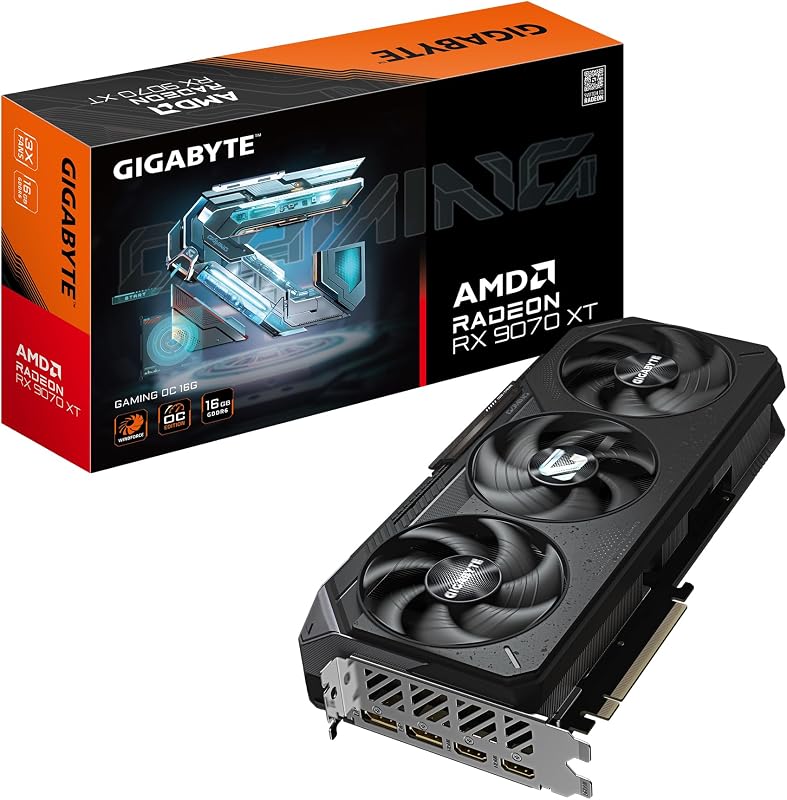
The GIGABYTE Radeon RX 9070 XT Gaming OC 16G provides an alternative approach centered on memory capacity and bandwidth. Equipped with 16GB of GDDR6 memory, a PCIe 5.0 interface, and GIGABYTE’s Gaming OC cooling design, this card caters to players who want a significantly larger frame buffer to handle higher-resolution texture packs and future-proofed display setups.
PCIe 5.0

The PCIe 5.0 ASUS TUF Gaming GeForce RTX 5080 16GB GDDR7 OC Edition represents a top-tier enthusiast solution. Built with a 3.6-slot cooler, military-grade components, a protective PCB coating, Axial-tech fans, and HDMI/DP 2.1 interfaces, this massive card suits builders who demand maximum build durability, cutting-edge GDDR7 speeds, and the highest possible hardware resilience for demanding workloads.
Final Verdict
The MSI GTX 1080 Ti Duke remains an impressive example of high-performance desktop engineering. By pairing NVIDIA’s 3584-stream-processor GP102 silicon with 11GB of GDDR5X memory across a 352-bit interface, MSI created a graphics card that manages high-resolution rasterized workloads with steady confidence. The TriFrozr triple-fan cooler and ZeroFrozr functionality strike an effective balance between aggressive thermal dissipation during heavy gaming and silent operation during standard computing tasks.
While modern gaming environments continue to evolve toward specialized lighting effects and upscaling algorithms, the Duke’s physical build quality, anti-bending reinforcement, and generous VRAM buffer provide dependable power for 1440p enthusiasts. If your desktop chassis can accommodate its 320 mm footprint and your priorities center on pure raster rendering, this card offers the thermal stability and structural durability needed for heavy gaming sessions.
FAQ
What are the dimensions of the MSI GTX 1080 Ti Duke and will it fit in my case?
The graphics card measures 320 x 141 x 42 mm (approximately 12.6 inches long by 5.55 inches wide). Because of its substantial length, desktop builders must verify that their PC case has at least 320 mm of clear horizontal space between the expansion slots and front fans or drive cages.
How does ZeroFrozr technology work on the TriFrozr cooler?
ZeroFrozr is an automated thermal control system built into the card’s fan management. During low-load situations such as desktop web browsing, office tasks, or light multimedia playback, the three cooling fans remain completely stopped to eliminate noise. They automatically activate once the GPU core reaches demanding gaming temperatures.
What display outputs are provided on the MSI GTX 1080 Ti Duke?
The card includes two DisplayPort connections, two HDMI ports, and one Dual-Link DVI-D (DL-DVI-D) port. The inclusion of dual HDMI ports makes it convenient to connect both a standard HDMI display and a virtual reality headset simultaneously without needing adapters.
What is the maximum display resolution supported by this card?
According to the manufacturer specifications, the MSI GTX 1080 Ti Duke supports a maximum display resolution of 3840×2160, allowing for high-definition 4K output across compatible monitors and televisions.
What does the rugged anti-bending strip do?
The anti-bending strip is a metal brace connected directly with the heatsink assembly along the tailor-made PCB. It provides mechanical rigidity across the card’s 320 mm span, preventing the PCB from bending or sagging over time when installed horizontally in a standard desktop tower.
How these reviews are put together
- 540reviews published
- 2,271products with a buyer rating
- 2,222products with listed features
- 87brands covered
Every number, star and price on this site is read from the Amazon product listing. We do not run lab tests of our own, so scores here are out of 10, based on listed specifications and buyer feedback, not a verdict from a test bench. Prices change without notice; check the listing before buying.


