Razer Blade 16 OLED Breakdown: 240Hz Display Meets RTX 5070 Ti
The Razer Blade 16 stands as a flagship portable powerhouse designed to bridge the gap between high-end desktop gaming performance and precision chassis engineering. Built around a striking 2560×1600 OLED panel paired with dedicated graphics processing, the laptop proves that enthusiast-grade speed no longer requires an unwieldy, oversized form factor. This machine is built primarily…
By Mark Archer
8 min read
As Amazon Associates, we earn from qualifying purchases. This means we may receive a small commission at no extra cost to you if you click through and make a purchase.
The Razer Blade 16 stands as a flagship portable powerhouse designed to bridge the gap between high-end desktop gaming performance and precision chassis engineering. Built around a striking 2560×1600 OLED panel paired with dedicated graphics processing, the laptop proves that enthusiast-grade speed no longer requires an unwieldy, oversized form factor.
This machine is built primarily for competitive gamers, technical developers, and media creators who demand uncompromising frame rates and pristine color precision in a unified portable system. Shoppers seeking a modest casual notebook or those who prioritize fully modular, socketed system memory will find better value in other hardware configurations.
240Hz QHD+ OLED Visual Experience
The centerpiece of this machine is undeniably the 16-inch display. Outfitted with a 2560×1600 resolution in an productivity-friendly 16:10 aspect ratio, the razer blade 16 240hz oled configuration provides crisp visual density for both detailed rendering workflows and fast-paced competitive esports. With an ultra-fast 0.2 ms response time, pixel transitions occur almost instantaneously, virtually wiping out motion blur and smearing during rapid camera movements.
Color presentation is a standout attribute for visual artists and cinematic gamers alike. The panel covers 100% of the DCI-P3 color space and carries Calman Verification, guaranteeing accurate calibration right out of the packaging. When viewing high dynamic range material, the VESA DisplayHDR TrueBlack 1000 certification allows peak brightness levels up to 1100 nits, delivering profound black levels alongside intensely bright highlights without the haloing artifacts common to traditional backlights.
Balancing high refresh rates with organic self-lit pixels sets a high bar for creative workflows. If you have spent time examining the broader portable gaming ecosystem, such as our breakdown of the razer blade 15 laptop, you will immediately notice the generational stride that high-refresh OLED technology represents over older standard LCD options.
Graphics Power and Modern Gaming Capabilities
High visual fidelity requires serious horsepower, and the razer blade 16 rtx 5070 ti configuration supplies ample muscle. Equipped with 12GB of cutting-edge GDDR7 memory and capable of drawing up to 140W Total Graphics Power (TGP), the graphics card operates with generous headroom to push modern rendering pipelines. The inclusion of high-speed GDDR7 video memory provides the bandwidth required to stream complex textures without stuttering at native 1600p resolution.
In high-load titles, razer blade 16 oled gaming shines by leveraging hardware ray tracing alongside dedicated AI acceleration features. Competitive shooters can drive frame rates well into triple digits to saturate the fluid 240Hz refresh rate, while narrative-driven AAA games benefit from realistic lighting simulations and dark shadows rendered with true pitch-black depth. The dedicated silicon effortlessly handles demanding titles, creative video rendering, and complex developmental simulations.
Much like how pairing an immersive panel with high-fidelity audio equipment like the razer barracuda pro elevates desktop gaming, having a reliable 140W GPU inside a slim frame creates a self-contained cinematic environment wherever you set up your battle station.
Core Ultra 9 Processing and Advanced Vapor Cooling
At the center of system logic sits the razer blade 16 core ultra 9 processor, specifically the Intel Core Ultra 9 386H. Packed with 16 physical cores and capable of clocking up to 4.9 GHz, the processor effortlessly handles multi-threaded computing tasks, background streaming encoding, and heavy game logic. An integrated Neural Processing Unit (NPU) delivers up to 50 TOPS of dedicated AI compute, offloading specialized background tasks to preserve primary CPU cores for raw performance.
Pushing this tier of silicon inside an ultra-thin 14.9 mm chassis inevitably presents substantial thermal hurdles. To manage this heat output, Razer implemented an integrated razer blade 16 vapor chamber cooling architecture. This vacuum-sealed thermal apparatus spans key internal components, vaporizing liquid coolant to draw heat rapidly across wide surface dissipation areas before liquid condenses and recirculates.
The vapor cooling system ensures sustained performance during extended gaming campaigns or batch rendering runs. By spreading heat uniformly across internal channels, the machine mitigates aggressive thermal throttling, allowing both the Core Ultra 9 processor and the RTX 5070 Ti graphics processor to maintain their elevated boost clocks for longer intervals.
Memory, Expandability, and Thunderbolt 5 Connectivity
System configuration requires careful attention to internal hardware specifications. The laptop comes equipped with 32GB of high-frequency LPDDR5X memory running at a blistering 9600MHz. This memory speed substantially reduces latency during data transfers, which is critical for frame-time consistency in modern games. However, buyers should take note of the hardware design: this memory is soldered directly to the board and is non-upgradeable.
On the storage front, Razer provides generous upgrade flexibility. The unit arrives with a 1TB PCIe 4.0 SSD installed, but features two total M.2 NVMe slots beneath the aluminum cover. This layout allows users to expand internal storage up to 8TB, granting ample room for expansive modern game libraries and voluminous 4K video scratch files without relying on external drives.
External interfacing is thoroughly future-proofed through the inclusion of a razer blade 16 thunderbolt 5 port, delivering immense data bandwidth for external graphics peripherals, high-speed storage enclosures, and multi-monitor daisy chaining. Additional I/O options round out the chassis:
- Dedicated full-size HDMI 2.1 video output for connecting 4K and 8K television panels
- Multiple high-speed USB Type-A and Type-B connections for standard peripherals
- Built-in SD card reader for convenient photo and video media transfers
- Next-generation Wi-Fi 7 wireless module for low-latency network connectivity
- Front-facing camera integrating Windows Hello facial recognition for instant biometric login
Ultra-Thin CNC Aluminum Chassis Engineering
The exterior of the laptop demonstrates premium industrial design. Carved from a solid block of CNC-milled aluminum and finished in classic matte black, the housing provides exceptional torsional rigidity while remaining remarkably slim. Measuring just 0.59 inches (14.9 mm) in thickness, it achieves an ultra-portable profile that easily slides into standard gear bags and travel sleeves.
While standard productivity laptops like the asus zenbook s16 laptop prioritize thin profiles exclusively for battery-conscious office tasks, the Razer Blade 16 manages to pack enthusiast-tier discrete silicon inside its thin frame. Gamers who have previously navigated compact models such as the razer blade 14 (2025) will appreciate the larger 16-inch canvas, which provides significantly more visual estate without sacrificing structural density.
The listing does not specify the exact total system weight, but its compact footprint of 13.98 inches long by 9.69 inches wide keeps the physical mass centered. The matte black finish paired with clean, straight edges delivers an aesthetic that transitions naturally from corporate boardroom presentations to late-night gaming tournaments.
Razer Blade 16 Pros and Cons
Pros
- Vibrant 240Hz QHD+ OLED with 0.2 ms response
- NVIDIA RTX 5070 Ti with 12GB GDDR7
- Intel Core Ultra 9 with 16 cores
- Ultra-thin 14.9 mm CNC aluminum chassis
- High-speed Thunderbolt 5 and Wi-Fi 7
- Dual M.2 slots expand storage up to 8TB
Cons
- Soldered 32GB memory cannot be upgraded
- Product listing does not specify laptop weight
- Vapor cooling required for tight thermal margins
Check Razer Blade 16 on Amazon
Who Should Buy the Razer Blade 16
Buy It If
- You demand a premier 240Hz OLED visual experience with true black levels and Calman-verified color precision.
- You want high-tier graphics power via a 140W RTX 5070 Ti housed inside an ultra-slim 14.9 mm aluminum enclosure.
- You plan to expand your local storage library up to 8TB using the two internal M.2 NVMe drive bays.
- You require cutting-edge peripheral throughput enabled by integrated Thunderbolt 5 and Wi-Fi 7 connectivity.
Skip It If
- You require modular, user-replaceable system RAM, as the 32GB LPDDR5X memory is permanently soldered.
- You primarily run basic productivity tools, cloud software, or light web browsing that do not leverage a 140W discrete GPU.
- You prefer a thicker chassis with traditional low-frequency mechanical thermal assemblies over ultra-dense vapor chambers.
Razer Blade 16 Alternatives Worth a Look
If the hardware profile of this machine does not match your specific computing needs or computing budget, several entry-level alternatives address completely different usage scenarios.
2026-2027 edition

The 2026-2027 edition is an HP 14 Laptop Computer powered by an entry-level Intel N150 processor, 4GB of DDR5 RAM, and 128GB of SSD storage, running Windows 11 paired with Microsoft 365 and 1TB of cloud storage. This ultra-modest device is intended strictly for light school assignments, word processing, and internet browsing, making it a budget-focused choice for users who have no need for high-end graphics rendering.
Supports 1TB TF Card Expansion
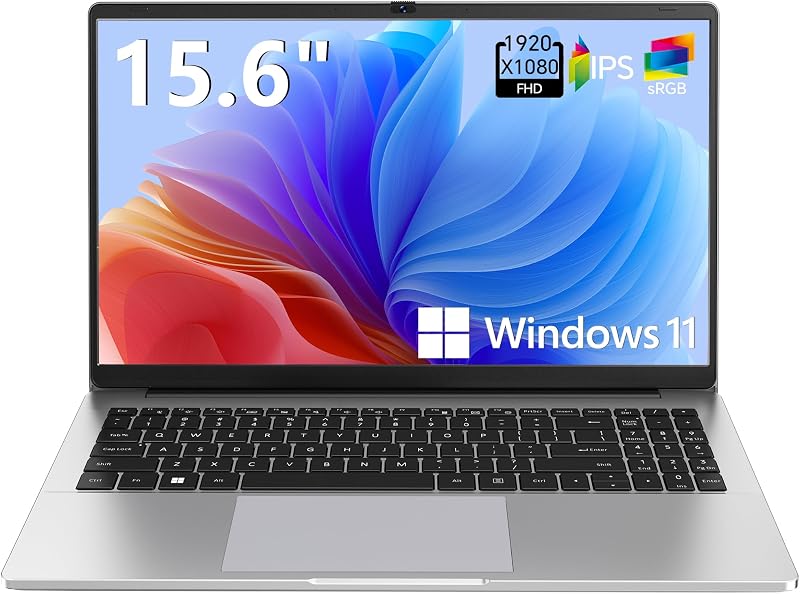
Featuring a 15.6-inch FHD LCD display, the Supports 1TB TF Card Expansion notebook relies on an Intel Celeron N4020 processor, 4GB of DDR4 RAM, and 128GB of eMMC storage running Windows 11. Designed as a basic home office and student terminal in gray, it provides memory card expansion for everyday document management rather than the intense computing tasks handled by the Blade.
Copilot AI

The Copilot AI laptop is a natural silver HP 2026 Essential Laptop featuring an Intel processor, 128GB of local storage, an LED display, and 1TB of cloud storage running Windows 11 with Office 365 integration. It targets buyers who want basic automated AI assistance for writing and general office workflows in a lightweight shell without discrete gaming silicon.
Final Verdict
When asking whether the razer blade 16 oled worth it question applies to your gaming lifestyle, the answer hinges on how much you value bleeding-edge display technology matched with flagship portability. The fusion of a 240Hz QHD+ OLED panel, an ultra-fast 0.2 ms response time, and the 140W RTX 5070 Ti establishes this system as an extraordinarily capable machine for both competitive play and rigorous content creation.
While the non-upgradeable 32GB LPDDR5X memory requires buyers to be comfortable with their factory capacity, the dual M.2 slots, Wi-Fi 7, Thunderbolt 5, and advanced vapor chamber cooling ensure that the platform remains potent for years to come. For the enthusiast gamer and creative professional seeking top-tier portable execution, the Razer Blade 16 offers a masterclass in modern hardware design.
FAQ
Can the system RAM on the Razer Blade 16 be upgraded later?
No, the 32GB LPDDR5X 9600MHz memory is soldered directly to the motherboard and is non-upgradeable. If your workflows require more than 32GB of memory, you cannot expand it after purchase.
How much internal storage can be added to the laptop?
The laptop comes with a 1TB PCIe 4.0 SSD installed, but features two total M.2 NVMe slots. These internal slots allow you to expand total solid-state storage up to 8TB.
What are the primary benefits of the 240Hz OLED display?
The 16-inch 2560×1600 OLED panel features a 240Hz refresh rate alongside a near-instantaneous 0.2 ms response time to virtually eliminate motion blur. It also delivers 100% DCI-P3 Calman-verified color accuracy and up to 1100 nits peak brightness under VESA DisplayHDR TrueBlack 1000 certification.
Does the Razer Blade 16 support facial recognition login?
Yes, the front-facing webcam supports Windows Hello facial recognition, allowing you to quickly and securely unlock your laptop without manually typing a password.
What ports are available on the chassis?
The Razer Blade 16 features a high-speed Thunderbolt 5 port, an HDMI 2.1 output, standard USB ports, an SD card reader, and an audio jack, alongside integrated Wi-Fi 7 wireless connectivity.
How these reviews are put together
- 203reviews published
- 2,271products with a buyer rating
- 2,222products with listed features
- 87brands covered
Every number, star and price on this site is read from the Amazon product listing. We do not run lab tests of our own, so a score here is the average rating left by buyers, not a verdict from a test bench. Prices change without notice; check the listing before buying.


