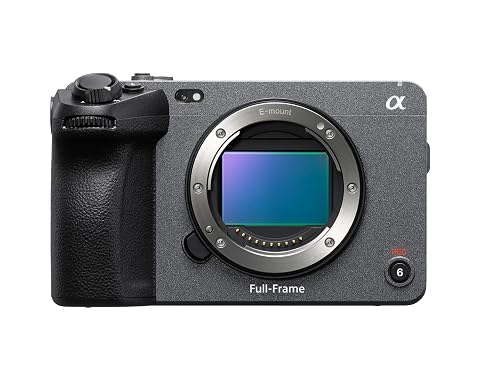
Sony a7 III Performance Breakdown: Full-Frame Imaging for Content Enthusiasts
The Sony a7 III stands as an industry benchmark in full-frame hybrid imaging, combining a 24.2-megapixel back-illuminated Exmor R CMOS sensor, 4K HDR movie recording, and high-precision subject tracking into a versatile mirrorless body. Designed to serve both high-resolution still photography and demanding broadcast production, this camera delivers exceptional light gathering, broad tonal gradations, and…
10 min read
As Amazon Associates, we earn from qualifying purchases. This means we may receive a small commission at no extra cost to you if you click through and make a purchase.
The Sony a7 III stands as an industry benchmark in full-frame hybrid imaging, combining a 24.2-megapixel back-illuminated Exmor R CMOS sensor, 4K HDR movie recording, and high-precision subject tracking into a versatile mirrorless body. Designed to serve both high-resolution still photography and demanding broadcast production, this camera delivers exceptional light gathering, broad tonal gradations, and consistent autofocus reliability. For enthusiast creators, studio broadcasters, and gaming streamers seeking a noticeable leap beyond entry-level hardware, this full-frame workhorse presents a dependable, performance-first platform that handles complex visual workflows with ease.
This camera is an ideal choice for dedicated video content creators, live streamers running multi-source production desks, and visual artists who require expansive dynamic range alongside superior low-light performance. Its interchangeable FE lens mount and broad shooting mode selection provide significant flexibility for controlled studio broadcasts and spontaneous field production alike. Conversely, casual vloggers searching for an ultra-pocketable body or creators on strict entry-level budgets who do not require a 35mm sensor format may find dedicated point-and-shoot setups or compact APS-C cameras better aligned with their immediate portable requirements.
Full-Frame Sensor Performance and Dynamic Range
At the center of the Sony camera a7iii imaging pipeline is a 35mm full-frame Exmor R CMOS sensor delivering 24.2 effective megapixels. Built with a back-illuminated architecture and an engineered 1.8X readout speed, this sensor collects incoming light with exceptional efficiency compared to traditional front-illuminated layouts. The physical dimensions of the 35.6 x 23.8mm sensor plane allow creators to achieve shallow depth of field, establishing sharp subject separation against softly blurred backgrounds that elevates desktop broadcasts, game-room stream overlays, and polished editorial photography.
Tonal preservation is reinforced by an impressive 15-stop dynamic range and native support for 14-bit uncompressed RAW capture. When shooting high-contrast gaming battle stations illuminated by intense RGB LED strips or balancing harsh window light against shadowy indoor corners, the sensor retains subtle details in both crushed blacks and blown highlights. Enthusiasts evaluating whether the sony a7 iii specs match professional editing workflows will appreciate how much exposure latitude remains intact during color grading and post-capture shadow recovery, preventing banding and visual artifacts in demanding lighting conditions.
Low-light performance benefits significantly from this hardware foundation, offering an expanded sensitivity range stretching from ISO 50 all the way up to ISO 204,800. In dim studio rooms or evening event spaces where supplementary lighting is limited, the sensor manages luminance noise cleanly while preserving structural edge definition. While specialized production environments might explore dedicated cinema cameras such as the camera sony fx3 for high-end studio video pipelines, the a7 III retains a massive advantage for hybrid operators who transition constantly between low-noise night photography and broadcast video capture.
Autofocus Precision and Real-Time Tracking
The autofocus architecture built into the Sony a7 III utilizes a sophisticated 693-point hybrid AF system consisting of 693 focal-plane phase-detection points paired with 425 contrast-detection points. This dense array blankets roughly 93% of the image frame, allowing creators to track subjects reliably even when they move toward the outer borders of the frame. Because the focus points cover nearly the entire sensor surface, you can compose shots using off-center framing without losing continuous tracking lock or hunting for contrast borders.
Subject acquisition remains dependable during dynamic motion, making the sony a7 iii autofocus system particularly valuable for high-energy content creators and live streamers. Whether an on-camera personality leans forward to react to an intense gaming moment or shifts across a streaming set, the camera recalculates focus and exposure instantaneously to maintain tack-sharp eye and face priority. Content producers comparing full-frame autofocus against high-performance APS-C options like the sony a6700 mirrorless camera will discover that the a7 III pairs responsive tracking algorithms with the distinct depth and optical rendering of a full-frame sensor.
The listing highlights reliable operability to ensure confident shooting under variable environmental conditions. Photographers shooting live entertainment, competitive esports tournaments, or quiet studio podcasts can rely on continuous AF/AE tracking that does not drop targets during sudden light shifts. By pairing optical phase detection with rapid contrast verification, the camera minimizes focus pulsing during movie recording, ensuring clean, distraction-free visual output that keeps the audience fully focused on the presenter.
Burst Shooting and Shutter Versatility
For high-speed action and decisive moment capture, the Sony a7 III delivers up to 10fps continuous shooting using either its mechanical shutter or an entirely silent electronic shutter. This rapid 10-frame-per-second capability operates with full continuous autofocus and autoexposure tracking engaged, ensuring that every individual frame in a sustained burst remains precisely exposed and accurately focused. Fast-moving subjects, celebratory streamer reactions, and rapid esports stage movements can be captured in sequences without sacrificing resolution or depth.
The shutter hardware accommodates wide operational flexibility, providing a mechanical shutter speed range spanning from a brisk 1/8000 second down to 30 seconds. The 1/8000 second maximum shutter speed gives photographers the ability to shoot wide open with fast prime lenses in bright ambient light, freezing high-speed motion cleanly without introducing motion blur. For evening cityscapes, long exposures, and low-light ambient scenes, the 30-second minimum shutter speed allows extensive exposure times directly in-camera across Program, Shutter Priority, Aperture Priority, and full Manual exposure modes.
Handling stability is augmented by integrated optical image stabilization. This in-body stabilization mechanism counteracts camera shake across multiple axes, providing noticeable compensation when operating handheld or navigating dynamic shooting angles. Handheld content creators benefit from steadier framing during walk-and-talk video segments, while still photographers can confidently capture sharp handheld images at slower shutter speeds than would otherwise be feasible without a tripod.
Video Recording and Broadcast Production
Video capabilities on the Sony a7 III include comprehensive 4K HDR movie recording, capturing rich color fidelity and high-definition details across the entire frame. The camera processes the full sensor width to generate detailed 4K footage that integrates smoothly into modern digital broadcasts and streaming timelines. The wide tonal range captured in movie modes allows colorists to pull nuanced gradient transitions from studio sets, background ambient lighting, and natural skin tones.
For broadcasters evaluating the sony a7 iii for streaming, the camera offers standard 16:9 and 3:2 aspect ratios, clean output through HDMI for video capture cards, and versatile Movie shooting modes alongside Programmed AE, Aperture Priority, Shutter Priority, and Manual controls. Setting the camera to Aperture Priority or Manual mode provides total control over background blur and exposure levels, ensuring that broadcast scenes remain completely consistent across multi-hour live streams without unwanted exposure fluttering. Creators moving up from fixed-lens vlogging devices such as the sony zv1f camera will notice an immediate leap in clean detail and dynamic headroom.
The included SEL2870 lens kit provides an initial focal length range of 28mm to 70mm with a maximum aperture of f/3.5, establishing a flexible working distance for desktop desk setups, interview framing, and general content creation. Supported by the robust Sony FE lens mount, creators can readily expand their optical kit over time with wide-angle broadcast zooms, ultra-fast portrait primes, or telephoto lenses tailored specifically to their studio spacing and production ambitions.
Sony a7 III Pros and Cons
Pros
- 2MP back-illuminated full-frame sensor
- 693-point hybrid AF with 93% frame coverage
- 15-stop dynamic range with 14-bit RAW
- Up to 10fps burst with AE/AF tracking
- Built-in optical image stabilization
- 4K HDR movie recording capability
Cons
- Included kit lens limited to f/3.5 maximum aperture
- Included cable uses legacy Micro USB connection
Who Should Buy the Sony a7 III
Buy It If
- You want a full-frame 24.2MP Exmor R sensor with 15 stops of dynamic range to deliver professional visual depth in streaming setups and photography.
- You need an advanced 693-point hybrid autofocus system with 93% frame coverage that locks onto subjects during fast-paced streaming and live capture.
- You require high-speed action performance with up to 10fps continuous burst shooting and shutter speeds reaching 1/8000 of a second.
- You value an all-in-one starter package that includes the SEL2870 zoom lens, NP-FZ100 battery, AC adapter, and protective accessories straight out of the box.
Skip It If
- You require an ultra-compact, lightweight point-and-shoot camera body designed strictly for basic daily pocket vlogging.
- You are seeking an entry-level starter camera with an APS-C crop sensor that minimizes initial equipment complexity.
- Your production relies exclusively on dedicated cinema-line camera bodies and does not require hybrid still-photo functionality.
Sony a7 III Alternatives Worth a Look
While the Sony a7 III offers an exceptional balance of full-frame hybrid performance, evaluating alternative mirrorless options helps clarify which sensor format, feature set, and accessory kit best matches your creative goals and shooting environment.
24.1 Megapixel CMOS

The 24.1 Megapixel CMOS kit features an APS-C sensor with 4K video recording, built-in Wi-Fi and Bluetooth connectivity, and an RF-S 18-45mm f/4.5-6.3 IS STM lens. This Canon EOS R100 package is tailored specifically for beginner photographers and new content creators who want a straightforward entry point into mirrorless capture without the operational complexity or larger physical footprint of a full-frame camera system.
Canon EOS R6 Mark II

The Canon EOS R6 Mark II is a full-frame hybrid camera equipped with a 24.2-megapixel CMOS sensor, advanced photo and video recording features, and an included RF 24-105mm f/4-7.1 IS STM lens kit. Enthusiasts and studio professionals seeking an alternative full-frame ecosystem with modern hybrid imaging capabilities and an extended kit zoom range will find this camera a formidable parallel option to the a7 III.
For Photography & Video

The For Photography & Video bundle provides a complete content creation starter package centered around a 24.2MP APS-C sensor with 4K video and Dual Pixel CMOS AF. Supplied as the Canon EOS R50 double-lens bundle, it includes an 18-45mm lens, a 55-210mm telephoto lens, a 64GB memory card, and a carrying bag, making it a comprehensive choice for creators who want an immediate two-lens kit without sourcing accessories separately.
Final Verdict
Determining whether the Sony a7 III is worth it comes down to your production standards and technical ambitions. By combining a 24.2MP back-illuminated full-frame sensor, 15 stops of dynamic range, and a massive 693-point hybrid autofocus array with 93% coverage, this mirrorless body provides enthusiast creators with an uncompromising foundation. The inclusion of 4K HDR movie capture, optical stabilization, and 10fps continuous shooting ensures that neither fast-moving live action nor demanding desktop streaming scenarios will outpace the hardware.
While creators with basic pocket vlogging requirements might prefer smaller APS-C alternatives, the Sony a7 III remains a premier choice for serious entertainment streamers, hybrid visual storytellers, and studio content producers. Backed by the extensive Sony FE lens catalog and packaged with the functional SEL2870 zoom lens, this camera delivers the image fidelity, tracking accuracy, and low-light headroom necessary to produce broadcast-grade content year after year.
FAQ
What items are included in the box with the Sony a7 III?
The Sony a7 III kit includes the mirrorless camera body, the SEL2870 28-70mm lens, a lens hood, a front lens cap, a rear lens cap, a rechargeable NP-FZ100 battery, an AC-UUD12 AC adapter, a shoulder strap, a camera body cap, an accessory shoe cap, an eyepiece cup, and a micro USB cable.
What lens mount does the Sony a7 III use?
The camera uses the Sony FE lens mount, making it compatible with full-frame Sony FE lenses as well as Sony E-mount optics designed for crop-sensor bodies.
What is the continuous shooting speed of the Sony a7 III?
The Sony a7 III achieves continuous shooting speeds of up to 10fps using either its mechanical shutter or silent electronic shutter, maintaining full continuous autofocus and autoexposure tracking across the burst sequence.
Does the Sony a7 III have in-body image stabilization?
Yes, the specifications confirm that the Sony a7 III features integrated optical image stabilization to help reduce blurring from camera shake during handheld photography and video capture.
What type of sensor is inside the Sony a7 III?
The camera is built with a 35mm full-frame Exmor R CMOS sensor measuring 35.6 x 23.8mm, offering 24.2 effective megapixels and a back-illuminated structure engineered with 1.8X readout speed.
How these reviews are put together
- 976reviews published
- 2,271products with a buyer rating
- 2,222products with listed features
- 87brands covered
Every number, star and price on this site is read from the Amazon product listing. We do not run lab tests of our own, so scores here are out of 10, based on listed specifications and buyer feedback, not a verdict from a test bench. Prices change without notice; check the listing before buying.