Logitech G PRO 2 LIGHTSPEED Review: The Modular Esports Icon Evolves
The Logitech G PRO 2 LIGHTSPEED arrives as a refined continuation of one of the most decorated silhouettes in professional esports, merging tournament-grade responsiveness with true ambidextrous utility. Engineered specifically for competitive players seeking dependable hardware, this pointer incorporates cutting-edge tracking hardware and hybrid actuation to deliver a cohesive, elite competitive experience. For players who…
By Eric Monroe
8 min read
As Amazon Associates, we earn from qualifying purchases. This means we may receive a small commission at no extra cost to you if you click through and make a purchase.
The Logitech G PRO 2 LIGHTSPEED arrives as a refined continuation of one of the most decorated silhouettes in professional esports, merging tournament-grade responsiveness with true ambidextrous utility. Engineered specifically for competitive players seeking dependable hardware, this pointer incorporates cutting-edge tracking hardware and hybrid actuation to deliver a cohesive, elite competitive experience. For players who demand precision tracking, swift actuation, and switchable hardware layouts, this iteration stands as a commanding contender in the high-performance gaming peripheral space.
This mouse is tailored for dedicated esports contenders, left-handed competitors, and multi-grip tournament players who need customizable magnetic side switches paired with zero-compromise wireless execution. Conversely, casual desktop users who prioritize deep thumb rests, excessive multi-genre macro grids, or Bluetooth multi-device toggling will find better alignment with productivity-oriented or ergonomic MMO alternatives.
HERO 2 Sensor and Tracking Precision
The centerpiece of the pro 2 lightspeed specs is the integration of the HERO 2 optical sensor, built to satisfy the intense tracking demands of modern first-person shooters and fast-paced battle royales. Delivering an upper ceiling of up to 44,000 DPI alongside a tracking velocity exceeding 888+ IPS, the sensor registers rapid flicks and micro-adjustments with surgical consistency. Whether an athlete relies on low sensitivity for tactical arm sweeps or high sensitivity for rapid twitch maneuvers, the optical sensor avoids smoothing, acceleration, or unintended filtering across its wide operational range.
Unlocking the full scope of the pro 2 lightspeed hero 2 sensor requires the Logitech G HUB software, where players can tune sensitivity curves, calibrate lift-off distances, and personalize settings to match their specific desk setup. Logitech specifically tested the sensor’s high-speed tracking performance on their G640 mouse pad, ensuring that consistent surface friction translates into uninterrupted sensor readouts during volatile tournament play. Although the listing specifications note a baseline hardware sensitivity rating of 3200 dots per inch out of the box, accessing the advanced software configuration reveals the complete breadth of the sensor’s 44K DPI architecture.
For competitive gaming environments where round outcomes hinge on fractions of a millimeter, tracking consistency remains non-negotiable. The optical engine tracks dynamic movement reliably even when subjected to intense acceleration forces from sudden stops and rapid directional resets. Maintaining exact sensor alignment mirrors the meticulous control required when piloting responsive stabilization platforms like the dji air 2s, proving that accurate tracking mechanics are foundational to top-tier execution across high-pressure environments.
LIGHTFORCE Hybrid Optical-Mechanical Switches
Click execution represents another major performance pillar, driven by the pro 2 lightspeed lightforce switches integrated beneath the primary buttons. These hybrid optical-mechanical switches merge the instantaneous actuation and structural longevity of optical light triggers with the distinct, tactile snap of mechanical hardware. By bypassing traditional physical debouncing delays through an optical beam break, inputs register instantaneously without sacrificing the crisp acoustic feedback that competitive gamers rely on to confirm every trigger pull.
Durability serves as a central advantage of this hybrid switch mechanism. Traditional purely mechanical contacts can degrade over prolonged competitive seasons, occasionally succumbing to unintended double-clicking due to physical wear. The optical triggering component in the LIGHTFORCE switch isolates registration from mechanical metal degradation, while the underlying tactile leaf provides positive switch engagement. This balance ensures that rapid semi-automatic tapping or repeated burst fire in tactical shooters feels distinctly positive and uniform over extensive gaming sessions.
The resulting feel delivers definitive tactility across varied finger placements. Whether pressing closer to the front edge or further back toward the center shell, actuation remains crisp and immediate. This hybrid switch architecture provides peace of mind during tournament matches, guaranteeing that click registration matches the speed of player reflexes while retaining the traditional, tactile mechanical sensation players expect.
Ambidextrous Modular Design and Ergonomics
The physical geometry of the chassis highlights the pro 2 lightspeed ambidextrous design, maintaining the universally recognized two-handed balance that established its predecessor as an industry icon. Unlike dedicated right-handed mice that feature asymmetric slopes, this chassis presents an evenly contoured silhouette suitable for claw, fingertip, and palm grip techniques. Left-handed competitors receive equal mechanical standing, avoiding the awkward button placements or forced compromises common among right-biased gaming peripherals.
Modularity enhances this ambidextrous footprint through programmable, switchable magnetic side buttons. Users can customize the button layout on both the left and right flanks, choosing between active tactile inputs or flush blanking covers depending on hand dominance and grip style. Left-handed gamers can activate the right-side buttons while disabling the opposite flank, whereas power users can configure all sides for extended utility, preventing accidental misclicks through physical layout customization.
In comparing this shell against dedicated asymmetric designs like the g pro superlight, the modular PRO 2 retains full mechanical flexibility without sacrificing balance. The neutral arch supports the palm evenly, while the contoured waist provides dependable grip surfaces for upward lifts and rapid resets. Finished in a clean black tone, the chassis balances tournament-grade durability with an understated, professional aesthetic tailored for competition.
LIGHTSPEED Wireless Latency and Battery Endurance
Wireless performance in esports demands complete parity with tethered connections, and the pro 2 lightspeed latency profile achieves this via Logitech’s proprietary LIGHTSPEED wireless protocol. Designed to eliminate dropped packets and transmission interference, this wireless implementation maintains a responsive, tournament-class connection even in crowded radio-frequency environments. Movement updates and click inputs transmit over a standard USB receiver link, providing an unbroken stream of input data that matches the consistency of high-end wired peripherals.
Endurance ranks high among modern wireless mouse priorities, and the pro 2 lightspeed battery life delivers up to 95 hours of continuous gameplay from its internal rechargeable lithium polymer battery. This extended reserve allows competitors to complete long tournament brackets and extensive practice routines without interruption. When battery levels deplete, the mouse recharges via a modern USB-C connection, allowing players to plug in and continue playing seamlessly while the battery replenishes.
For tournament travelers who also organize portable gear kits featuring mobile power tools like the gopro volta 2, standardizing on universal USB-C charging across desktop and mobile accessories simplifies packing. The internal power management intelligently conserves energy during idle moments without introducing sluggish wake-up delays when play resumes. Compatibility across Windows 10, macOS 12 or later, and Chrome OS confirms that the wireless hardware performs reliably across diverse computing setups.
Logitech G PRO 2 LIGHTSPEED Pros and Cons
Pros
- HERO 2 optical sensor up to 44K DPI
- LIGHTFORCE hybrid optical-mechanical switches
- True ambidextrous modular chassis
- Switchable magnetic side buttons
- Up to 95 hours of battery life via USB-C
- Tournament-grade LIGHTSPEED wireless connection
Cons
- Advanced sensor customization requires Logitech G HUB software
- Neutral ambidextrous shape lacks dedicated thumb rests
- Listing specifications indicate two primary buttons out of the box
Check Logitech G PRO 2 LIGHTSPEED on Amazon
Who Should Buy the Logitech G PRO 2 LIGHTSPEED
Buy It If
- You need a true ambidextrous chassis with swappable magnetic side buttons configured for left- or right-handed use.
- You want the optical speed and mechanical snap of hybrid LIGHTFORCE switches to eliminate double-click worries.
- You prioritize tracking precision supported by the HERO 2 sensor offering up to 44K DPI and 888+ IPS velocity.
- You travel frequently and want dependable LIGHTSPEED wireless performance backed by up to 95 hours of USB-C battery life.
Skip It If
- You prefer heavily sculpted, asymmetric ergonomic mice featuring integrated thumb rests and flared ledges.
- You require a dense multi-button macro layout for complex MMO or strategy title keybinds.
- You want built-in Bluetooth connectivity to switch between non-gaming mobile devices without a USB port.
Logitech G PRO 2 LIGHTSPEED Alternatives Worth a Look
Before making a final tournament selection, exploring comparable gaming mice across varying specifications, button counts, and weights can help clarify which peripheral best aligns with your competitive demands.
12,000 DPI
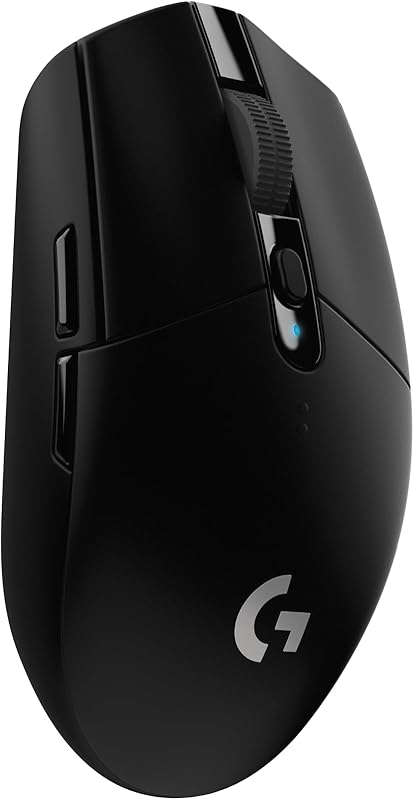
The 12,000 DPI wireless model (Logitech G305 Lightspeed) features a 12,000 DPI sensor, 6 programmable buttons, onboard memory, and a battery life reaching up to 250 hours. Shoppers who prioritize exceptional power longevity from standard batteries and a compact, budget-conscious footprint should pick this alternative over the premium modular platform.
High performance

The High performance wired pointer (Logitech G502 Hero) offers 25,600 DPI tracking, 11 programmable buttons, customizable weights, and onboard profile memory for PC and Mac. Players who prefer an ergonomic, right-handed contour with abundant macro inputs and physical weight tuning will find this tethered option better suited to their workflow.
400 IPS speed

The 400 IPS speed mouse (ASUS ROG Keris) provides 400 IPS tracking, a 16,000 DPI sensor, hot-swappable switches, PBT buttons, ROG feet, and a lightweight paracord cable. Gamers who prioritize modular switch replacement at the solderless socket level in a dedicated ultralight wired form factor may lean toward this responsive alternative.
Final Verdict
The Logitech G PRO 2 LIGHTSPEED delivers a cohesive evolution of an iconic competitive silhouette. By pairing the formidable HERO 2 sensor with responsive LIGHTFORCE hybrid switches, it resolves historical mechanical wear concerns while advancing tracking fidelity beyond tournament standards. Its standout strength remains its true modular ambidextrous construction, providing left-handed and right-handed competitors equal access to tournament-grade wireless execution.
When asking is pro 2 lightspeed worth it, the answer depends on your performance requirements. For serious esports contenders looking for an ambidextrous wireless mouse that provides top-tier tracking, swappable magnetic side buttons, low-latency execution, and dependable 95-hour USB-C battery life, this mouse stands as an exceptional investment for competitive gaming rigs.
FAQ
What sensor is used in the Logitech G PRO 2 LIGHTSPEED?
The mouse utilizes the HERO 2 optical sensor, which delivers tracking speeds exceeding 888+ IPS and can reach up to 44,000 DPI when calibrated through Logitech G HUB software.
How long does the battery last on a single charge?
The built-in rechargeable lithium polymer battery provides up to 95 hours of continuous gameplay, and it recharges via a standard USB-C cable connection.
Can left-handed gamers use the Logitech G PRO 2 LIGHTSPEED?
Yes, the mouse features a true two-handed ambidextrous shell accompanied by modular, switchable magnetic side buttons that can be configured on either side to accommodate left- and right-handed grips.
What switch technology does this mouse use for primary clicks?
It utilizes LIGHTFORCE switches, which combine the immediate triggering speed and durability of optical switches with the positive, tactile click sensation of traditional mechanical contacts.
Which operating systems are compatible with this mouse?
The mouse is compatible with Personal Computers running Windows 10, Mac systems on macOS 12 or later, and Chromebook hardware running Chrome OS.
How these reviews are put together
- 976reviews published
- 2,271products with a buyer rating
- 2,222products with listed features
- 87brands covered
Every number, star and price on this site is read from the Amazon product listing. We do not run lab tests of our own, so scores here are out of 10, based on listed specifications and buyer feedback, not a verdict from a test bench. Prices change without notice; check the listing before buying.


