NVIDIA RTX Pro 6000 Blackwell Architecture, Specs, and Workstation Prowess
The NVIDIA RTX Pro 6000 Blackwell Server Edition represents a monumental advancement in enterprise visual computing and accelerated data center processing. Built by PNY under model number RTXPRO6000TC, this professional computational accelerator pairs state-of-the-art silicon with a massive 96 GB pool of cutting-edge GDDR7 memory to handle workloads that bring standard graphics processing units to…
By Rachel Ford
10 min read
As Amazon Associates, we earn from qualifying purchases. This means we may receive a small commission at no extra cost to you if you click through and make a purchase.
The NVIDIA RTX Pro 6000 Blackwell Server Edition represents a monumental advancement in enterprise visual computing and accelerated data center processing. Built by PNY under model number RTXPRO6000TC, this professional computational accelerator pairs state-of-the-art silicon with a massive 96 GB pool of cutting-edge GDDR7 memory to handle workloads that bring standard graphics processing units to an immediate crawl. Operating on an expansive PCI-Express x16 physical interface and configured specifically for high-density server environments, the hardware is engineered to eliminate data transfer bottlenecks and deliver sustained compute performance. The definitive verdict on this flagship accelerator is simple: it is an uncompromised enterprise powerhouse that provides unprecedented memory headroom and deterministic processing stability for organizations tackling massive parallel computing challenges.
This accelerator is tailored specifically for artificial intelligence engineers, machine learning researchers, visual effects studios, and server farm administrators who require extraordinary memory capacity to train complex neural networks or render massive 3D scenes. The card thrives in continuous production environments where data integrity and round-the-clock reliability cannot be compromised under any circumstances. Conversely, everyday PC gamers, general video editors, and home hobbyists should look elsewhere. The specialized enterprise server format, passive chassis airflow dependencies, and computational architecture make consumer-oriented graphics cards far more appropriate, practical, and functional for standard desktop systems.
Architecture and Computational Horsepower
The foundation of this enterprise accelerator rests upon the sophisticated RTX 6000 Ada generational evolution, stepping firmly into next-generation processing with the refined nvidia 6000 pro blackwell architecture. Running at a baseline core clock of 1590 megahertz, the graphics coprocessor is built to deliver exceptional throughput across dense matrix math operations, floating-point calculations, and intensive vector transformations. Unlike gaming-focused products that prioritize short bursts of high clock speeds at the expense of thermal limits, this server unit focuses on flat, predictable performance delivery that resists thermal throttling over days or weeks of uninterrupted execution.
Communication between the host motherboard and the GPU takes place across a robust PCI-Express x16 interface. Implementing modern lane bandwidth through the rtx pro 6000 pcie 5.0 architecture ensures that incoming and outgoing data pipelines stay saturated with minimal latency. High-bandwidth communication prevents starvation of the compute cores when transferring multi-gigabyte models or massive point-cloud datasets between system RAM and localized video memory. The physical implementation engineered by PNY ensures complete signal integrity even when multiple cards operate adjacent to one another inside dense server nodes.
As a dedicated nvidia blackwell workstation gpu deployed in server trim, the coprocessor handles mixed-precision mathematical equations with supreme efficiency. Computational research facilities running complex molecular modeling, computational fluid dynamics, or structural stress analyses gain substantial throughput advantages from the specialized instruction sets baked directly into the silicon. The combination of architectural refinements and hardware-level instruction optimizations transforms this card into a core computational engine for enterprise data platforms.
Memory Density and GDDR7 High-Bandwidth Subsystem
The defining technical milestone of this accelerator is undeniably the integration of an nvidia rtx 6000 pro 96gb gddr7 memory configuration. By transitioning to high-speed GDDR7 technology, the memory subsystem achieves phenomenal data rates that allow the core processor to ingest and manipulate immense datasets with virtually zero wait states. In data science and AI applications where memory starvation is the primary bottleneck, having 96 GB of direct-access frame buffer allows entire enterprise models to reside directly on the accelerator rather than spilling over into slower system host memory.
When analyzing the published nvidia 6000 pro blackwell specs, the listed memory clock speed is noted at 1.75 MHz within the technical documentation. In comparison to mid-range professional hardware such as the NVIDIA RTX Pro 4000 Blackwell, this flagship card provides more than double the frame buffer density, unlocking an entirely distinct tier of institutional computational possibilities. Tasks that previously required distributing a dataset across three or four individual accelerators can now be consolidated into a single card, drastically reducing network interconnect latency and simplifying parallel programming structures.
The practical ramifications of a 96 GB frame buffer extend deep into modern scientific and machine vision workflows. Handling high-resolution uncompressed satellite imagery, vast volumetric medical scans, and massive geographic information system databases requires substantial contiguous memory pools. This accelerator allows data scientists to load several massive datasets concurrently, iterate exploratory algorithms in real time, and eliminate out-of-memory crashes that routinely disrupt advanced computational work.
Enterprise AI and Deep Learning Performance
Modern machine learning workflows require immense localized memory, making the rtx 6000 pro ai performance an indispensable asset for enterprise research organizations. When fine-tuning large language models, multimodal generative systems, or advanced computer vision backbones, the batch size and parameter footprint are directly constrained by available video memory. With 96 GB of GDDR7 memory, engineering teams can fine-tune multi-billion parameter foundation models locally, preventing costly out-of-core memory paging operations that slow down training pipelines.
The rtx pro 6000 server edition is specifically tailored to integrate seamlessly within high-density rackmount computing environments. In enterprise configurations analogous to the compute density seen in an NVIDIA DGX Spark 128GB platform, this card excels when handling continuous, multi-tenant AI inference workloads. Dozens of containerized instances can leverage the shared silicon simultaneously, delivering low-latency inference queries to thousands of concurrent network clients without exhausting the underlying computational resources.
Beyond training and inference, high-density AI pipelines depend heavily on vector database indexing and tensor operations. The hardware-level matrix math acceleration integrated into this server edition accelerator accelerates similarity searches across billions of dimensional embeddings. Research labs deploying Retrieval-Augmented Generation workflows will find that indexing speeds and retrieval latencies improve noticeably when running on hardware that combines ultra-fast memory with dedicated enterprise silicon.
Rendering Pipelines and Creative Workflows
Digital production studios operating at the highest levels of entertainment and media demand hardware built specifically for extreme rendering loads. Deploying the rtx 6000 blackwell for rendering eliminates the traditional trade-offs artists must navigate between visual fidelity and hardware limits. In feature film visual effects and high-end commercial post-production, multi-layered geometry, displacement maps, and volumetric smoke or fire simulations routinely exceed the capacity of consumer-tier graphics cards, resulting in render failures or sluggish performance.
Implementing the card across demanding rtx pro 6000 creative workflows unlocks fluid interaction within software packages like Autodesk Maya, SideFX Houdini, and Unreal Engine. Artists can preview complex path-traced lighting solutions in real time while navigating scenes populated with tens of millions of polygons. Because the hardware natively supports display output configurations up to 4K UHD with a maximum resolution of 3840×2160 pixels, grading artists and colorists can inspect fine details on ultra-high-definition studio monitors with pristine accuracy.
Virtual production environments and real-time broadcast pipelines also benefit heavily from this accelerator. Driving expansive LED stage walls requires instantaneous frame rendering, synchronized multi-camera tracking, and heavy background compositing without a single dropped frame. The expansive 96 GB GDDR7 frame buffer ensures that high-resolution environment assets remain loaded in active memory, guaranteeing stutter-free projection and flawless camera tracking throughout live filming sessions.
Server Deployment, Form Factor, and Infrastructure Fit
Unlike consumer graphics cards that emphasize decorative shrouds and RGB lighting, the PNY RTXPRO6000TC is designed purely for utilitarian functionality inside a data center chassis. Designated as a server-compatible device, the card features physical dimensions and thermal profiles optimized for forced-air server racks. Modern rackmount enclosures utilize powerful front-to-back fan arrays to push massive volumes of cool air through PCIe expansion cages, and this accelerator relies on that directed airflow to maintain optimal operating temperatures under 100 percent load.
System integrators must ensure host compatibility before deploying this accelerator into an existing server environment. The card requires a standard PCI-Express x16 slot with adequate physical clearance and substantial auxiliary power delivery from the server power distribution board. Because server edition components prioritize remote administration and headless compute clustering, driver stacks are geared toward enterprise operating systems like Linux enterprise distributions and virtualized environments, ensuring rock-solid stability during continuous multi-week computational runs.
NVIDIA RTX Pro 6000 Blackwell Pros and Cons
Pros
- Massive 96GB GDDR7 memory capacity
- High-speed PCI-Express x16 interface
- Engineered for server chassis airflow
- Supports 4K UHD display resolution
- Reliable 1590 MHz GPU clock speed
Cons
- Requires specialized server rack cooling
- Lacks standard multi-port consumer outputs
- Incompatible with compact desktop cases
Check NVIDIA RTX Pro 6000 Blackwell on Amazon
Who Should Buy the NVIDIA RTX Pro 6000 Blackwell
Buy It If
- You manage machine learning or AI infrastructure requiring 96 GB of GDDR7 memory to execute complex model training and fine-tuning without memory overflow.
- You operate an animation or visual effects render farm needing reliable nodes that render dense, multi-layered scenes at 4K UHD resolutions.
- You deploy server-rack compute clusters optimized for high-density PCI-Express x16 enterprise accelerator installations.
- You require certified enterprise hardware from PNY built for continuous, non-stop computational cycles under rigorous enterprise workloads.
Skip It If
- You are building an enthusiast desktop PC designed primarily for gaming, casual streaming, or standard media consumption.
- Your workstation relies exclusively on low-noise internal active fans rather than high-velocity server rack airflow solutions.
- Your creative projects easily fit inside the memory limits of conventional 12 GB or 16 GB consumer desktop graphics cards.
NVIDIA RTX Pro 6000 Blackwell Alternatives Worth a Look
While the server edition accelerator reigns supreme in enterprise compute and deep learning density, different hardware configurations may better suit traditional workstation towers and desktop enthusiast environments.
ASUS SFF-Ready Prime NVIDIA GeForce

The ASUS SFF-Ready Prime NVIDIA GeForce RTX 5070 OC Edition represents a consumer-oriented alternative tailored specifically for compact builds. Featuring a 2.5-slot form factor, Axial-tech fans, Dual BIOS, a 3-year warranty, and display connections including HDMI and DisplayPort 2.1, this card is built for small-form-factor desktop towers. Enthusiasts who need modern PCIe 5.0 connectivity and 12GB of GDDR7 memory for gaming and standard content creation will find this desktop card far more practical and ergonomic than a passive server accelerator.
GIGABYTE Radeon RX 9070 XT
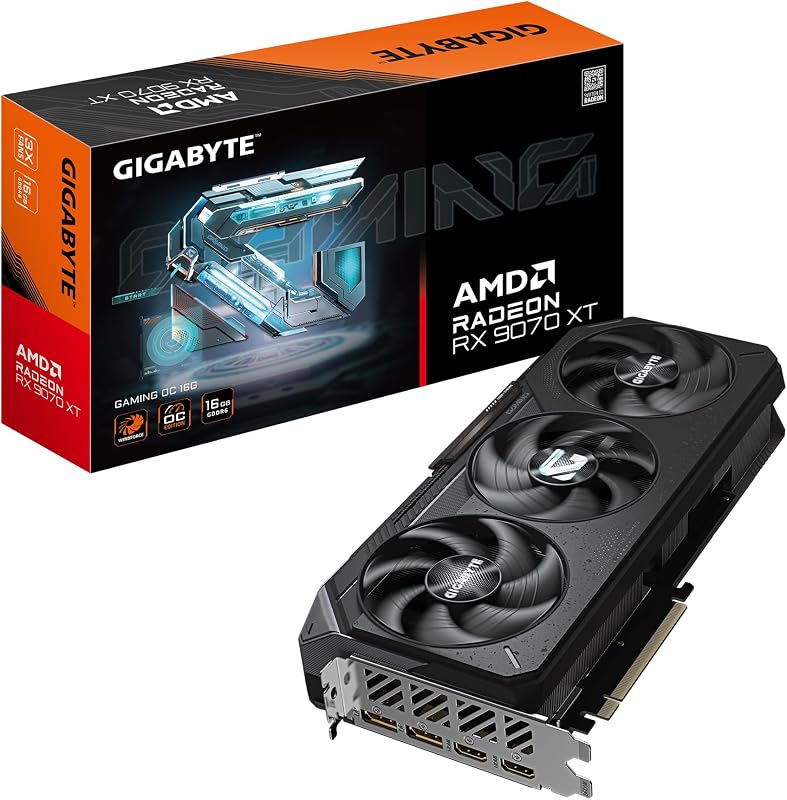
For creators and gamers who favor an open hardware ecosystem with a generous frame buffer, the GIGABYTE Radeon RX 9070 XT Gaming OC 16G provides an appealing balance. It features 16GB of GDDR6 memory, PCIe 5.0 support, and a robust multi-fan cooling assembly designed to operate quietly in standard ATX chassis. Desktop users who prioritize high-performance rasterized gaming and standard 3D design software without paying for enterprise rackmount capabilities should consider this mainstream alternative.
PCIe 5.0 ASUS TUF Gaming GeForce RTX 5080
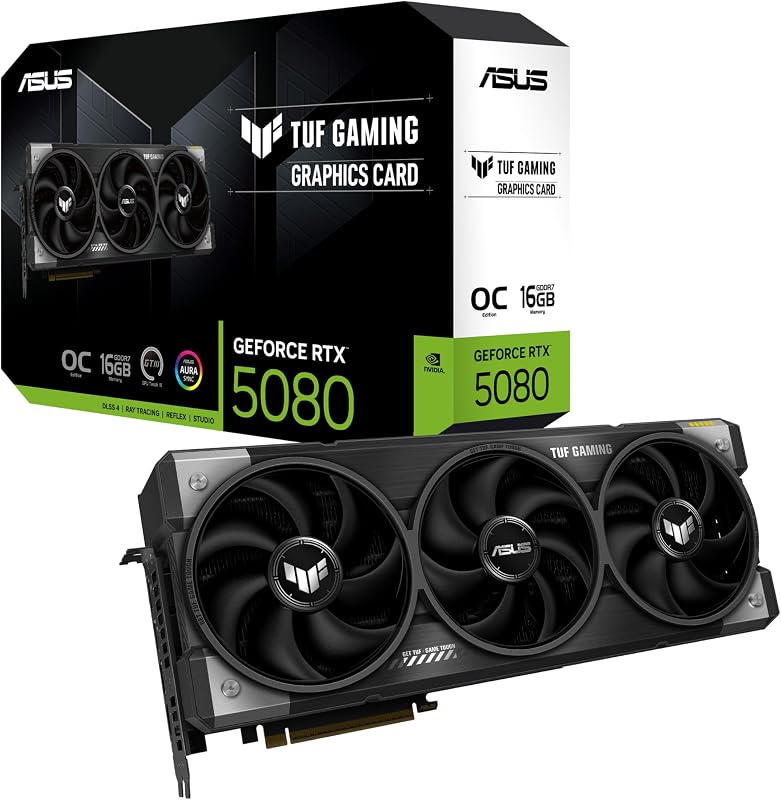
Those seeking extreme desktop performance backed by heavy-duty construction should explore the PCIe 5.0 ASUS TUF Gaming GeForce RTX 5080 16GB GDDR7 OC Edition. Engineered with military-grade components, a protective PCB coating, Axial-tech fans, and a substantial 3.6-slot thermal footprint, it delivers massive cooling headroom for consumer workstations. Enthusiasts who want rapid GDDR7 memory speeds, HDMI and DisplayPort 2.1 video connectivity, and plug-and-play desktop power will appreciate this heavy-duty consumer flagship.
Final Verdict
When enterprise organizations evaluate whether is nvidia 6000 pro blackwell worth it, the answer depends squarely on the scale and financial stakes of the computational workloads in question. With its extraordinary 96 GB GDDR7 memory pool, stable 1590 MHz core clock speed, and high-bandwidth PCI-Express x16 architecture, the PNY RTXPRO6000TC eliminates the traditional performance ceilings that stall artificial intelligence development and large-scale visual effects pipelines. For compute clusters and enterprise data centers, the operational efficiencies gained by fitting enormous models directly into video memory provide immediate dividends.
At the same time, prospective buyers must remember that this server edition card is not a plug-and-play component for a home office gaming PC. Its mechanical design, enterprise driver ecosystem, and thermal airflow requirements demand a dedicated server rack or specialized workstation chassis equipped for high-throughput cooling. If your facility possesses the infrastructure and computational demands to harness 96 gigabytes of blistering GDDR7 performance, the NVIDIA RTX Pro 6000 Blackwell stands as one of the most capable and dependable computational instruments available today.
FAQ
What makes the NVIDIA RTX Pro 6000 Blackwell different from standard desktop graphics cards?
The NVIDIA RTX Pro 6000 Blackwell Server Edition is engineered specifically for high-density server environments and continuous computational workloads. It features a massive 96 GB pool of GDDR7 memory, enterprise-grade drivers, and a server-oriented physical design that relies on directed chassis airflow rather than consumer-style internal fans, making it distinct from gaming-oriented cards.
How much video memory is included on this accelerator?
This accelerator comes equipped with 96 GB of cutting-edge GDDR7 graphics memory. This substantial frame buffer is specifically designed to accommodate massive neural network weights, extensive 3D simulation caches, and ultra-high-resolution textures without overflowing into slower system host memory.
Can the card output video directly to a display?
Yes, the card supports display output over its PCI Express video interface with a maximum display resolution of 4K UHD (3840×2160 pixels). While primarily used for headless computational and rendering server tasks, it can drive high-resolution professional displays when integrated into compatible systems.
What interface does this server accelerator require on the host motherboard?
The accelerator connects to the host system via a physical PCI-Express x16 slot. To ensure maximum data throughput, the host system should support modern PCIe bandwidth standards, preventing data bottlenecks when transferring massive datasets between system memory and the 96 GB GDDR7 frame buffer.
Who manufactures this specific model of the card?
This specific iteration of the server edition accelerator is manufactured by PNY under model number RTXPRO6000TC, incorporating NVIDIA’s professional visual computing processor architecture to ensure reliable performance in mission-critical server environments.
How these reviews are put together
- 203reviews published
- 2,271products with a buyer rating
- 2,222products with listed features
- 87brands covered
Every number, star and price on this site is read from the Amazon product listing. We do not run lab tests of our own, so a score here is the average rating left by buyers, not a verdict from a test bench. Prices change without notice; check the listing before buying.


