PNY NVIDIA RTX 6000 Ada Review: Workstation Power Unleashed
The PNY NVIDIA RTX 6000 Ada is a dedicated enterprise workstation graphics card engineered to tackle the most demanding visual compute, simulation, and high-density rendering workflows. Built around an astonishing 48 GB of GDDR6X memory and running at a swift 2505 MHz GPU clock speed, this hardware stands as an elite production engine designed to…
By Rachel Ford
8 min read
As Amazon Associates, we earn from qualifying purchases. This means we may receive a small commission at no extra cost to you if you click through and make a purchase.
The PNY NVIDIA RTX 6000 Ada is a dedicated enterprise workstation graphics card engineered to tackle the most demanding visual compute, simulation, and high-density rendering workflows. Built around an astonishing 48 GB of GDDR6X memory and running at a swift 2505 MHz GPU clock speed, this hardware stands as an elite production engine designed to deliver uncompromised professional computing power.
This powerhouse graphics solution suits visual effects artists, enterprise 3D animators, data scientists, and architectural visualization teams who require massive frame buffer headroom and reliable stability. Mainstream PC gamers, general desktop users, and hobbyist video editors should look elsewhere, as its workstation focus and high-capacity architecture far exceed the needs of recreational gaming and casual desktop computing.
Enterprise Memory Capacity and Workstation Workloads
The defining highlight of this graphics solution is undoubtedly the massive rtx 6000 ada 48gb memory capacity. Utilizing dedicated GDDR6X memory, this graphics processor allows production studios to load entire volumetric data sets, multi-gigabyte 3D environment scenes, and massive AI training weights directly into the frame buffer. In traditional content creation pipelines, running out of dedicated video memory forces the operating system to swap data across system RAM, resulting in severe performance drops and system instability. Having 48 GB on board eliminates these bottlenecks, giving creators uninterrupted workflow continuity.
When assessing rtx 6000 ada workstation performance, this expansive memory pool translates into tangible workflow efficiencies across CAD modeling, digital asset management, and complex simulation baking. While the listing does not specify the exact memory bus width or total bandwidth figure, having double the memory capacity of top-tier consumer flagships allows multi-application workflows—such as real-time compositing alongside background ray tracing—to execute without out-of-memory errors. For engineering firms and visual effects studios handling complex geometry, this capacity provides critical operational peace of mind.
Ada Generation Architecture and Compute Capabilities
Operating on the modern nvidia rtx 6000 ada generation platform, this workstation card benefits from core architectural advancements in ray tracing and matrix mathematics. The rtx 6000 ada architecture is engineered to execute compute operations at a responsive 2505 MHz clock speed, delivering fast turnaround times for complex compute pipelines. While enterprise technology roadmaps continue to anticipate future developments such as the nvidia 6000 pro blackwell, the Ada platform remains a premier workhorse for active desktop production environments.
A closer look at the rtx 6000 ada specs reveals a card optimized for high-end desktop motherboards via a standard PCI-Express x16 interface. The listing does not specify the precise CUDA core count or hardware tensor core metrics, but the architectural efficiency of the Ada coprocessor ensures rapid parallel processing across complex computing tasks. In any standard pny rtx 6000 ada benchmark focused on enterprise simulation or rendering engines, this specialized silicon emphasizes deterministic accuracy and driver consistency over transient burst performance.
Thermal Management and Triple-Fan Cooling Design
Sustained computational workloads generate substantial heat, making active cooling a vital consideration for workstation reliability. The card utilizes a dedicated triple-fan cooling configuration to channel steady airflow across the internal heatsink array. By using three active fans, the cooling system balances dissipation efficiency across the circuit board, preventing localized hotspots from causing thermal throttling during multi-hour render jobs or computational simulations.
Physical integration requires careful planning, as the card measures 10.5 inches in length and 10.5 inches in width according to the product specifications. While standard workstation chassis comfortably support PCI-Express x16 components, builders housing their hardware in large enthusiast cases—such as an acer predator orion chassis—must ensure adequate interior width and unhindered intake channels. Adequate case ventilation is essential to maintain optimal operating temperatures when all three fans run under heavy compute loads.
High-Resolution Display Output and Included Accessories
Display capabilities on the card are designed to meet modern professional visual standards, supporting a maximum display resolution of 7680×4320. This 8K maximum resolution allows digital artists and post-production colorists to drive ultra-high-resolution monitors or multi-display configurations for detailed timeline previews. Video output on the card is delivered via HDMI, ensuring direct compatibility with high-resolution visual displays and production televisions.
The packaged hardware inclusions ensure straightforward deployment right out of the box. Alongside the dedicated graphics card, the retail box includes a DisplayPort to HDMI adapter, a Quickstart Guide, and a Support Guide. Additionally, the bundle provides a power adapter that converts two standard 8-pin PCI-E power connections into a single 16-pin 12VHPWR connector. While the listing does not specify the exact total board power draw, this included dual-8-pin adapter simplifies connection to existing enterprise power supply units.
Workstation Certification Versus Consumer Gaming Flagships
Prospective buyers frequently evaluate the rtx 6000 ada vs rtx 4090 when planning extreme performance builds. While both options originate from the same architectural era, they target entirely different user bases. Consumer gaming flagships are optimized for maximum rasterization frame rates, aggressive out-of-the-box boosts, and mainstream gaming driver releases. In contrast, the RTX 6000 Ada focuses on enterprise driver certification, stability under non-stop 24/7 compute loads, and a massive 48 GB memory footprint that is double that of consumer 24 GB alternatives.
From an entertainment perspective, rtx 6000 ada gaming is entirely possible thanks to its standard PCI-Express x16 desktop interface and 2505 MHz clock speed. However, using this hardware purely for interactive gaming is an inefficient allocation of resources. Enthusiast gamers who want high frame rates without enterprise overhead are far better served by dedicated gaming platforms, ranging from high-end desktop gaming GPUs down to capable mobile configurations like the asus tuf gaming a16 rtx 5060. For enterprise users asking is rtx 6000 ada worth it, the decision rests on whether your software workflows require ISV certification, error-free compute, and 48 GB of uninterrupted VRAM.
PNY NVIDIA RTX 6000 Ada Pros and Cons
Pros
- Massive 48GB GDDR6X dedicated frame buffer
- Rapid 2505 MHz GPU clock speed
- Triple-fan active cooling thermal design
- Ultra-high 7680×4320 maximum display resolution
- Bundled dual 8-pin to 12VHPWR power adapter
Cons
- Substantial 10.5-inch square physical profile
- Excessive memory capacity for basic gaming
- Listing omits specific thermal power specifications
Check PNY NVIDIA RTX 6000 Ada on Amazon
Who Should Buy the PNY NVIDIA RTX 6000 Ada
Selecting an enterprise-tier workstation card requires balancing project demands against hardware capabilities. Below are clear scenarios indicating whether this model matches your setup.
Buy It If
- You build complex 3D scenes, CAD assemblies, or offline visual effects that exceed 24 GB of frame buffer memory.
- Your daily professional workflow requires 48 GB GDDR6X memory for local AI model inference, machine learning, or scientific computing.
- You require verified enterprise hardware reliability and 7680×4320 resolution support for high-end studio monitoring.
- Your desktop chassis accommodates a 10.5-inch square card and dual-8-pin power delivery via the included 12VHPWR adapter.
Skip It If
- Your primary focus is recreational PC gaming, where consumer gaming graphics cards provide dedicated gaming drivers and features.
- Your workloads consist of standard photo editing or light 4K video rendering that easily fits into 8 GB to 16 GB of memory.
- Your desktop enclosure has limited width clearance that cannot accommodate a 10.5-inch wide form factor.
PNY NVIDIA RTX 6000 Ada Alternatives Worth a Look
If your computing needs lean more toward consumer entertainment, standard content creation, or modern PCIe 5.0 graphics connectivity, several alternative desktop graphics cards are worth considering.
GIGABYTE Radeon RX 9070 XT
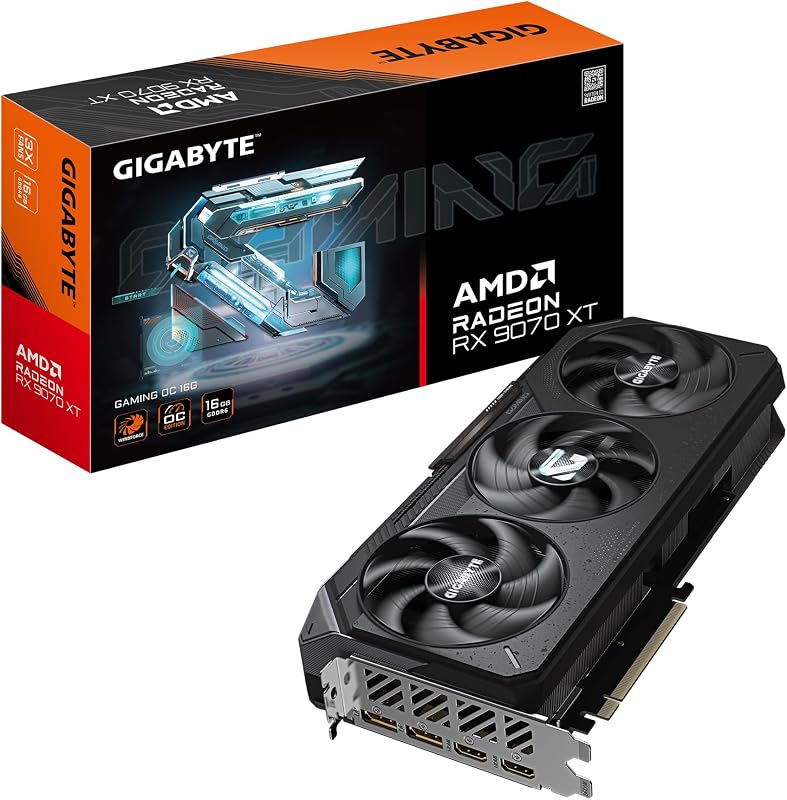
The GIGABYTE Radeon RX 9070 XT offers 16GB of GDDR6 memory alongside PCIe 5.0 interface support. It suits desktop creators and high-end gamers who want contemporary architecture and solid rasterization performance without requiring massive enterprise memory capacity.
PCIe 5.0 ASUS TUF Gaming GeForce RTX 5080
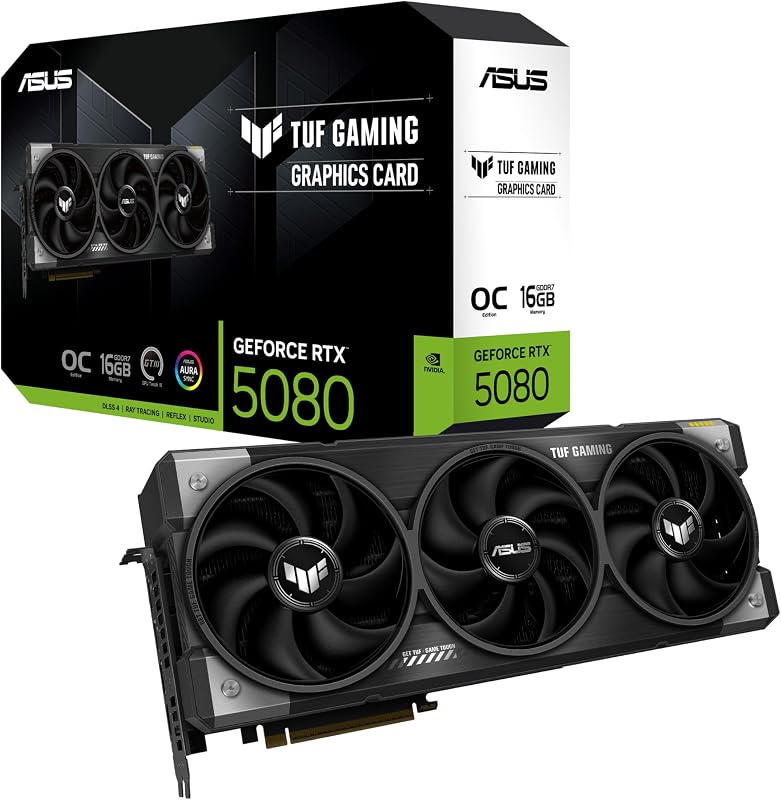
For builders who want cutting-edge consumer graphics with ultra-fast memory speeds, the PCIe 5.0 ASUS TUF Gaming GeForce RTX 5080 features 16GB of GDDR7 memory, HDMI and DisplayPort 2.1 support, military-grade components, and a heavy 3.6-slot Axial-tech cooling design. It is the ideal choice for enthusiast gamers and video editors who prioritize next-generation consumer technology over workstation-certified drivers.
ASRock Radeon RX 9070 Challenger

The ASRock Radeon RX 9070 Challenger is built on RDNA 4 architecture with 16GB of 256-bit GDDR6 memory, a 2520MHz boost clock, and a PCIe 5.0 interface. Featuring triple fans, 0dB silent operation modes, and an LED indicator, it suits builders who want a capable modern graphics card for everyday creative projects and gaming without enterprise complexity.
Final Verdict
The PNY NVIDIA RTX 6000 Ada represents an uncompromising solution for professional visual computing. By combining a 2505 MHz GPU clock speed with an enormous 48 GB GDDR6X frame buffer and a triple-fan cooling system, this graphics card handles memory-intensive simulation, multi-layer rendering, and generative AI workloads that cause standard consumer hardware to falter. The inclusion of a DisplayPort to HDMI adapter and a dual 8-pin power conversion cable ensures practical compatibility with enterprise desktop workstations.
While the hardware is capable of running standard desktop software and games via its PCI-Express x16 connection, its true value lies entirely within high-stakes professional production environments. If your studio or technical engineering workflow routinely bottlenecks on memory limits or requires maximum stability under continuous computation, this workstation graphics card provides the capacity and reliability needed to maintain optimal productivity.
FAQ
How much video memory is on the PNY NVIDIA RTX 6000 Ada?
The graphics card comes equipped with 48 GB of dedicated GDDR6X memory, offering extensive frame buffer headroom for complex 3D scenes, deep learning models, and high-resolution rendering pipelines.
Can the PNY NVIDIA RTX 6000 Ada be used for PC gaming?
Yes, the card functions in desktop computers using a standard PCI-Express x16 slot and operates at a 2505 MHz clock speed, but its architecture and drivers are tailored specifically for professional workstation applications rather than gaming optimization.
What maximum display resolution does this card support?
According to the product specifications, the card supports a maximum display resolution of 7680×4320, enabling high-definition 8K visual output over its display connections.
What accessories are included in the packaging?
The retail package includes the graphics card, one DisplayPort to HDMI adapter, a power adapter converting two 8-pin PCIe cables to one 16-pin 12VHPWR connector, a Quickstart Guide, and a Support Guide.
How does the card manage operating temperatures?
The card utilizes an active triple-fan cooling design featuring three dedicated fans that direct continuous airflow across the internal heatsink structure during sustained computational workloads.
How these reviews are put together
- 203reviews published
- 2,271products with a buyer rating
- 2,222products with listed features
- 87brands covered
Every number, star and price on this site is read from the Amazon product listing. We do not run lab tests of our own, so a score here is the average rating left by buyers, not a verdict from a test bench. Prices change without notice; check the listing before buying.


